
Greek Yogurt Market: A Preventive Nutrition Shift
Preventive Health Approvals & Advanced Processing Move Industry Toward $30 Billion by 2031

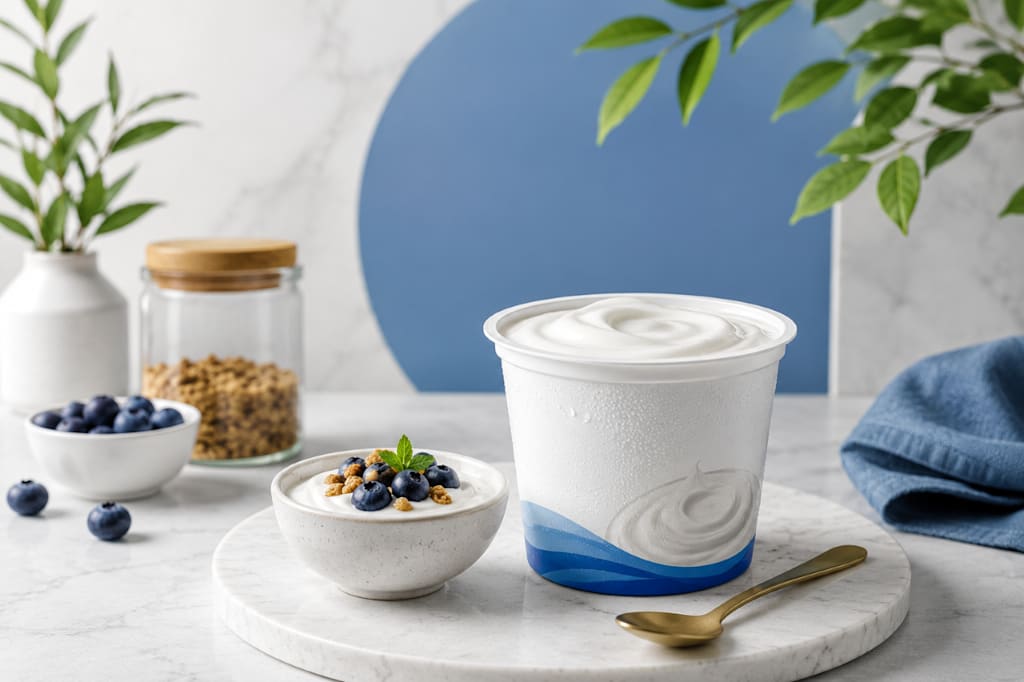
It wasn’t that long ago that reaching for a tub of yogurt meant grabbing a sugary, fluid snack to pack into a school lunchbox or eat as a quick dessert.
However, check out any gym locker, office refrigerator, or morning breakfast bowl today, and you will see a total transformation. Health-conscious consumers are actively trading in standard low-protein sweets, and even their afternoon protein bars, for thick, strained Greek yogurt. The product has successfully broken away from its identity as a simple, occasional snack to establish itself as an indispensable, high-performance staple of daily preventive nutrition.
This widespread lifestyle migration is generating extensive commercial value. According to the latest data from Mordor Intelligence, the global Greek yogurt market size is projected to grow from USD 18.70 billion in 2025 to USD 20.26 billion in 2026. Driven by an insatiable global demand for accessible macros and clean-label functional nutrition, the industry is forecast to reach a substantial USD 30.24 billion by 2031, moving forward at a steady 8.37% CAGR.
The Preventive Label: A Major Health Claim Milestone
The primary driver behind this multi-billion-dollar expansion is a clear, institutional shift in how regulatory bodies view fermented dairy. A defining milestone for the industry arrived with the U.S. Food and Drug Administration's (FDA) qualified health claim, which formally acknowledges a potential link between regular yogurt consumption and a reduced risk of type 2 diabetes.
By evaluating an extensive body of clinical data, the agency established that eating at least 2 cups (3 servings) of yogurt per week could play a measurable role in preventive metabolic health. This public health validation has completely altered the marketing landscape. Rather than focusing solely on weight management or digestive comfort, brands can now confidently market their strained dairy lines as a foundational tool for chronic disease prevention, opening up massive new customer segments.
Strategic Market Breakdown: Flavors, Fats, and Forms
The internal product architecture of the global market reveals a highly dynamic distribution between volume staples and fast-moving, health-conscious preferences:
- Flavored Offerings Hold the Core: By product composition, flavored variants led the industry, capturing 58.61% of global revenue in 2025 due to continuous palate innovation and indulgent, fruit-forward profiles. However, unflavored lines are set to grow at a fastest-in-class 9.83% CAGR through 2031, favored by clean-label purists and home cooks using it as a healthy substitute for sour cream and mayonnaise.
- The Non-Fat Acceleration: Traditional full-fat formats controlled the largest absolute share at 43.03% of the 2025 market. Concurrently, non-fat Greek yogurt is outpacing all other fat tiers, projected to expand at a rapid 10.34% CAGR through 2031 as fitness enthusiasts seek pure protein density with minimal calorie overhead.
- Spoonable Dominance vs. Drinkable Speed: Spoonable Greek yogurt made up the absolute majority of global demand at 71.24% in 2025. On the other hand, drinkable formats are scaling the quickest at a 10.12% CAGR to 2031, answering the call for portable, on-the-go morning fuel.
The Whey Paradox: Industrial Processing and Environmental Tech
Operating a large-scale strained yogurt facility requires managing an intense, capital-heavy production footprint. The traditional straining process requires roughly three to four ounces of milk to yield just one ounce of thick Greek yogurt, leaving behind a massive volume of liquid acid whey as a byproduct.
To turn this environmental challenge into a profitable revenue stream, major processors are investing heavily in advanced, closed-loop industrial technologies:
- Ultrafiltration Engineering: Modern manufacturing facilities are installing scaled ultrafiltration systems directly onto their processing lines, allowing them to extract high-purity whey protein isolates and functional milk solids from the byproduct stream.
- Anaerobic Digestion: Companies are setting up industrial anaerobic digesters to convert residual organic waste into clean, renewable biogas, directly lowering factory operating costs.
- The Regional Entry Barrier: While these high-tech systems maximize raw material efficiency and lower carbon footprints, they are incredibly capital-intensive. This structural reality creates a massive economic moat for global market leaders, making it highly difficult for smaller regional competitors to achieve matching cost-efficiencies.
Competitive Dynamics: Plant-Based Alternatives and Digital Channels
The retail landscape is experiencing an ongoing structural reorganization. While brick-and-mortar networks like supermarkets and hypermarkets remain the dominant volume anchor, managing 43.65% of global sales in 2025, online channels show the strongest upside, set to accelerate at an 11.05% CAGR through 2031.
This digital growth allows direct-to-consumer platforms to highlight a highly selective product mix. A major area of digital product discovery is the rapid development of plant-based, Greek-style alternatives. Utilizing advanced coconut, almond, and oat bases cultures, independent disruptors are successfully replicating the signature thick texture and sour tang of dairy-based Greek yogurt, satisfying the demands of lactose-sensitive and vegan demographics.
Regional Horizons: North American Value, Asia-Pacific Velocity
From a geographic standpoint, the market displays an exciting balance between high-value strongholds and rising economies:
- North America: Stands firmly as the largest regional market, capturing 37.52% of global revenue in 2025. Consumption here is deeply mature, fueled by a dense network of modern supermarkets and a massive consumer demographic prioritizing high-protein functional foods.
- Asia-Pacific: Has emerged as the global hotspot for fastest incremental growth, projected to expand at an industry-leading 9.68% CAGR through 2031. This acceleration is being powered by rapid urbanization across China, India, and Indonesia, where an expanding middle class is adopting premium wellness trends, steadily closing the gap in per capita dairy consumption compared to traditional Western markets.
Final Thoughts: A Smarter Spoonful
As the global Greek yogurt market moves toward its USD 30.24 billion milestone in 2031, the category stands as a prime example of how an ancient agricultural staple can be fully modernized. By aligning a simple, natural food matrix with major institutional health approvals, sustainable byproduct recycling, and diverse non-dairy alternatives, the industry has secured a permanent spot on the world's daily wellness menu.
The next time you enjoy a spoonful of chilled, unflavored Greek yogurt or grab a portable, drinkable bottle, take a moment to look at the process behind the cup. Behind that thick, creamy texture sits a sophisticated global web of advanced filtration engineering, strict clinical health backing, and an ongoing corporate push toward absolute resource efficiency. The world's daily nutrition is becoming cleaner, denser, and significantly more functional, one protein-rich cup at a time.
About the Creator
Harvey Specter
I am passionate about Food & Beverage, Ag, & Animal Nutrition companies. I help organizations unlock their data's potential and fuel business growth. My expertise transforms raw data into actionable insights for strategic decisions.
Enjoyed the story? Support the Creator.
Subscribe for free to receive all their stories in your feed.
Comments
There are no comments for this story
Be the first to respond and start the conversation.