
Global Markets Navigate Uncertainty: Tech Valuations, Energy Volatility, and Inflation Watch
Asian Cautious Open Oil Choppy Amid Gulf Tensions and Ceasefire Confusion AI-Driven Gains Face Earnings Test Treasury Yields and Borrowing Costs Inflation Data and Rate Paths Currency and Commodity Crosscurrents

Global markets began the week in a measured, cautious mood on Monday, October 12, balancing remarkable optimism around artificial intelligence against mounting real-world risks: elevated energy prices, geopolitical ambiguity, rising borrowing costs, and the approaching earnings season that will test whether sky-high tech valuations are truly justified. Trade was muted with Japanese markets closed and the United States observing a partial holiday, but the undercurrents driving price action were clear and consequential.
Energy Markets: Choppy Waters, Confusing Signals
Oil prices were unsettled and volatile. Brent crude futures opened higher before drifting 1.1% lower to US$103.50 per barrel, retreating from a recent peak of US$109.97. U.S. crude fell 1.2% to US$90.73. Multiple forces tugged at the market: reported strikes on shipping and airports across the Gulf kept supply concerns alive, while President Donald Trump’s announcement of a Ukraine‑Russia energy ceasefire added significant uncertainty; neither side had confirmed the proposal, and a related suggestion that Russia boost diesel exports faced bipartisan criticism in Congress as potentially illegal. As JPMorgan’s global economics head Bruce Kasman noted, oil and product prices remain materially above earlier forecasts, with shipping costs surging alongside them, a dynamic that flows directly into inflation figures worldwide.
Equities: AI Leadership Faces the Earnings Reality Check
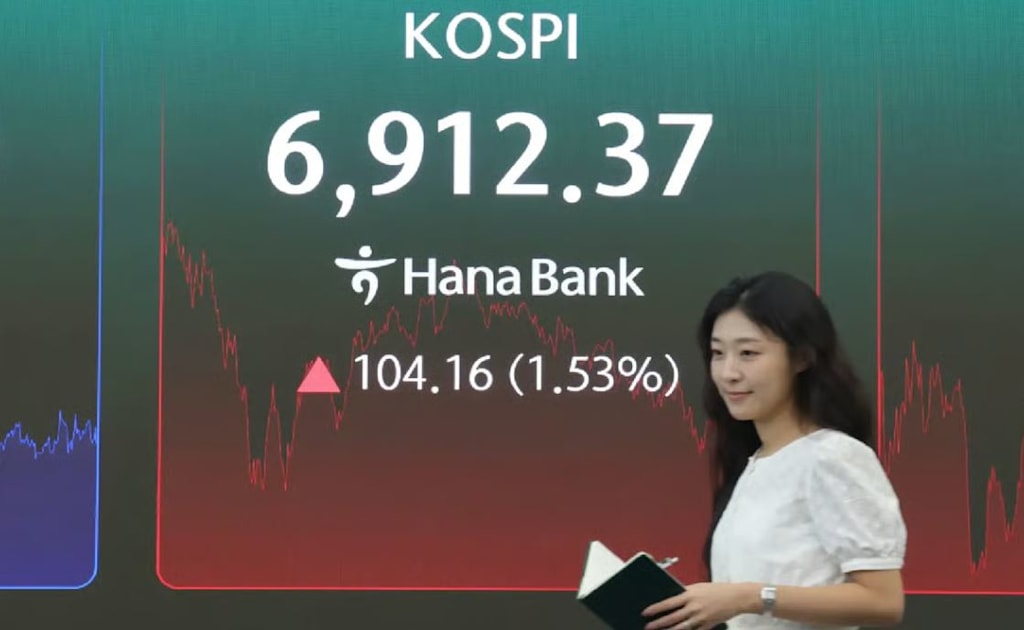
Asian share markets trod water. South Korea’s Kospi declined 1.1%, while the broader MSCI Asia‑Pacific index excluding Japan was largely flat. The picture offshore was more encouraging: S&P 500 futures edged up 0.2% and Nasdaq futures firmed 0.5%, with European benchmarks also in modest positive territory. Yet beneath the surface, a critical tension is emerging. Since mid‑September, essentially all the S&P 500’s gains have come from the technology sector, driven overwhelmingly by the AI investment boom. Third‑quarter earnings are forecast to rise more than 30% year‑on‑year, and nearly all of that growth is concentrated in tech. My Bui, an economist at AMP, points to a looming disconnect: investors are now demanding higher yields to absorb the massive wave of debt being issued to fund AI capital expenditure. The U.S. investment‑grade credit default swap index has jumped to its highest level since the Iran conflict began, signalling growing unease. “Wider spreads suggest investors are questioning whether AI revenues can keep pace with rising borrowing costs,” Bui warned, noting that refinancing expenses will climb sharply as maturing debt is rolled over at higher rates.
Inflation, Yields, and the Policy Path
This week brings data that could reshape central bank thinking. Headline U.S. consumer inflation is expected to surge 0.6% for the month, pushing the annual rate to 3.7%, driven largely by climbing energy costs. By contrast, core CPI, which strips out volatile food and energy is projected to rise a cooler 0.2%, leaving the annual rate at 2.5%. The contrast highlights policymakers’ dilemma: energy‑driven headline inflation erodes household purchasing power even as underlying trends appear more contained. Markets currently price only an 18% chance of a Federal Reserve rate hike this month, but an 85% probability of one in December, with further tightening also anticipated from the European Central Bank, Bank of Japan, and Bank of England before year‑end. Treasury yields have already hit 24‑year highs, raising the discount rate applied to future corporate earnings and pressuring equity valuations, particularly growth‑oriented tech names.
Currencies and Commodities
The U.S. dollar index held near a 17‑month peak at 102.25, though it paused against the yen at 158.15 as the threat of official intervention kept traders cautious. The euro struggled at US$1.1201**, marking five consecutive weekly declines amid renewed concern over European fiscal deficits. Gold, which pays no interest, climbed 0.3% to **US$4,206 per ounce, building on a more than 1% rebound last week as investors sought safety amid the crosscurrents.
The Week Ahead
Quiet as Monday may have seemed, the calm is likely temporary. Major U.S. banks kick off earnings season on Tuesday, offering the first real measure of whether AI enthusiasm has been priced in ahead of actual results. Inflation data, retail sales figures, and producer price numbers will arrive alongside, giving markets plenty to digest. For now, optimism persists, but it is balanced, fragile, and increasingly expensive to sustain.
About the Creator
Mark Lim
Hi I am mark an automotive student and a car, tech and food enthusiast ! Im gonna try and post daily & hope you enjoy what I write and do share my page with people you know. I would gladly appreciate it! Cheers
Enjoyed the story? Support the Creator.
Subscribe for free to receive all their stories in your feed.
Comments
There are no comments for this story
Be the first to respond and start the conversation.