
Gauzy CES 2024 Booth Shows How a 20x20 Technology Demo Space Can Carry a Complex Product Story
A closer look at how Gauzy used a 20x20 booth at CES 2024 to turn smart glass, automotive applications, and light-control technology into a product-led show-floor experience.

LAS VEGAS — CES 2024 continued to show how technology exhibitors are rethinking booth design. For many brands, the booth is no longer just a place to stand beside a logo wall. It has become part of the product explanation itself.
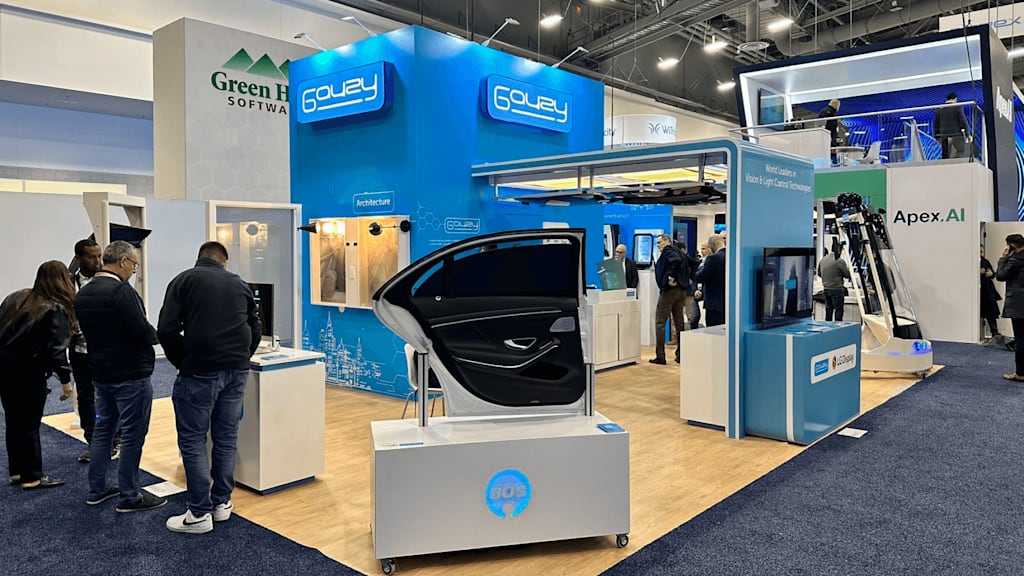
Gauzy’s 20x20 booth offered a clear example of that shift. Built around vision and light-control technologies, the space used architectural displays, illuminated branding, application-based product zones, and a full vehicle door demo to help visitors understand a technical category quickly.
In a show environment as crowded as CES, that matters. Products related to smart materials, automotive systems, embedded technology, and advanced display applications are not always easy to explain in one sentence. A booth like this works when it gives visitors something more useful than a headline. It gives them a sequence: what the product is, where it is used, and why it matters.
A Booth That Starts With Application, Not Decoration
One of the strongest choices in this booth is that it leads with application.
The vehicle door display immediately gives context. Visitors do not have to guess whether the company’s technology is theoretical, lab-based, or part of a real-world system. The object itself helps explain the product. Instead of depending only on screens or printed claims, the booth uses a physical example to connect the technology to automotive use.
That is a practical move for CES. Exhibitors in technical fields often lose attention when the booth explains too little or tries to explain too much at once. Gauzy’s booth avoids that problem by giving visitors a recognizable entry point.
The same logic appears in the architectural display areas. By separating product examples into visible zones, the booth makes the technology easier to read from the aisle and easier to discuss once a visitor steps closer.
The 20x20 Footprint Is Used With Discipline
A 20x20 booth gives enough room to build a meaningful brand environment, but it also demands structure. Without clear zoning, the space can become crowded very quickly.
This booth handles that well. The central branded structure gives the exhibit a strong visual anchor, while the surrounding display areas support different types of interaction. The front remains open enough for people to approach naturally. Visitors can stop at the vehicle door, move toward the display windows, or speak with staff without feeling trapped in a narrow path.
That layout is one reason CES technology product demo booth planning has become more deliberate in recent years. A booth at CES has to work in motion. It has to attract people from the aisle, provide a clear first reading, and support deeper product conversations without breaking visitor flow.
This Gauzy booth does that by dividing the space into readable parts rather than forcing everything into one presentation wall.
Lighting and Color Help Carry the Message
The booth’s blue structure does more than make the exhibit easy to spot. It also reinforces the technical tone of the brand.
Lighting plays an equally important role. Illuminated brand signs, lit display zones, and controlled contrast help the booth remain visible under show-floor lighting. For a company whose product story is tied to vision, transparency, and light control, that visual consistency strengthens the message.
This is a detail many exhibitors overlook. Lighting is often treated as a finishing touch, but in product demo booths it can support the category itself. In this case, the lighting is not only aesthetic. It helps the booth explain what kind of technology is being shown.
Product Demo Booths Work Better When the Story Is Layered
Another useful aspect of this exhibit is how it layers information.
The booth does not depend on a single message or a single object. Instead, it uses multiple levels of explanation: brand recognition from the tower structure, immediate application from the vehicle door, product framing through the display windows, and deeper engagement through staff interaction inside the booth.
That is often what separates a useful CES booth from a purely decorative one. Technical exhibitors rarely need a booth that only looks polished. They need one that moves visitors from curiosity to understanding.
A product demo booth should answer at least three questions quickly:
What is this product category?
Where is it used?
Why should a visitor stop here instead of moving on?
Gauzy’s booth handles those questions through physical context rather than relying only on marketing language.
Open Visitor Flow Still Matters
Even with a strong central structure, the booth does not feel sealed off.
That is important in a 20x20 environment. A closed layout can slow entry and make conversations feel formal too early. An overly open layout can lose focus and weaken the product story. This booth sits in the middle. It creates a defined branded environment while still allowing easy movement around the displays.
For CES exhibitors, this remains one of the most practical lessons. Complex products do not need a confusing booth. In most cases, the better approach is a layout that lets the product story unfold in steps.
What This Booth Says About CES Exhibiting
Gauzy’s CES 2024 booth reflects a larger direction in trade show design for technology brands. More exhibitors are using the booth as a live product environment rather than a branded shell.
That shift is especially visible in sectors connected to automotive technology, smart materials, AI infrastructure, sensors, and display systems. Visitors in those categories usually need more than a quick pitch. They need to see how the product fits into a real-world application.
A well-planned 20x20 booth can do that without becoming oversized or overloaded. What matters is not only the structure. It is the order of information, the quality of the demo object, and the clarity of the visitor path.
Final Takeaway
Gauzy’s CES 2024 20x20 technology product demo booth worked because it gave the technology a physical story.
The vehicle door created an immediate point of focus. The architectural display zones added context. The blue branded structure made the booth visible from distance. Lighting reinforced the product theme. And the open layout allowed visitors to move through the space without confusion.
For exhibitors watching how technical products are being presented at CES, this booth offered a straightforward lesson: when the product is complex, the booth should make the first explanation easier, not harder.
About the Creator
CircleExhibit
Circle Exhibit is a Las Vegas-based exhibit partner supporting trade show booth design, fabrication, logistics, installation, and dismantle for exhibitors across U.S. trade shows.
Enjoyed the story? Support the Creator.
Subscribe for free to receive all their stories in your feed.
Comments
There are no comments for this story
Be the first to respond and start the conversation.