
Gaharu, AI, and the Scent of Preservation: Hope and Reality in Malaysia’s Forests
A Treasure Under Threat The Science of Scent Reimagined Promises and Limitations Malaysia’s Precious Heritage Substitutes Are Not Solutions A Complementary Path Forward

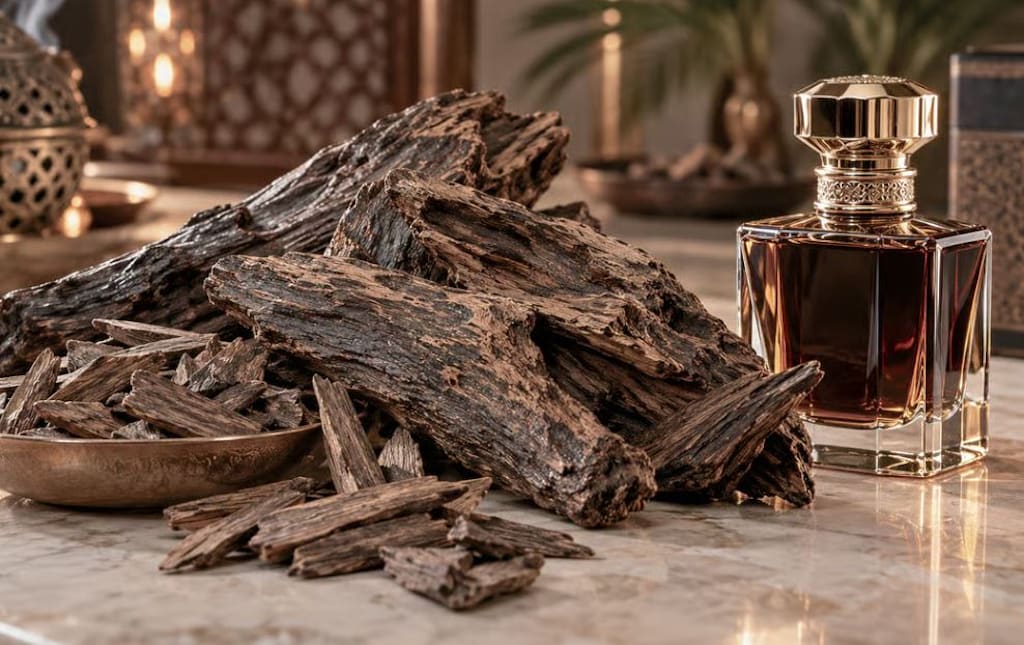
Deep in Malaysia’s forests, a quiet crisis is unfolding around one of nature’s most prized gifts: gaharu, or agarwood. Rich, smoky, and intensely alluring, this fragrant resin has been cherished for centuries in perfumes, incense, and spiritual ceremonies. Yet the very qualities that make it precious have placed the trees that produce it in grave danger. Now, emerging technologies, artificial intelligence and advanced biotechnology, offer the tantalising possibility of recreating these scents without felling another tree. But as promising as these innovations may be, they are no simple cure, and true conservation will require more than just a synthetic match.
A Treasure Under Threat
Gaharu does not come easily. It forms only when trees of the Aquilaria genus, including Malaysia’s native A. malaccensis, A. hirta, and A. microcarpa, respond to injury, fungal infection, or pest attack by producing a dark, resin-rich wood. Healthy trees yield nothing; only those under stress develop the sought-after fragrance. This natural rarity has driven prices to extraordinary heights, and wild populations have paid the price. Malaysia’s biodiversity database lists A. malaccensis as Critically Endangered and A. hirta as Vulnerable, while international trade in these species is strictly regulated under CITES. Plantations have been established, but cultivated trees rarely produce resin with the same depth and character as wild sources, leaving the oldest, most venerable trees disproportionately targeted.
The Science of Scent Reimagined
Into this fragile landscape steps a new generation of innovators. Companies like Osmo, a Google Brain spin-off, are training AI systems on millions of human scent responses to predict how molecules and their combinations will be perceived identifying alternatives to rare ingredients or recreating lost aromas from minute samples. In one project, the scent of a rare tree was reconstructed from a fragment of bark no larger than a finger. Other firms, such as BioHarvest Sciences, are growing stable plant cell cultures in laboratories, producing valuable compounds without harvesting from the wild at all. For perfumers and brands, the appeal is clear: sustainable, scalable supply alongside an environmental narrative.
Promises and Limitations
Yet the enthusiasm is tempered by caution. “Calling this conservation is greenwashing,” argues Mandy Aftel, a respected natural perfumer. Replicating a scent does not stop people from seeking the authentic original, often viewed as superior, more potent, or simply more prestigious. Rhian Smith of the Royal Botanic Gardens, Kew, points to oudh, agarwood’s most famous derivative: AI may create a convincing alternative, but wild-sourced material remains highly prized by collectors and connoisseurs. Worse, synthetic substitutes address only harvesting pressure; they do not stop deforestation, habitat loss, or the broader threats to ecosystems where these trees grow. Even the scientists acknowledge limits: a flower’s scent can contain hundreds of molecules shaped by soil, climate, season, and ecology, a full, living profile no laboratory can perfectly replicate. As researcher Christina Agapakis reflects, what is produced is often “a ghostly fragment” of what nature creates.
Malaysia’s Precious Heritage
For Malaysia, these questions carry special weight. Peninsular Malaysia is home to five recognised Aquilaria species, each playing a role in forest ecosystems far beyond their scent. Gaharu is woven into local culture, economy, and tradition, making its protection both an environmental and a cultural imperative. The gap between demand and supply remains wide; illegal harvesting persists despite enforcement efforts. While plantations help, they cannot replace the genetic diversity, ecological function, or mature resin production of ancient wild stands.
A Complementary Path Forward
None of this means technology has no place. If AI and biotech can meet even a portion of global fragrance demand, they can ease pressure on vulnerable populations particularly for mass-market use. But they must be seen as one tool among many: stronger enforcement, community-led forest protection, sustainable harvesting standards, and deeper consumer awareness remain essential. A synthetic scent does not save a tree by itself, but it can buy time, create breathing room, and shift markets toward responsibility.
Ultimately, the true test will be whether innovation translates into protection. Gaharu’s survival will not be secured in a laboratory alone, but in the forests where it grows, preserved not just for its aroma, but as a living, breathing part of Malaysia’s natural heritage. Technology can offer a mirror to nature’s beauty; only stewardship can ensure the original remains.
About the Creator
Mark Lim
Hi I am mark an automotive student and a car, tech and food enthusiast ! Im gonna try and post daily & hope you enjoy what I write and do share my page with people you know. I would gladly appreciate it! Cheers
Enjoyed the story? Support the Creator.
Subscribe for free to receive all their stories in your feed.
Comments
There are no comments for this story
Be the first to respond and start the conversation.