
Gabriel Shohet built a coffee empire on the bean the industry dismissed
How Gabriel Shohet turned a bean the specialty world called a swear word into a global coffee chain that scaled while its founders kept full control.


The Miami office of Black Sheep Coffee is, by Gabriel Shohet's own account, close to a ghost town. Five chairs. No screens. A building so empty it echoes when he speaks. Shohet based himself here in 2024, leaving a company with more than 140 locations worldwide to go back to chasing landlords and scouting sites himself. He runs Black Sheep Coffee as joint chief executive alongside Eirik Holth, the flatmate he met at university. He went looking for the hard version anyway.
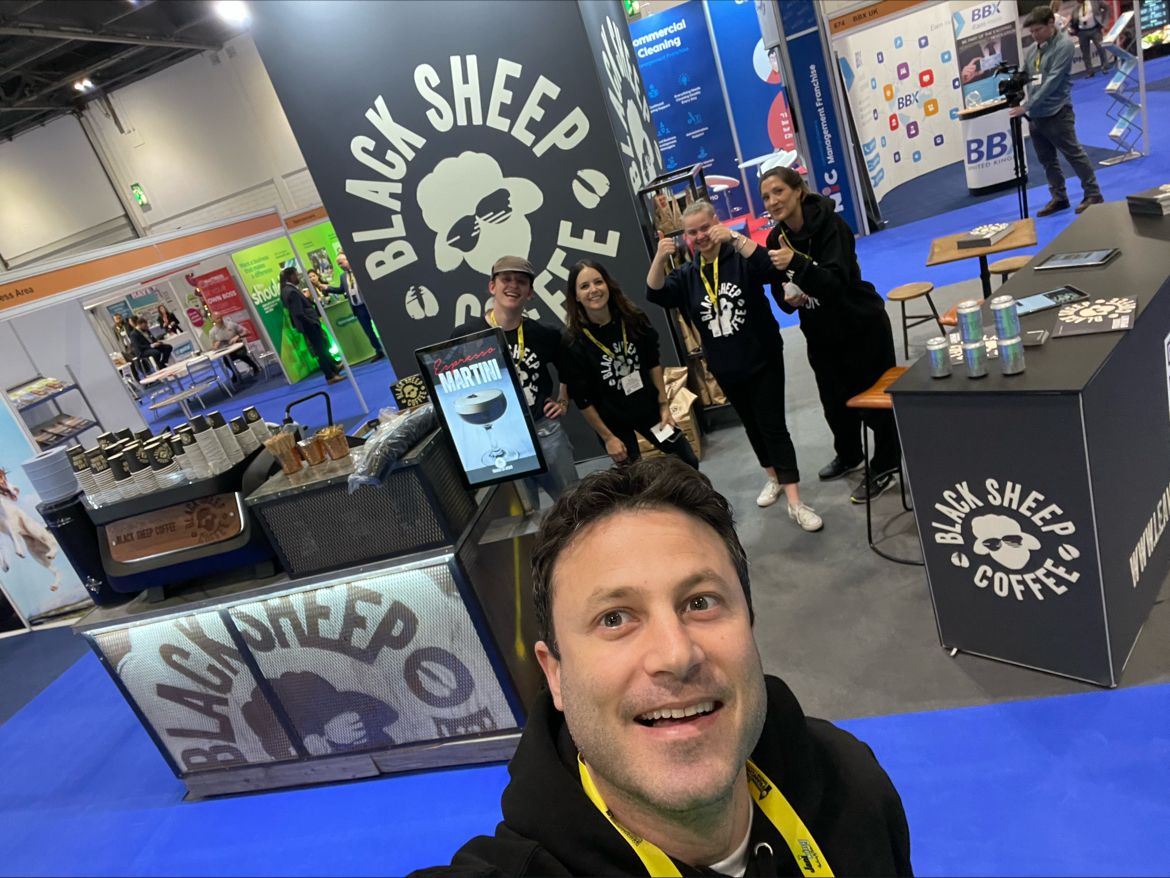
"Being in the US now is like starting the company from scratch," Shohet says. "You're facing challenges you thought you'd never have to face again. You're right back in the weeds." He sounds thrilled about it.
That instinct, the pull toward the room where nobody is cheering for you, explains most of how Gabriel Shohet turned a folding table on Camden High Street into one of the United Kingdom's fastest growing coffee chains.
Two roommates who quit on the same day
Shohet and Holth met as flatmates at the University of St Andrews, both a little obsessed with coffee. After graduating they scattered, Holth to New York and Shohet to Milan, and spent a year talking every Sunday about a company that did not exist yet. The dream could have stayed a dream. "We said, if we don't actually quit our jobs, we're never going to do this," Shohet recalls. So they picked a date and kept it. They quit on the same day, moved to London, and started the company together in the summer of 2013.
They had £20,000, a Kickstarter campaign, and, by his own admission, more nerve than sense. "It was arguably very naïve," he says. For two years there was no shop, only market stalls from Camden to Brick Lane and a rented secondhand espresso machine. When they finally scraped together enough for a permanent site, they could not afford contractors, so they built it by hand from salvaged materials. "A lot of sweat and tears," Shohet says, "but it was worth it." That first room, all exposed metal and raw graffiti, became the template every Black Sheep Coffee shop still copies, whether in Dubai, Edinburgh, or Texas.
The bean that was basically a swear word
The heresy was the bean. When Black Sheep Coffee launched, London's specialty scene ran entirely on Arabica, and Robusta was treated as something closer to an insult. "You had all those guys with long moustaches doing cupping sessions and talking about Arabica," Shohet says. "Robusta was like a swear word." He and Holth were pointedly not invited. "It was almost like a cult. It wasn't just raised eyebrows, there was some animosity." None of the objectors had ever tasted specialty grade Robusta, because it did not yet exist.
Their case for it was not sentimental. Robusta grows on hardier trees at lower altitude, holds twice the caffeine of Arabica, and can be harvested throughout the year. Those traits made it cheap to mass produce, which is exactly why the industry had let its quality collapse into a race to the bottom. Shohet and Holth asked what would happen if someone grew Robusta the way the best Arabica is grown: high altitude, shade, picked by hand, dried in the sun. They visited hundreds of plantations before finding a grower in Karnataka who had torn out his father's Arabica to plant Robusta by conviction.
Robusta Revival, that single origin coffee, is still the house default more than a decade later, still around 85 percent of coffee sales. Shohet is unbothered by whether customers can even taste it. "It's not for us to lecture customers," he says. "What mattered to us was, does this coffee taste like money, and is it awesome?"
A coffee company nobody controls but its founders
Consumer retail usually strips founders of control fast. Scaling eats capital, and the quickest money comes from private equity. Shohet and Holth refused it. Black Sheep Coffee has taken no venture capital or private equity, raising money from customers and angel backers, and the founders kept every board seat and full voting control. NBA player Kristaps Porzingis became a shareholder in 2021, after becoming a customer, and remains one of the brand's loudest supporters.
That independence buys a different clock. Black Sheep Coffee does not chase a target store count. It opens new sites only when the numbers say it can, and slows down when they say otherwise. "We don't have a magic shop number we want to hit," Shohet says. "As long as customer feedback is good, we will open more stores." The metric he watches most closely is the average Google Maps rating across the estate, now near 4.8, up from about 4.5 a year and a half earlier. Customers at the London Coffee Festival voted the chain Best Multiple Operator. It is now the fourth largest coffee company in the UK by store count and one of the fastest growing. It reached near saturation of its home market within two years of hitting 50 corporate locations.
Chasing the hardest markets
The United States was never the obvious move for Gabriel Shohet. That was the point. "The US is massive. People spend more in coffee shops, the competition is fierce, which we love," he says. "We want to go where it's the hardest, for the same reasons we picked London when we started." Black Sheep Coffee opened its first American store in Plano, Texas, in 2024, and now trades across Texas and Florida from a Miami headquarters. In early 2026 it signed one of the largest franchise deals in its history: 20 stores across the Dallas and Fort Worth metroplex, led by franchise partner Yoloways.
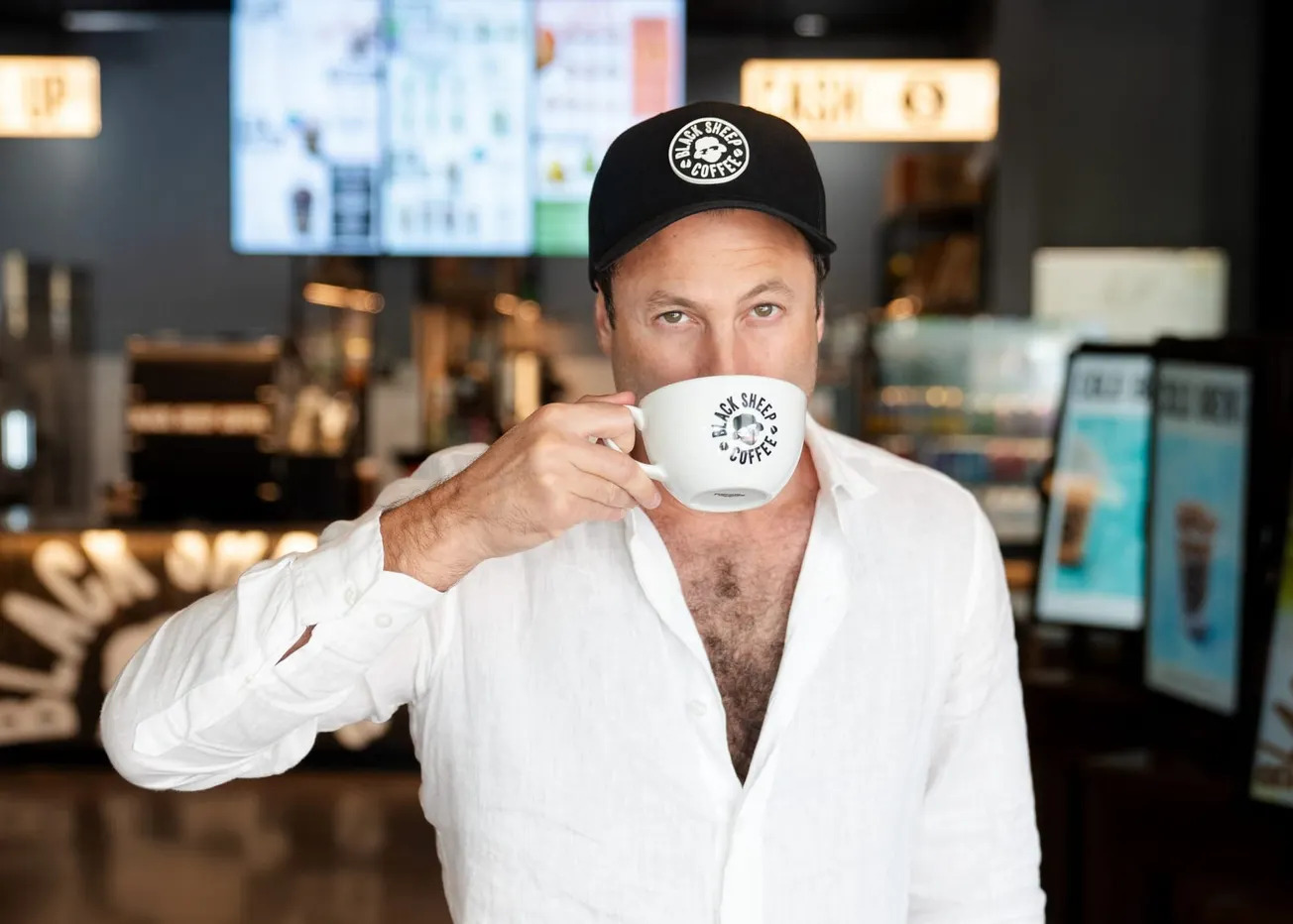
Home has not slowed either. Off a record trading year, it is roughly doubling its London footprint with about 60 new UK sites. The Gulf may be the most telling bet of all. A franchise agreement with the Al Farran Group has carried the brand across the United Arab Emirates, with a fifth store just opened in Dubai and Saudi Arabia next. In Jeddah and Riyadh, where alcohol is scarce or absent, coffee shops absorb the social life that pubs and bars hold in London. "People go to coffee shops to celebrate birthdays, to go on dates," he says. "The rush hour for coffee shops in Jeddah is 11pm."
Ask Shohet what comes next and he offers no fireworks. "I don't have any big announcement like we're entering a completely new country far away," he says. "It's really about doing more of the same, being thorough, and continuing to build." That restraint is the point. With no funds setting deadlines, Gabriel Shohet grows Black Sheep Coffee at the pace the numbers allow, and can stop the moment the coffee stops being worth it. He made peace with being the outsider long ago, and suspects most people quietly are too. "A lot of people identify with being the black sheep of something," he says, "whether it's in their family, at work, or in the life they've chosen." A company named for the bean nobody wanted ended up giving a lot of people a name for how they already felt.
Comments
There are no comments for this story
Be the first to respond and start the conversation.