
From an Iowa Farmhouse to the White House: Xi Jinping’s 41-Year Journey Through America
Four decades, nine visits, and a changing U.S.-China relationship—from a young county official in 1985 to a state visit to Washington in 2026.
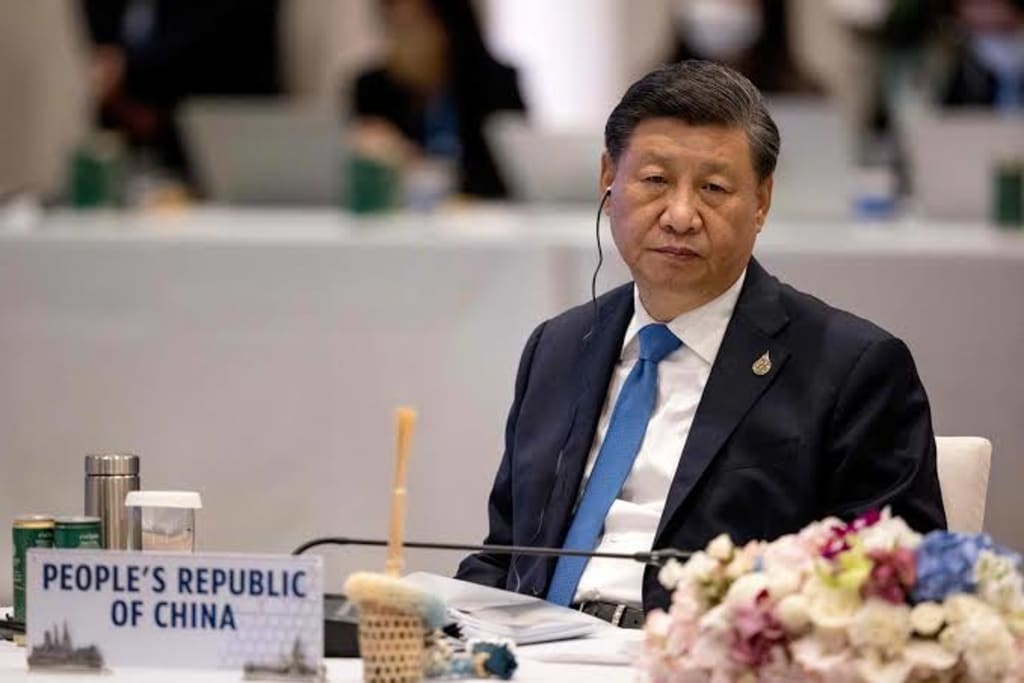
From Zhengding to the White House: Xi Jinping's 41-Year Record of Visits to the United States
In April 1985, Xi Jinping stood in front of the Golden Gate Bridge and had his photograph taken.
He was 31, then secretary of the Communist Party committee in Zhengding County, Hebei. China and the United States had established diplomatic relations only six years earlier. China was still in the early years of reform and opening, and overseas study tours were unusual for many local officials.
The photograph was simple. Its meaning changed with time.
Xi would return to the United States as a municipal party secretary, a provincial party secretary, vice president and, eventually, president of China. His stops would move from Iowa farms and a family home in Muscatine to the White House, Sunnylands, Mar-a-Lago and the United Nations.
On September 23, 2026, Xi is scheduled to begin another U.S. visit, a state visit at the invitation of President Donald Trump. The Chinese Foreign Ministry announced the September 23–25 dates on September 21. The White House says Trump will receive Xi and Peng Liyuan at Joint Base Andrews on September 23, followed by a state arrival ceremony at the White House on September 24.
By the time Xi arrives in Washington, 41 years will have passed since the young county official stood beside the Golden Gate Bridge.
1985: A county official goes to Iowa
Xi's first American trip was built around agricultural study.
According to Chinese official accounts, he led a five-member delegation from Hebei to the United States in April 1985. The trip included San Francisco and Iowa, where the delegation examined agriculture and livestock production. Muscatine became the most memorable stop.
There, Xi stayed with Eleanor and Grant Dvorchak, in the bedroom of their son, who was away at college. He spent two nights in the house.
The detail matters because it is so ordinary. There was no White House ceremony and no presidential motorcade. A young Chinese county official was sleeping in a college student's room in an Iowa town.
The visit also produced photographs that would be used decades later to tell the story of Xi's relationship with the United States. The Muscatine episode became part of his public recollections of his first direct contact with ordinary Americans.
When Xi returned in 2012, the old connection was still usable as a piece of political memory. He met people connected to the 1985 visit, and the town welcomed him back. A local McDonald's electronic sign reportedly displayed a message welcoming him back.
The scale of the visit had changed. The memory had not.
1992, 1993 and 2006: Business before summitry
Xi returned to the United States three more times before reaching the national leadership.
In 1992 and 1993, he was party secretary of Fuzhou. In 2006, he was party secretary of Zhejiang. His work during this period was tied more closely to local economic development, trade and investment than to presidential diplomacy.
That distinction matters when looking backward at the later visits.
A municipal or provincial official visiting the United States was dealing with companies, local governments and economic contacts. A national leader arriving in Washington was dealing with presidents, strategic questions and the international consequences of bilateral decisions.
The United States also changed during those years. The Cold War ended. Trade disputes, intellectual-property conflicts, the Taiwan Strait crisis and the 1999 bombing of China's embassy in Belgrade all complicated the relationship.
Local exchanges did not disappear when relations became difficult. They continued alongside the disputes.
Xi's early American trips therefore belong to a different part of the story from his later meetings with U.S. presidents. They show the period when his exposure to the United States was still connected to provincial and municipal work.
2012: Returning to Muscatine as vice president
Xi returned in February 2012, this time as China's vice president.
The trip lasted five days and took him to Washington, Iowa and California. In Washington, he met President Barack Obama and Vice President Joe Biden. The White House records that Xi spent time with Biden and met Obama at the White House on February 14.
Then came Muscatine.
Xi returned to the town where he had stayed in 1985 and met people associated with that first trip. The visit also included Des Moines and Los Angeles. In Los Angeles, Xi attended a Lakers game and met California and Los Angeles officials. A Congressional Research Service report from the period notes that he was scheduled to reunite in Muscatine with people he had first met in 1985 and to meet Iowa Governor Terry Branstad, who had also been present during the earlier visit.
The contrast was visible without much explanation.
In 1985, Xi had been part of a provincial agricultural delegation. In 2012, he was the Chinese vice president, meeting the U.S. president and vice president before returning to a small Iowa town where the old photographs could still be brought out.
The Muscatine stop gave the visit a personal layer. The Washington meetings gave it a national one.
2013: Two presidents walk at Sunnylands
Xi returned again in June 2013, only months after becoming China's president.
President Obama hosted him at the Annenberg Retreat at Sunnylands in Rancho Mirage, California, on June 7 and 8. The White House described the meeting as an opportunity for the two presidents to discuss bilateral, regional and global issues and to address differences between the two countries.
The setting was deliberately different from a formal Washington summit.
There were no state dinner rituals or White House honor guard. Obama and Xi walked around the estate and spoke without ties. Photographs of the two men walking together became some of the most recognizable images from their early meetings.
The informality had a practical purpose. Contemporary reporting described the meeting as an effort to give the two leaders time to establish a personal relationship while discussing difficult issues, including North Korea, cyberattacks and territorial disputes in Asia.
The setting could soften the ceremony. It could not remove the disputes.
That distinction would recur in later U.S.-China meetings.
2015: The state visit reaches Washington and New York
In September 2015, Xi returned for a state visit.
This time the itinerary moved through several parts of the American political and economic system. Xi visited Seattle, where he toured Boeing's facilities, before traveling to Washington for meetings with Obama. He later went to New York for the United Nations' 70th anniversary events.
The State Department's historical record lists September 24–25, 2015 as Xi's state visit to the United States.
The photographs from the trip looked different from those in Muscatine or Sunnylands. There were state dinners, White House ceremonies and rows of officials. The setting had caught up with the office.
Xi also addressed the U.N. General Assembly in New York. The visit therefore crossed several layers at once: business, bilateral diplomacy and multilateral politics.
By this point, his American itinerary was no longer mainly about seeing how a state, city or company operated. He was representing China in meetings that involved trade, security and international institutions.
2016: Washington again, this time for nuclear security
Xi returned to Washington in March 2016 for the fourth Nuclear Security Summit.
The summit was held on April 1, and Xi delivered a speech on nuclear security. He also met Obama during the summit. The Chinese Foreign Ministry records his arrival in Washington on March 30 and his participation in the summit's official events.
The subject was narrower than the 2015 state visit but no less consequential.
The two governments also issued a joint statement on nuclear security cooperation. The statement referred to bilateral discussions on nuclear security and further cooperation to prevent nuclear terrorism.
The trip added another type of American setting to Xi's record: Washington as a venue for multilateral security negotiations rather than simply a place for a bilateral presidential visit.
2017: Mar-a-Lago and the beginning of the Trump era
In April 2017, Xi met Donald Trump at Mar-a-Lago in Florida.
Trump had taken office only a few months earlier. The two leaders met at Trump's private club for a summit that lasted about two days, according to the State Department's historical record, which lists the meeting on April 6–7.
The timing produced an unusual scene.
During the summit, Trump ordered missile strikes against Syria. The decision became part of the backdrop to his first meeting with Xi.
The relationship that emerged from Mar-a-Lago would soon become dominated by tariffs, trade negotiations and strategic competition. But the first meeting itself was also an attempt to establish a direct relationship between the two leaders.
The location was private. The subjects were not.
2023: Woodside and the return of leader-to-leader contact
Xi did not visit the United States again until November 2023.
The gap was largely a product of the pandemic period and China's restrictions on international travel. In November 2023, Xi traveled to the San Francisco area for the Asia-Pacific Economic Cooperation leaders' meeting and met President Joe Biden at the Filoli estate in Woodside, California. The U.S. State Department records the Woodside meeting on November 12 and Xi's attendance at the APEC leaders' summit from November 12 to 17.
The setting once again carried some of the visual language seen at Sunnylands.
The leaders walked outside. They spoke away from the formal conference room. Cameras followed them.
But the substance had changed sharply since 2013. The United States and China were dealing with trade restrictions, technology controls, military tensions and a deterioration in trust. The meeting nevertheless produced agreements including the resumption of military-to-military communications.
The contrast between Sunnylands and Woodside is useful precisely because the photographs look familiar.
The men were walking again.
The problems were different.
2026: Back to Washington
Xi's next U.S. visit begins on September 23, 2026.
China's Foreign Ministry announced that Xi would make a state visit from September 23 to 25 at Trump's invitation. The White House has scheduled Trump's reception of Xi at Joint Base Andrews on September 23 and a state arrival ceremony at the White House the following morning.
The agenda is expected to include trade and economic relations, artificial intelligence and broader security issues. Recent reporting has also identified Taiwan and other geopolitical questions as areas of disagreement between Washington and Beijing.
This will be Xi's first Washington visit in a decade.
That fact alone gives the itinerary a different feel from 2023, when he came to California for APEC. The 2026 trip is a state visit, with the White House preparing a formal arrival ceremony and state dinner.
The location has changed again.
So has the relationship.
What the photographs leave out
Put the visits in chronological order and three changes are hard to miss.
First is Xi's position.
In 1985, he was a county official from Hebei. Later he became a municipal party secretary, a provincial party secretary, vice president and then president. The protocol surrounding each American trip changed with the office he held.
Second is the subject matter.
The 1985 trip centered on agriculture. The later provincial visits were connected to local economic and commercial relations. By 2012, the itinerary included the White House and meetings with the U.S. vice president and president. After that came strategic dialogue, nuclear security, trade disputes, technology controls and summit diplomacy.
Third is the geography.
The first trip passed through San Francisco and Iowa. Later visits added Washington, Los Angeles, Seattle, New York, Florida and the San Francisco area. The addresses themselves became a record of the changing level of the relationship.
But one place keeps returning.
Muscatine.
It is the one location in the story where Xi's American experience can still be described through a bedroom, a family, a town and people he met before he was a national leader.
That is why the 1985 photograph matters.
The picture does not explain what Xi's later policies toward the United States would be. It does not predict the state of the relationship in 2026. It simply records a younger official standing beside an American landmark.
Forty-one years later, he is scheduled to arrive at Joint Base Andrews for a state visit.
Between those two moments are Iowa farmland, a family home, the White House, Sunnylands, a Boeing factory, the United Nations, Mar-a-Lago and Woodside.
The photographs changed.
The office changed.
The arguments changed.
The road between China and the United States did not.
About the Creator
Jin
Writer of reamstories
https://reamstories.com/jin
Enjoyed the story? Support the Creator.
Subscribe for free to receive all their stories in your feed. You could also become a paid subscriber, letting them know you appreciate their work.
Comments
There are no comments for this story
Be the first to respond and start the conversation.