
Forklift Trucks Market: The Machines Keeping Global Supply Chains Moving
How automation, warehouse expansion, and e-commerce growth are driving the future of material handling
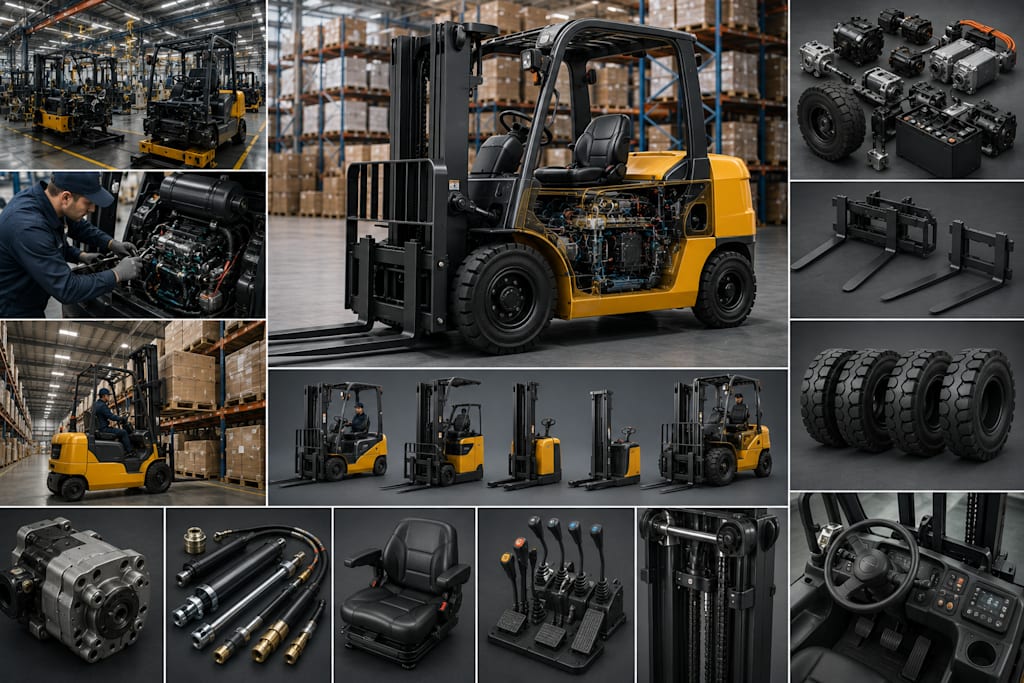
Hook Intro
Every package that reaches a warehouse shelf, every pallet loaded onto a truck, and every container moved through a distribution center relies on one essential machine working behind the scenes—the forklift truck.
While consumers rarely notice them, forklift trucks are critical to industries ranging from manufacturing and logistics to retail and construction. As supply chains become faster and more complex, businesses are investing in smarter, safer, and more efficient material handling solutions. At the center of this transformation is the Forklift Trucks Market, where innovation is helping companies improve productivity while reducing operational costs.
From electric forklifts to autonomous warehouse vehicles, the industry is evolving rapidly to meet the demands of modern commerce.
Why Forklift Trucks Matter Today
The growth of e-commerce, industrial production, and global trade has increased the need for efficient material handling equipment. Warehouses and distribution centers must process higher volumes of goods while maintaining speed, accuracy, and safety.
Forklift trucks help businesses move, store, and organize materials efficiently, making them indispensable across multiple industries. Modern forklifts offer improved maneuverability, enhanced safety features, and greater energy efficiency compared to earlier generations.
According to Mordor Intelligence, the Forklift Trucks Market size is projected to grow from USD 76.31 billion in 2026 to USD 93.60 billion by 2031, registering a CAGR of 4.17% during the forecast period. Growth is being supported by expanding warehouse infrastructure, increasing industrial activity, and rising demand for automated material handling solutions.
Understanding Forklift Trucks Market Size and Share
The Forklift Trucks Market size continues to expand as companies modernize warehouses and invest in advanced logistics operations. Rapid growth in e-commerce fulfillment centers and distribution networks is creating substantial demand for forklift fleets worldwide.
Electric forklifts account for the largest share of the market, representing 69.54% of total sales. Their lower operating costs, reduced emissions, and suitability for indoor operations have made them the preferred choice across warehouses and manufacturing facilities.
The Forklift Trucks Market share is led by Asia-Pacific, which holds 47.91% of the global market. Strong manufacturing activity, rapid industrialization, and significant investments in logistics infrastructure continue to drive regional demand.
Forklift Trucks Market Trends Driving the Industry
Several Forklift Trucks Market trends are reshaping the material handling landscape.
Electric forklifts are rapidly replacing internal combustion engine models.
Automation technologies are improving warehouse productivity and operational efficiency.
Autonomous forklifts are gaining traction in large distribution centers.
Lithium-ion batteries are enhancing equipment performance and reducing charging times.
Smart fleet management systems are enabling real-time monitoring and predictive maintenance.
These innovations are helping companies optimize operations while improving workplace safety and sustainability.
Why Businesses Are Investing in Modern Forklift Fleets
Efficiency has become a critical competitive advantage in logistics and warehouse operations. Companies are under constant pressure to move goods faster while controlling labor and operational costs.
Modern forklift trucks offer higher productivity, lower maintenance requirements, and improved energy efficiency. Advanced telematics systems also provide valuable data that helps operators maximize equipment utilization and minimize downtime.
This trend continues to strengthen the broader Forklift Trucks Market analysis, where investments in automation and electrification are becoming increasingly important for long-term operational success.
The rapid expansion of e-commerce fulfillment centers is further accelerating demand for advanced material handling equipment.
Challenges Facing the Industry
Despite strong growth prospects, the industry faces several challenges. High upfront costs for electric and autonomous forklifts can create adoption barriers for smaller businesses.
Manufacturers also face supply chain disruptions, rising raw material costs, and increasing competition within the material handling equipment sector. Battery sourcing and charging infrastructure requirements present additional considerations for fleet operators transitioning to electric equipment.
Workforce training and safety compliance remain important priorities as new technologies become more integrated into warehouse operations.
Forklift Trucks Market Forecast and the Road Ahead
The Forklift Trucks Market forecast remains positive as warehouse automation, industrial expansion, and e-commerce growth continue to drive equipment demand.
Future forklift trucks are expected to feature greater automation, advanced connectivity, enhanced battery performance, and increased integration with warehouse management systems. Autonomous material handling solutions are likely to become more common as businesses seek higher productivity and operational efficiency.
As supply chains continue evolving, forklift trucks will remain a critical component of modern logistics and industrial operations.
Final Thought
Forklift trucks may not attract the same attention as delivery vehicles or automated warehouses, but they remain essential to the movement of goods around the world.
From manufacturing plants and ports to fulfillment centers and retail warehouses, these machines help keep global supply chains running efficiently every day.
Do you think fully autonomous forklifts will become standard in warehouses over the next decade, or will human-operated equipment continue to dominate material handling operations?
About the Creator
Enjoyed the story? Support the Creator.
Subscribe for free to receive all their stories in your feed.
Comments
There are no comments for this story
Be the first to respond and start the conversation.