
For Thirty Years, Everyone Called Her Madame de Givenchy. No One Asked Her Name.
A wealthy marriage gave her a title, a château, and a trust fund. It never gave her the key.
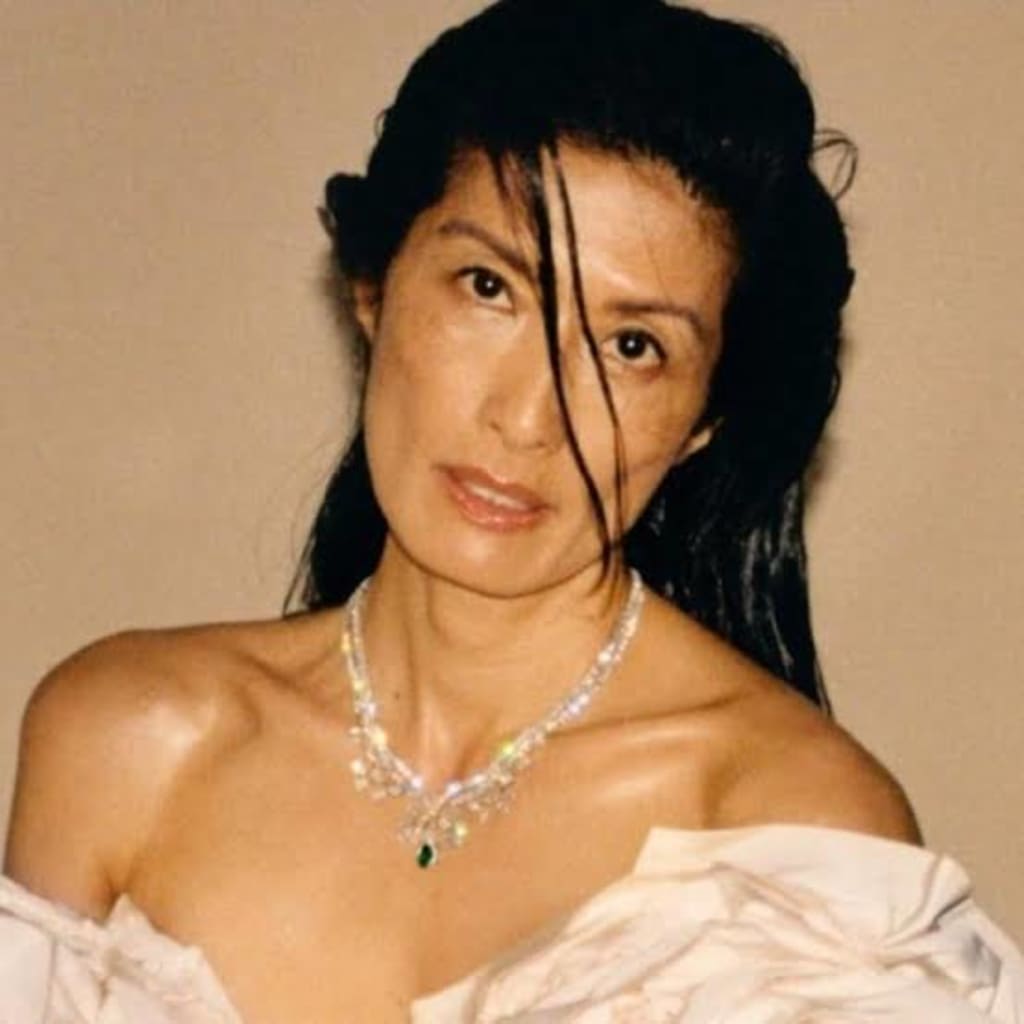
Suzi de Givenchy doesn’t remember the first time someone called her Madame de Givenchy.
She remembers that after a while, everyone did. The market vendors in the small town in the south of France. Her husband’s friends. The teachers at school. The parents of her sons’ classmates. They were polite. They called her Madame de Givenchy with French respect and a distance she could not measure.
No one asked what her name was.
Her name was Huang Xianxi. She was born in Hong Kong in 1966. When she was four, she went with her mother to Long Island. Her mother worked several jobs. After school, Suzi waited tables and swept hair off the floor at a salon. Four children in the family. She was the oldest. The neighborhood was all white. With an East Asian face, she learned early what it meant to stand outside.
She learned it in small ways. Conversations paused when she walked into a room. Classmates invited each other to birthday parties and not her. Her mother came home exhausted and still cooked dinner. Being outside was not always an insult. Sometimes it was just a fact. The sky was blue. The grass was green. She was outside.
At sixteen she went to Manhattan to study art. She worked while she studied. She spent hours in museums and libraries. She looked at paintings until her feet hurt. She read until the library closed. She didn’t know what she was looking for. She wanted to find it anyway. On her twentieth birthday, she took all her savings and bought a one-way ticket to Paris. Before boarding, she called her mother. “I’m going to see,” she said.
Her mother said, “Go.”
In Paris she met Hubert. He took her to their first restaurant. She didn’t know how to order in French. He said, “I’ll do it.” Later she learned French and how to cook. She learned to serve food at family dinners. They married. She took the name de Givenchy. The Givenchy family had existed for centuries. She was the first Asian daughter-in-law.
At the wedding, some people cried. Some laughed. Some took photos. She remembers standing beside her husband in a white dress, holding flowers. He held her hand tightly. She remembers thinking she had finally arrived somewhere. She remembers thinking this was the place she would stay.
After the wedding they moved to the south of France. The town was quiet. The days were slow. She had three sons. She learned drafting software to help her husband revise architectural drawings. Often she worked until dawn. Her husband said, “I couldn’t finish without you.” She said, “Go to sleep.” She turned off the computer. The screen reflected her face. She paused, then went to wash the dishes.
She was not unhappy. Her husband loved her. Her children were healthy. Life was comfortable. Estates, jewelry, dinners, holidays. The trust fund guaranteed everything. She did not need to worry about money.
Then she discovered something. She had the right to use. She did not have the right to belong.
The house could be lived in. It could not be sold. Jewelry could be worn. It could not be given away. Trust income arrived on time. The principal, the shares, the family decisions stayed out of reach. No one was guarding against her. The rules had been written that way. Blood was the only key. A spouse was an outsider.
She never asked why. She kept cooking and raising the children. She helped her husband revise drawings. She did not complain or fight. She did not fully understand what she had lost, because she had never been given it. She only knew something was missing.
At a family gathering, someone at the long table called her “Madame de Givenchy.” She answered. Then she realized that the whole evening, no one had called her by her name.
She was not being excluded. She heard it.
In 2016, her husband died suddenly of a heart attack. He was forty-nine.
The trust lawyer came to the house. The documents were thick. The lawyer turned to a page and said, “You have the right to live here for life.”
She asked, “Can I sell it?”
The lawyer closed the file. “We’ll discuss that another time.”
There was no other time.
She received part of the personal estate and fixed trust income. She would not lack food or clothing. But the scrutiny and hidden prejudice her husband had shielded her from now fell on her. The aristocratic social circle faded. The blood relatives remained polite. The trust operated by the book. No one harmed her. All the doors slowly closed.
She was fifty. Three children. A large house. A France with an accent.
Every evening at five, she stood in the kitchen. In the past, at this time, she had to cook for four people. Now she cooked for three. She put the extra portion in the refrigerator. The next morning, she threw it away. She did this for seven days.
On the eighth day, she cooked only for three.
She wrote in her diary. She had insomnia. At three in the morning, she opened the refrigerator light and looked inside. Nothing. She closed the door and went back to lie down. She did not cry or call anyone. She lay in the dark and waited for morning.
Three years.
She did not suddenly understand. She survived it day by day. One day, she found the stub of that one-way ticket from when she was twenty. She looked at it for a long time. She remembered the girl who bought it. That girl was afraid. She bought it anyway.
Then she went to a private party. A casting director saw her. “Have you ever thought about being a model?”
She laughed. “I’m fifty-two.”
“I know.”
She hesitated for six months. Then she signed up for a modeling class. At her first audition, she waited two hours in the hallway and ate a sandwich. She was rejected. The second time, she walked the runway for forty minutes. At home, she found bruises on her ankles. She took a photo and sent it to her son. “Look, Mom gets hurt too.”
Her son replied, “Cool.”
She began auditioning, getting rejected, trying again. She did not rely on the name de Givenchy. Like every new model, she queued and waited for notifications. She was chosen or not chosen. She got Balenciaga. She got Lemaire. She appeared on the cover of VOGUE. The photographer said, “No retouching.” She said, “Okay.”
She saw the wrinkles and spots, the marks of more than fifty years. She did not let the retoucher touch them. For decades, people had seen her as her husband’s wife or her children’s mother. Now they saw her. The feeling was quieter than triumph. She was standing in the right room at last.
Someone asked her why she still walked in shows at this age. She said, “Because I still can.”
She no longer waited for others to call her Huang Xianxi. She called herself Huang Xianxi.
The first time she went to Paris, it was a one-way ticket. Now she had a ticket back to the south of France. Going back meant returning to herself.
Before boarding, she called her mother. Her mother was old now, her voice very light. “Mom, I’m going to walk in a show.”
Her mother said, “Go.”
She hung up and held the ticket tightly in her hand. Just like when she was twenty.
At twenty, she had left. Now she was going back.
About the Creator
Jin
Writer of reamstories
https://reamstories.com/jin
Enjoyed the story? Support the Creator.
Subscribe for free to receive all their stories in your feed. You could also become a paid subscriber, letting them know you appreciate their work.
Comments
There are no comments for this story
Be the first to respond and start the conversation.