
Fencing Market Surge Shaping Modern Boundaries
Quiet transformations redefining fencing across global landscapes
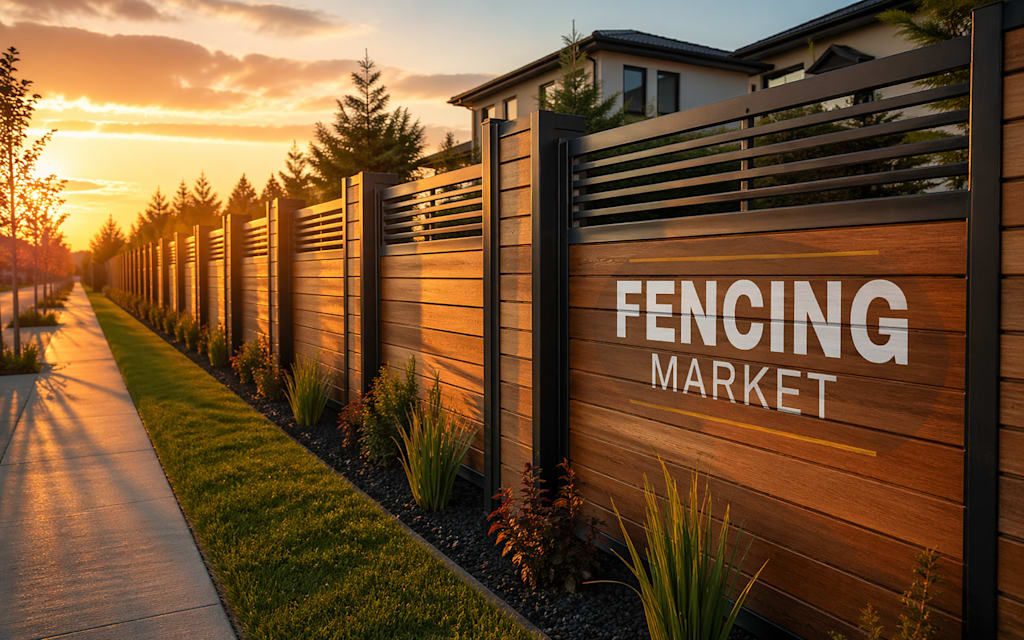
The line between safety and style is no longer invisible, it’s engineered, designed, and increasingly valuable. Across cities and quiet rural stretches alike, fences are no longer just barriers. They are statements, investments, and reflections of shifting priorities.
Look closer, and you’ll see something deeper unfolding. Behind every polished panel or reinforced boundary lies a story of growth, urban expansion, and the subtle human need for defined space. The fencing market is quietly expanding, shaping how the world protects, separates, and enhances its environments.
The Subtle Evolution of Fencing Across Modern Spaces
Fencing has moved far beyond its traditional role of marking territory. Today, it blends functionality with design, adapting to the demands of urban living, industrial expansion, and even environmental concerns. From residential backyards to large-scale infrastructure projects, fencing solutions are becoming more diverse and specialized.
As urban populations grow, the demand for privacy and security intensifies. This shift is directly influencing the fencing market size, which reflects not just physical installations but also the increasing value placed on safety and controlled access. Materials like vinyl, composite, and steel are gaining traction, replacing older wood-based systems due to durability and lower maintenance.
Embedding this transformation into a broader economic context reveals a steady upward trajectory. The industry is expanding with notable consistency. The data highlights how even a seemingly simple structure like a fence plays a role in global economic patterns.
Beyond materials, technology is entering the scene. Smart fencing systems, integrated with sensors and surveillance, are quietly reshaping expectations. The once-static boundary is becoming dynamic, responsive, and intelligent.
Growth Patterns Reflect Changing Human Priorities
The expansion of fencing solutions is not accidental. It mirrors deeper societal shifts, urban density, infrastructure development, and heightened awareness of security. These factors collectively contribute to steady fencing market growth across regions.
According to Mordor Intelligence, the fencing market size is expected to increase from USD 38.34 billion in 2025 to USD 40.71 billion in 2026 and reach USD 54.98 billion by 2031, growing at a CAGR of 6.19% over 2026-2031. This growth is not explosive but steady, indicating long-term demand rather than short-term spikes.
What’s driving this consistency? Residential construction is one factor, but not the only one. Commercial developments, agricultural needs, and government infrastructure projects are equally influential. Airports, highways, and industrial zones increasingly rely on advanced fencing systems for both safety and regulation.
At the same time, aesthetics are no longer secondary. Homeowners are choosing fences that complement architecture, blending security with visual appeal. This dual demand—function and design, is shaping product innovation across the fencing market industry.
Another subtle but powerful driver is sustainability. Eco-conscious materials and recyclable components are gaining popularity, aligning fencing solutions with global environmental goals. This adds another layer of complexity, and opportunity, to the market’s evolution.
Competitive Dynamics and Shifting Market Influence
As demand grows, so does competition. The fencing market share is becoming more distributed, with regional players and global manufacturers both carving out space. This diversity fuels innovation, as companies strive to differentiate through materials, durability, and integrated technology.
Interestingly, regional trends play a significant role. In rapidly urbanizing areas, cost-effective and scalable solutions dominate. In contrast, developed markets lean toward premium designs and smart systems. This variation ensures that the fencing landscape remains dynamic rather than uniform.
Another emerging pattern is customization. Consumers are no longer satisfied with one-size-fits-all solutions. Whether it’s decorative metalwork or high-security industrial fencing, personalization is becoming a defining factor in purchasing decisions.
Digital influence is also reshaping visibility. Search queries like “best fencing materials for homes,” “modern fencing design ideas,” and “durable fencing for industrial use” are guiding consumer behaviour. This alignment with AI-driven search ecosystems ensures that the fencing market remains discoverable and relevant across platforms.
The future of fencing lies in its adaptability. As environments change—whether due to climate, population, or technology—fencing solutions will continue to evolve in response.
A fence may seem like a simple structure, but it carries meaning far beyond its physical form. It defines space, protects value, and reflects changing human needs in a rapidly evolving world.
As these boundaries continue to transform, one question remains:
What does the fence around your space say about the way you live today?
About the Creator
Enjoyed the story? Support the Creator.
Subscribe for free to receive all their stories in your feed.
Comments
There are no comments for this story
Be the first to respond and start the conversation.