
Experts: Cermat Madani Safe Driving Rewards Must Be Paired with Strict Enforcement to Succeed
Road safety advocates welcome insurance premium discounts for low-risk drivers but warn that without calibrated penalties and income-based fines, the initiative will fail to change entrenched driving behaviors.

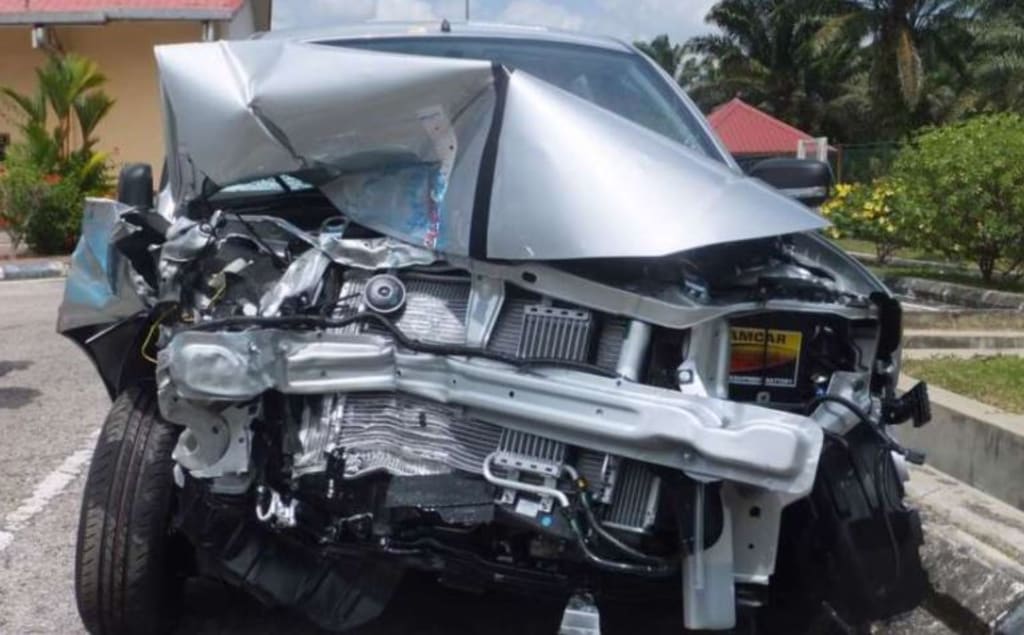
The introduction of the Cermat Madani initiative, which offers safe drivers up to an additional 10% discount on motor insurance premiums, has been widely praised as a progressive step toward reducing road accidents in Malaysia. However, road safety experts are now cautioning that rewards alone are insufficient. Without a parallel strengthening of enforcement mechanisms, specifically the Kejara demerit points system and income-calibrated fines, the initiative risks becoming a symbolic gesture rather than a transformative road safety tool.
The Carrot: Rewarding Low-Risk Drivers
Launched last month by the Transport Ministry, Cermat Madani leverages data from the MyJPJ mobile application to identify low-risk motorists. Eligible drivers can now stack this new 10% discount on top of the existing maximum No-Claims Discount (NCD) of 55%, creating a significant financial incentive for maintaining a clean driving record.
Mas Tina Abdul Hamid, General Manager of the Vehicle Theft and Accident Reduction Council (VTAREC), described the initiative as a behavioral shaping tool. “Drivers who are motivated by discounts will definitely adopt safer driving habits,” she stated. By linking tangible financial benefits directly to verified safe driving behavior, the government is attempting to make road safety personally profitable for individual motorists.
The Stick: The Case for Calibrated Enforcement
Despite the optimism surrounding Cermat Madani, VTAREC and other experts insist that the reward system must be mirrored by a robust punitive framework. Mas Tina emphasized that the Kejara demerit points system needs stricter enforcement to complement the incentives. More controversially, she advocated for income-based fines, arguing that flat-rate penalties have lost their deterrent effect among wealthier offenders.
“Income-based fines ensure that penalties are not treated lightly by wealthier drivers and that risky behaviour is discouraged across all income groups,” Mas Tina explained. Under the current system, a RM300 speeding fine may represent a significant burden for a lower-income driver while being negligible for a high-earner, effectively creating a two-tiered justice system where road safety compliance becomes optional for those who can afford the penalty. Income-calibrated fines, modeled after systems in Finland and Switzerland, would ensure that the financial sting of a traffic violation is proportionate to the offender’s ability to pay, restoring the deterrent value of enforcement.
Protecting Victims of Uninsured Motorists
Beyond prevention, the conversation also addressed post-accident recourse. The General Insurance Association of Malaysia (PIAM) clarified that motorists who are not at fault in crashes involving uninsured or untaxed vehicles still have pathways to compensation.
Victims can pursue legal action against the at-fault party personally. For bodily injuries caused by uninsured third parties, claims can be submitted to the Motor Insurers’ Bureau (MIB), which may offer discretionary compensation subject to its terms and conditions. PIAM stressed the critical importance of documentation at accident scenes, urging drivers to collect:
Name and contact details of the other party
Photocopies of IC and driving license
Photographs of the accident scene
A police report
While victims can also claim under their own comprehensive policy, doing so may affect their NCD entitlement. PIAM advised consulting legal professionals and contacting insurers directly for guidance on navigating these complex claims processes. All policyholders were also reminded to utilize their insurer’s 24-hour roadside assistance services, which include geotracking, towing to authorized panel workshops, and claims management support.
Toward a Holistic Road Safety Ecosystem
The consensus among experts is clear: Cermat Madani represents a necessary evolution in Malaysia’s road safety strategy, but it cannot succeed in isolation. Behavioral change requires both positive reinforcement and credible consequences. Without income-calibrated fines and consistent Kejara enforcement, the discount scheme may simply reward those who were already safe while failing to deter the high-risk drivers responsible for the majority of fatal accidents.
As Malaysia moves forward with this initiative, the true test will be whether authorities can match the sophistication of the reward mechanism with equally sophisticated enforcement. Only then can Cermat Madani fulfill its promise of making Malaysian roads safer for everyone, regardless of income level or driving history.
About the Creator
Mark Lim
Hi I am mark an automotive student and a car, tech and food enthusiast ! Im gonna try and post daily & hope you enjoy what I write and do share my page with people you know. I would gladly appreciate it! Cheers
Enjoyed the story? Support the Creator.
Subscribe for free to receive all their stories in your feed.
Comments
There are no comments for this story
Be the first to respond and start the conversation.