
Everyone Thinks Kathy Hilton Married Into Money. The Trust Fund Tells a Different Story.
Inside the surname, the locked trust, and the cash flow that kept her in the room.
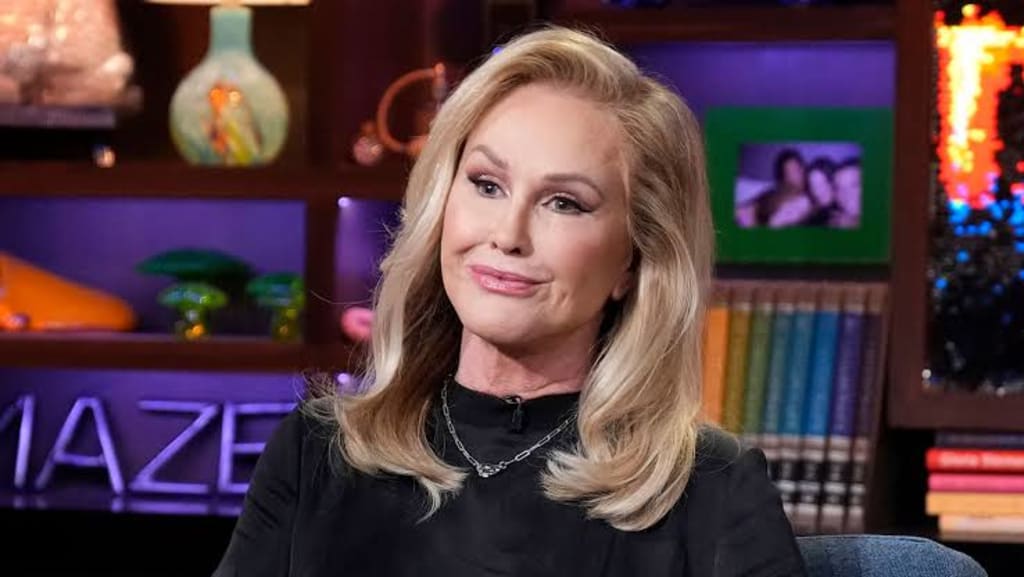
When Kathy Hilton appears on The Real Housewives of Beverly Hills, the comments say “relaxed,” “elegant,” “wealthy lady.”
She sits on a Bel Air sofa. Her top is cleanly cut. She speaks slowly. She smiles slowly. The camera moves past vases, frames, and cushions placed with care. A viewer could decide she has never worried about money.
That viewer would be wrong.
Kathy was born in New York in 1959. Her parents divorced. Her mother remarried. That marriage gave her the half-sisters the public later knew: Kim Richards and Kyle Richards. She was not a Hilton by blood. She was not raised in old-money circles. She worked as a child actor and model. She attended Montclair Preparatory School in Los Angeles and went to school with Michael Jackson. She learned how cameras chew people up. She learned how quickly connections go cold.
In 1979, at 20, she married Richard “Rick” Hilton. Rick is a grandson of Conrad Hilton, the founder of Hilton Hotels. After the wedding, Kathy changed her surname to Hilton.
The surname got her through doors. Doormen knew it. Dinner invitations spelled it right. The media filed her under “the Hiltons.” The surname did not change the beneficiary structure in trust documents. It did not change who owned the foundation assets.
Kathy never treated the name as proof of money.
The 2007 Will
The Hilton family asset plan explains her position.
In December 2007, Barron Hilton announced he would give 97% of his personal net worth, about $2.3 billion, to the Conrad N. Hilton Foundation. Barron was Rick’s father and Paris and Nicky’s grandfather. He gave about $1.2 billion at the time. The rest was to arrive after his death.
The remaining 3%, about $135 million, went to family descendants. Media estimates put the average share at about $5.6 million across 24 family members.
For an ordinary family, $5.6 million is a fortune. For a Hilton collateral branch with a Bel Air mansion, dinner parties, private schools, and class expectations, it was not enough to stop working.
Barron left no control of the hotel empire to his descendants. He followed his father Conrad, who died in 1979 and left nearly everything to the foundation. The Hilton name still carried weight. The hotels still ran around the world. The core assets were locked away.
Rick did not wait for a family check. He co-founded Hilton & Hyland, a high-end real estate firm. Later he and his son Barron and daughter-in-law Tessa launched a luxury brokerage brand. Celebrity Net Worth estimates Rick and Kathy’s combined net worth at about $350 million. That is more than their richest child, Paris.
They earned it. It did not come from the old hotel fortune.
She Took the Name. She Did Not Get the Keys.
Kathy married into a closed trust system.
An outside spouse gets class status, a comfortable family life, and a seat at social events. She does not get asset control. Marriage is a contract. It can change. It can end. Children are blood. That fact does not reverse.
Kathy knew this. She did not stop at “Mrs. Hilton.”
In the 1980s, she ran an antique store, The Staircase, on Sunset Plaza. In 2002, she started selling products on QVC. In 2007, she launched a skincare line on HSN. In 2008, she launched a perfume, “My Secret.” From 2012, she designed the Kathy Hilton Collection dress line, sold at Neiman Marcus, Saks Fifth Avenue, and Nordstrom.
None of these businesses became a phenomenon. No company went public. No brand became a giant. Together, they formed an independent economic record that lasted decades.
Trademark registrations, product launch filings, media reports, and public partnership notices are legal evidence of independent work. If a marriage changes, if assets are divided, if status is challenged, those records prove she was not fully dependent.
At a wealthy marriage’s negotiating table, a spouse with continuous independent income and a spouse who is fully supported are not close. The fully dependent spouse has a bottom line of zero. Anyone with ongoing economic activity has a way out.
Kathy did not chase one-time windfalls. She did not gamble on aggressive markets. She stayed present. She kept working. She kept leaving a record.
Four Children, Four Directions
Kathy and Rick have four children: Paris, Nicky, Barron, and Conrad.
In the Hilton order, blood comes first. Rick carries the family blood. He was born with a fixed seat in the family chart. Kathy was brought in from outside. No matter how long she stays, how much she gives, or how well she builds, the family habit is to see her as “the one who married a Hilton.”
Marriage can end. Blood descent cannot be undone.
The four children she bore carry Hilton blood. They were born “Hilton children.” If the marriage changes, her status as the birth mother of four Hilton descendants stays in the family chart.
She watches their public images and career paths closely. Their dignity, success, and social value affect her weight inside the family.
Four children, four directions.
Paris went for global fame. She did reality TV, launched perfumes, and built a personal brand. Her money does not depend on Hilton hotel equity.
Nicky built a fashion career. In 2015, she married James Rothschild, an heir to the Rothschild family. That marriage connected old-money networks and strengthened the Hilton branch’s social base. Analysts estimate the Hilton fortune at about $1.5 billion and the Rothschild fortune at $12 billion or more. The match reaches across real estate, banking, fashion, and hotels.
Barron works in real estate. He partnered with his father Rick on a new brokerage brand and carries the family’s property tradition.
Conrad stays low-profile. He takes a quiet elite path and avoids public friction.
The four paths do not overlap. They cover different ground: entertainment, fashion, real estate, and the elite circle. One holds the old-guard base. One keeps independent choice. Two stay close to traditional industry and a steady route.
Who Gets to Tell the Family Story
In wealthy circles, the public version of a family, its media persona, and its story tone affect prestige, business value, and the marriage market for descendants.
If outsiders control the story, the family’s intangible assets can be priced and picked apart by rebellious relatives, angry former employees, or scraps of public opinion.
Kathy refused to follow her sister’s reality-TV story in her early years. Later she joined The Real Housewives of Beverly Hills as a guest and main cast member. She controlled the family’s camera rhythm. She knew where the camera sat. She knew what to say and what to hold back.
In 2020, Paris Hilton’s documentary This Is Paris aired. Paris said she suffered physical and psychological abuse at Provo Canyon School, a boarding school in Utah. She spent 11 months there.
Kathy responded in public. She said she fell into depression after watching the documentary. She said, “We thought we were saving Paris. How ironic.” She also said Paris was “completely out of control” at the time, skipping school and running away from multiple schools.
That response was a fight over the story. The outside label for Kathy was “negligent mother.” She publicly revisited the emotions and used her own account to challenge that label and reshape her image as a mother.
She did not leave the story to public opinion.
The Cost
Sending Paris to boarding school was the decision with the longest reach in Kathy’s married life.
Paris was an adolescent then. She was rebellious. She skipped school. She ran away from multiple schools. Kathy faced a daughter she could not control. She used the method she knew: discipline, closed management, and pressure to make her daughter fit elite standards.
She did not see that a high-pressure boarding environment would break parent-child trust and make adolescent trauma worse. Paris later said her mother apologized after learning the truth. Their relationship improved. The shadow and the emotional gap from that time did not disappear.
The marital power structure behind the decision matters more.
Rick stayed relaxed. On the surface, he let Kathy decide. It looked like respect for her role at home. But sending the child away was a joint decision. In the end, the estrangement, the daughter’s trauma, the public backlash, and the criticism fell on Kathy. Rick did not carry the same cost.
She had the visible power to decide. She alone carried the emotional damage when the decision failed. Her husband had hidden final say. He did not pay the same price.
That is the deepest structural risk in her marriage.
Stay in the Room
Kathy’s survival rule was simple: keep working, keep a record, and stay visible.
She did not chase the top of any market. Her antique store, QVC products, HSN skincare line, perfume, and dress line were not business miracles. Linked together, they formed an economic record that lasted decades.
She kept her businesses away from her husband’s real estate work. She did not overlap, intersect, or compete. She did not fight for his market, his resources, or his family voice. She built her own territory. That protected her inside the marriage and kept the family power balance from tipping.
She also kept a steady public presence. She did not over-hype. She did not vanish. Long-term positive appearances and an elegant persona kept her small Hilton branch with a social seat, commercial invitations, and public voice. Her public influence reinforced her position inside the marriage.
She took the convenience of the surname. She did not bet her life on family gifts.
Grandchildren Change the Room
In later life, eight grandchildren arrived. Kathy’s role shifted from mother to grandmother and family elder.
New pressure came with it. She had spent her life staying tense, working, and fighting to stay visible. Now she also had to maintain a three-generation family front, the family reputation, the grandchildren’s images, and the family name.
She did not want to fade from the main story, become a background elder, or watch the position she built thin out as the family changed hands.
The family weight, independent identity, and irreplaceability she fought for still need care, work, and output as generations change.
She cannot slack.
Dignity Is Rented
Kathy Hilton’s story is not a Cinderella tale.
When she married Rick, the Hilton core assets were already locked by Barron’s donation plan. Ancestral wealth was untouchable. Trusts were tight. Large inheritances were nearly gone. Class dignity was expensive. On the surface, she looked carefree. In practice, she had no guaranteed asset that could support her for life.
Her skill was not in fighting for the family cake. She saw the cake had been cut away. She built her own plate.
Continuous work held her economic identity. Children anchored her family seat. Narrative power protected intangible assets. Lifelong presence kept her from being pushed aside.
Her weaknesses are clear too. She outsourced parenting when anxiety overloaded her. She replaced emotional connection with rigid dignity training. She carried the full cost of failed decisions inside an unequal marriage.
Top families give gifts with chains. The surname, the dinners, and the luxuries can be handed to you. The underlying assets, core inheritance rights, and bloodline voice still favor the male direct line.
For women inside complex asset systems, the stronger move is to build their own assets, reputation, and class foundation. That gives them and their children a lifelong right to choose.
About the Creator
Jin
Writer of reamstories
https://reamstories.com/jin
Enjoyed the story? Support the Creator.
Subscribe for free to receive all their stories in your feed. You could also become a paid subscriber, letting them know you appreciate their work.
Comments
There are no comments for this story
Be the first to respond and start the conversation.