
EV Taxi Market: Electrifying the Future of Urban Mobility
How electric taxis are transforming transportation with cleaner, smarter, and more cost-efficient mobility
Hook Intro
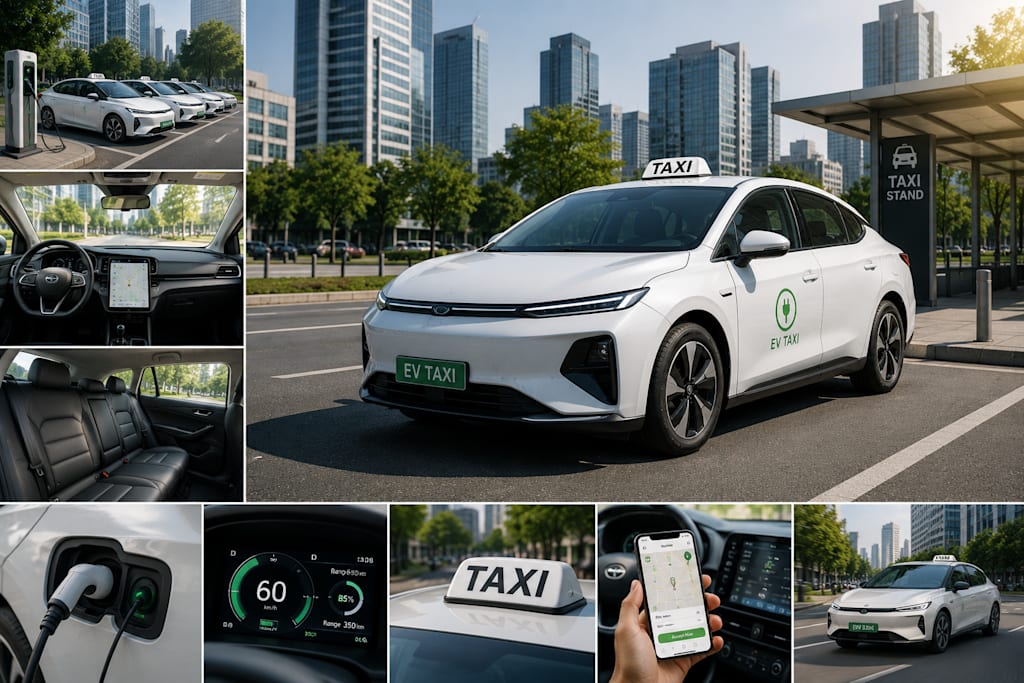
A passenger books a ride through an app. Within minutes, a quiet electric vehicle arrives at the curb. There is no engine noise, no fuel smell, and no vibration at traffic lights. The journey feels familiar, yet it represents a major shift in how cities move people.
As governments push for lower emissions and ride-hailing platforms pursue sustainability goals, electric taxis are becoming an increasingly important part of urban transportation. At the center of this transformation is the EV Taxi Market, where electrification, digital platforms, and smart mobility solutions are reshaping the future of public transport.
Why EV Taxis Matter Today
Cities around the world are facing growing challenges related to air pollution, fuel costs, and traffic congestion. Electric taxis offer a practical solution by combining zero tailpipe emissions with lower operating expenses.
Compared to conventional taxis, EV taxis benefit from reduced fuel costs, fewer maintenance requirements, and improved energy efficiency. For fleet operators, these advantages can significantly improve profitability while supporting environmental goals.
According to Mordor Intelligence, the EV Taxi Market is expanding rapidly as governments introduce zero-emission transportation policies and ride-hailing companies accelerate their electrification commitments. The growing availability of charging infrastructure is further supporting adoption across major cities worldwide.
Understanding EV Taxi Market Size and Share
The EV Taxi Market size is growing as fleet operators, ride-hailing platforms, and public transportation providers increasingly invest in electric mobility solutions.
Battery electric vehicles currently account for the largest share of adoption, supported by lower operating costs and improving battery performance. Four-wheeler taxis remain the dominant vehicle category, while electric two-wheelers are gaining momentum in densely populated urban markets.
The EV Taxi Market share is led by Asia-Pacific, driven by strong EV manufacturing capabilities, supportive government policies, and rapid urbanization. Emerging markets are also witnessing significant growth as cities invest in sustainable transportation infrastructure.
EV Taxi Market Trends Driving the Industry
Several EV Taxi Market trends are accelerating industry growth.
Expansion of fast-charging networks across urban centers and airports.
Growing adoption of battery-as-a-service and subscription models.
Increasing electrification commitments from ride-hailing platforms.
Advances in battery technology that improve range and efficiency.
Smart fleet management systems powered by AI and real-time data analytics.
These innovations are helping operators maximize vehicle utilization while reducing ownership costs and environmental impact.
Why Operators and Drivers Are Embracing EV Taxis
One of the biggest advantages of EV taxis is their lower total cost of ownership. Electricity is often cheaper than fuel, while electric drivetrains require fewer maintenance interventions compared to conventional vehicles.
For drivers, lower operating costs can improve earnings. For fleet operators, electrification helps meet sustainability targets while reducing long-term expenses. Passengers also benefit from quieter rides and a cleaner transportation experience.
These factors continue to strengthen the broader EV Taxi Market analysis, where economic benefits increasingly complement environmental advantages.
Challenges Facing the EV Taxi Transition
Despite strong momentum, several challenges remain.
Charging downtime can reduce vehicle availability, particularly in cities with limited charging infrastructure. Battery replacement costs and uncertainty around long-term resale values also influence investment decisions for operators. Additionally, growing EV demand may place pressure on urban power grids if infrastructure development fails to keep pace.
However, ongoing investments in fast-charging technology, battery innovation, and energy management systems are helping address many of these concerns.
EV Taxi Market Forecast and the Road Ahead
The EV Taxi Market forecast points toward robust growth as governments, mobility platforms, and fleet operators continue investing in electrified transportation. Increasing urbanization, supportive regulations, and rising consumer acceptance of sustainable mobility solutions are expected to drive long-term market expansion.
Future developments are expected to include faster charging technologies, larger battery capacities, AI-powered fleet optimization, and deeper integration with smart city infrastructure. As these innovations mature, EV taxis will become even more efficient and accessible.
The transition to sustainable transportation is no longer a future concept. For many cities, it is already happening one electric ride at a time.
Final Thought
Urban mobility is evolving rapidly, and electric taxis are proving that cleaner transportation can also be practical, profitable, and convenient. As technology advances and infrastructure expands, EV taxis may become the standard rather than the alternative.
About the Creator
Enjoyed the story? Support the Creator.
Subscribe for free to receive all their stories in your feed.
Comments
There are no comments for this story
Be the first to respond and start the conversation.