
Europe’s Democratic Backslide Deepens Despite Stable Institutions
A new report from the International Institute for Democracy and Electoral Assistance (International IDEA) reveals that democracy in Europe has deteriorated more than it has improved over the past five years, with 77 recorded setbacks against just 42 improvements across the continent.

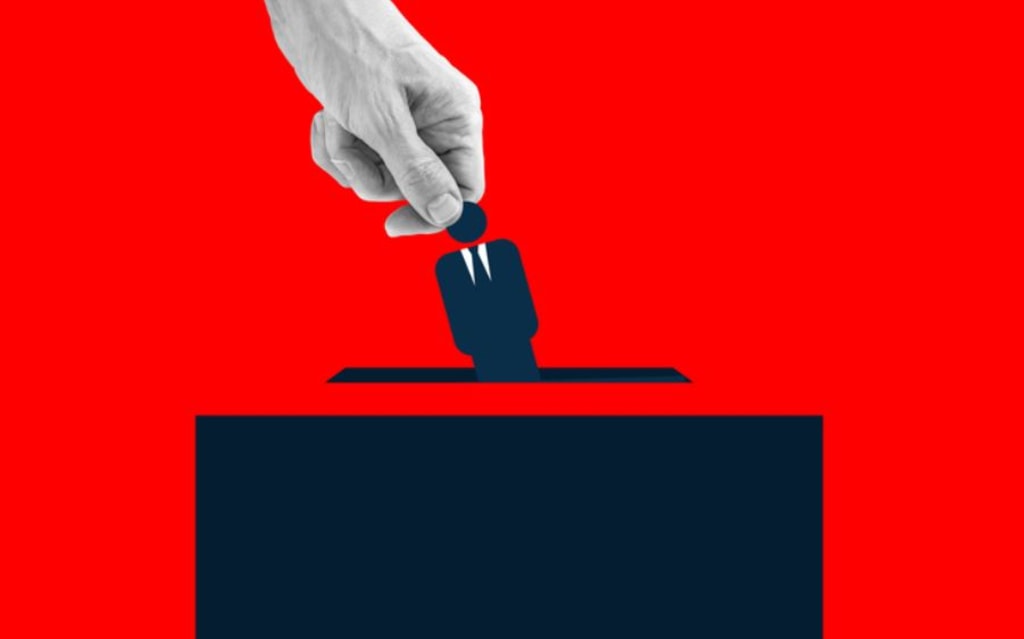
The Global State of Democracy 2026 report, published on Tuesday, paints a concerning picture of a continent where democratic quality is stagnating or declining in subtle but significant ways. While no European democracy has collapsed entirely, the data shows that more than half of the countries assessed saw declines in at least one key indicator between 2020 and 2025. The areas most affected include civil liberties, access to justice, and electoral integrity, suggesting that the foundational pillars of democratic life are under increasing strain.
A Continent-Wide Phenomenon
Contrary to the common narrative that democratic backsliding is confined to Eastern Europe or illiberal regimes, the report highlights that declines are widespread. While Eastern Europe (including Russia) recorded the highest number of setbacks (28), the rest were distributed relatively evenly: 18 in Central Europe, 16 in Southern Europe, and 15 in Northern and Western Europe.
This geographic spread indicates that the challenges facing democracy are not merely about authoritarian leaders seizing power, but rather about systemic weaknesses emerging in established democracies. Southern Europe, for instance, recorded zero improvements over the five-year period, with Portugal seeing declines in six indicators related to rights and participation. Meanwhile, in some of Europe’s most stable nations, fundamental freedoms are eroding. Freedom of the press declined in Iceland, Italy, and the UK, while freedom of expression deteriorated in Denmark and Germany.
Kevin Casas-Zamora, Secretary-General of International IDEA, clarified that the report does not suggest democracy is in immediate danger of collapse. “But rather that there are growing areas of weakness, and the direction of travel is not toward the continuous improvement in democratic quality that many Europeans would like to see,” he said. He noted that in countries like Germany and Denmark, the decline has been gradual over a decade, urging immediate action to reverse the trend before it causes broader damage.
The Security Trap
A central theme driving many of these setbacks is the "politics of securitization." Governments across Europe have introduced stricter measures to combat terrorism, extremism, migration, and public disorder. While often justified as necessary for public safety, the report argues that these measures frequently infringe upon basic civil liberties.
“The protection of some rights [is essential] because democracy is meaningless without them,” Casas-Zamora explained. “If people are not free to gather in public places, to associate with like-minded people, to express their deeply held beliefs in private and public spaces, then the potential for real political competition is severely limited.”
In Germany, restrictions originally designed to prevent the rise of extremism have increasingly widened to limit broader political expression. In Slovenia, the introduction of "security zones" has allowed police to enter homes without warrants, disproportionately affecting Roma communities. These examples illustrate how security concerns can be used to justify the erosion of privacy, assembly, and speech rights, creating a chilling effect on democratic engagement.
Corruption and Judicial Independence
The fight against corruption has also weakened in several countries, including Austria, Lithuania, Finland, Spain, and Slovakia. In these nations, elections remain competitive, and institutions appear intact, making the deterioration harder to detect for the average citizen. However, the weakening of anti-corruption mechanisms and judicial independence undermines the rule of law and equal access to justice, which are critical for maintaining public trust in democratic systems.
The report’s data visualizations highlight specific areas of concern:
Civil Liberties: 46 countries saw declines, compared to only 35 with advances.
Access to Justice: 48 countries declined, with only 32 advancing.
Absence of Corruption: 49 countries declined, against 32 advances.
These figures suggest that while the machinery of democracy (elections, parliaments) may still function, the quality of governance and the protection of individual rights are suffering.
Glimmers of Hope
Despite the gloomy overall trend, there are notable exceptions. Poland recorded seven improvements, the most of any European country, with significant gains in civil society, parliamentary effectiveness, and media independence following its political shift away from illiberalism. Czechia also showed improvements in parliament and judicial independence, demonstrating that positive change is possible when political will aligns with democratic values.
The report concludes that the future of European democracy rests not just with governments, but with citizens. “What happens next in European democracy is in the hands of the citizens of European countries,” Casas-Zamora said. Reversing the trend will require vigilance, civic engagement, and a renewed commitment to protecting civil liberties even in the face of security challenges.
As Europe navigates a complex geopolitical landscape, the lesson from the last five years is clear: democracy is not self-sustaining. Without active maintenance and defense of their core principles, even the most established democracies can slowly drift away from the ideals they claim to uphold.
About the Creator
Mark Lim
Hi I am mark an automotive student and a car, tech and food enthusiast ! Im gonna try and post daily & hope you enjoy what I write and do share my page with people you know. I would gladly appreciate it! Cheers
Enjoyed the story? Support the Creator.
Subscribe for free to receive all their stories in your feed.
Comments
There are no comments for this story
Be the first to respond and start the conversation.