
EPDM vs. Silicone Rubber: Which One Fits Your Needs Best
Discover the key differences between EPDM and silicone rubber, including temperature resistance, durability, cost, and applications. Choose the perfect material for your industrial, automotive, or household needs with this comprehensive guide.

Introduction
When it comes to selecting the right material for industrial, automotive, or household applications, EPDM and silicone rubber are two leading contenders. Both materials offer unique properties tailored to specific environments and uses. Choosing the right material can be a daunting task, especially when the success of your project depends on durability, performance, and cost-effectiveness.
This comprehensive guide breaks down the essential differences between EPDM and silicone rubber, helping you make an informed decision that perfectly aligns with your project requirements.
What Are EPDM and Silicone Rubber?
Understanding EPDM Rubber
Ethylene Propylene Diene Monomer (EPDM) is a synthetic rubber widely used for its exceptional weather resistance and durability. It performs exceptionally well in outdoor environments, resisting harmful elements like ozone, UV rays, and water. EPDM is often the first choice for applications where exposure to the elements is unavoidable, such as automotive weather stripping, roofing membranes, and seals.
Key Features of EPDM Rubber:
Temperature Range: Performs optimally between -40°C and 120°C, making it suitable for moderate temperature conditions.
Weather Resistance: Highly resistant to UV rays, ozone, and extreme weather conditions.
Durability: Known for its long-lasting performance, even in the harshest environments.
Flexibility: Maintains flexibility in cold temperatures, which helps prevent cracking and wear.
Applications: Commonly used in outdoor sealing, automotive parts, roofing membranes, and industrial applications.
Exploring Silicone Rubber
Silicone rubber is a highly versatile material known for its superior thermal stability, flexibility, and non-toxic properties. Its ability to remain functional in extreme temperatures makes it a go-to choice for high-performance applications in industries like food processing, medical equipment, and electronics.
Key Features of Silicone Rubber:
Temperature Range: Operates effectively in a temperature range of -60°C to 230°C, making it suitable for high-temperature and cold-weather applications.
Heat Resistance: Retains elasticity and shape even under continuous exposure to high temperatures.
Non-Toxic and FDA Approved: Ideal for medical and food-grade applications.
Applications: Widely used in kitchenware, medical devices, high-performance gaskets, and electrical insulation.
Aesthetic and Design Flexibility: Available in various colors and can be customized to meet specific design needs.
EPDM vs. Silicone Rubber: A Detailed Comparison
To make the best decision, it is essential to understand the key differences between EPDM and silicone rubber. These differences highlight the unique properties and strengths of each material.
1. Temperature Resistance
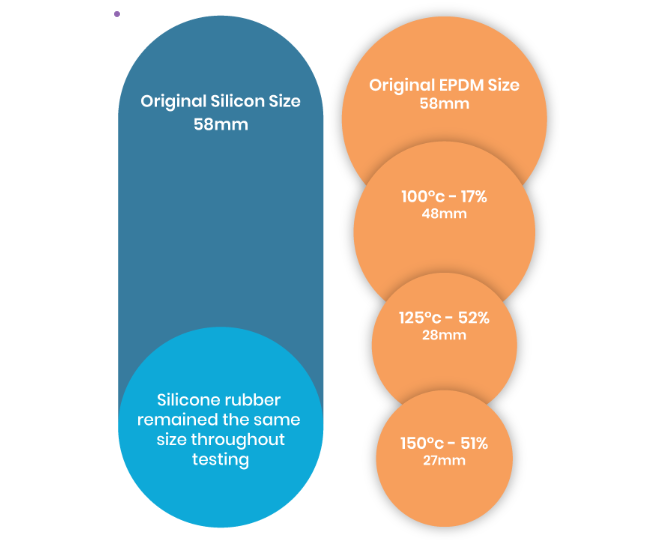
EPDM: Works efficiently in moderate to low-temperature conditions. While it performs well in temperatures as low as -40°C, it is not suitable for environments with continuous high heat.
Silicone: Excels in extreme temperature ranges, remaining functional between -60°C and 230°C. It is the ideal choice for applications exposed to high heat, such as industrial ovens, kitchen tools, and automotive engine parts.
2. Weatherability
EPDM: Provides excellent resistance to UV rays, ozone, and water. It is the preferred material for outdoor use, as it can endure prolonged exposure to harsh environmental conditions without degradation.
Silicone: While silicone is durable, it does not perform as well as EPDM in resisting UV and ozone exposure. It is better suited for indoor or controlled environments.
3. Durability
EPDM: Known for its outstanding durability in outdoor settings. It can resist cracking, aging, and wear caused by environmental factors, making it a long-lasting solution for outdoor sealing applications.
Silicone: Durable in extreme temperatures and indoor applications but may degrade faster when exposed to harsh UV light and ozone over extended periods.
4. Flexibility and Elasticity
EPDM: Retains flexibility in colder temperatures, which prevents cracking and ensures a tight seal.
Silicone: Offers superior flexibility and elasticity, even under high thermal or mechanical stress, making it ideal for precision applications like medical devices and electronics.
5. Chemical Resistance
EPDM: Highly resistant to chemicals such as acids, alkalis, and hydraulic fluids, but not suitable for use with petroleum-based products.
Silicone: Resists many chemicals but may swell or degrade when exposed to petroleum products.
6. Electrical Insulation
EPDM: Limited electrical insulating properties, primarily used in non-electrical applications.
Silicone: Excellent electrical insulation, widely used in electronic components and wiring.
7. Cost Efficiency
EPDM: A cost-effective choice, especially for large-scale projects where affordability is a key factor.
Silicone: Typically more expensive due to its specialized properties and manufacturing requirements.
8. Applications
EPDM: Best suited for roofing, automotive parts, and outdoor seals.
Silicone: Ideal for medical-grade tools, high-temperature gaskets, and food-grade products.
When to Choose EPDM vs. Silicone Rubber
The choice between EPDM and silicone rubber depends on the specific requirements of your application:
Choose EPDM if:
Your project involves prolonged outdoor exposure to UV rays, ozone, and water.
You need a cost-effective solution for large-scale projects.
Applications require moderate to low-temperature resistance.
Choose Silicone if:
Your application requires high-temperature resistance or operates in extreme heat or cold.
You need FDA-approved, non-toxic material for food or medical uses.
Flexibility and electrical insulation are critical factors.
Why Choose Elastostar Rubber Corporation?
At Elastostar Rubber Corporation, we bring decades of experience and expertise in manufacturing high-quality rubber products. Whether you need EPDM or silicone rubber, we ensure you receive the best material tailored to your requirements.
Here’s why you should choose Elastostar Rubber:
Material Expertise: Comprehensive knowledge of EPDM and silicone rubber properties to guide you in making the right choice.
Custom Solutions: Tailored products to suit your unique project needs.
Quality Assurance: All products meet or exceed industry standards, guaranteeing performance and reliability.
Advanced Manufacturing: Cutting-edge technology ensures precision and high-quality output.
Diverse Applications: Trusted by industries ranging from automotive and construction to medical and food processing.
Additional Resources for Rubber Applications
To help you dive deeper into the world of rubber materials, check out these resources:
FDA Food Grade Silicone Tubing: A Comprehensive Guide
EPDM Rubber: Meaning, Applications & Benefits
Conclusion
Both EPDM and silicone rubber are excellent materials, each with distinct advantages tailored to particular applications. By evaluating factors such as temperature range, durability, flexibility, and cost, you can make the right choice for your project.
If you need further assistance in choosing the perfect material, Elastostar Rubber Corporation is here to help. With a wide range of high-quality EPDM and silicone rubber products, we can provide expert guidance to meet your unique needs.
Need Help Choosing the Right Material?
Contact Elastostar Rubber Corporation today! Let us help you find the perfect rubber material for your application. From outdoor sealing to high-performance industrial gaskets, we have the expertise to support your projects every step of the way.
About the Creator
Shyam Patel
Hi I am shyam patel owner of the website Elastostar Rubber Corporation based in USA Plain City Ohio 43064. We manufacture cutomized silicone rubber gasket windoe seal extruded silicone rubber of shapes like O-rings.
Enjoyed the story? Support the Creator.
Subscribe for free to receive all their stories in your feed.
Comments
There are no comments for this story
Be the first to respond and start the conversation.