
Emergency Fund Explained: How Much Should You Save?
Read the article to learn more


A job loss, surprise medical bill, broken transmission, or leaking roof can turn an ordinary week into a money crisis. The question of how much emergency fund you need matters because cash on hand gives you choices when life gets expensive without warning.
There isn't one dollar amount that fits every household. Most people should aim for three to six months of essential expenses, then adjust that range for income stability, dependents, debt, insurance, and access to work.
Key Takeaways
A practical emergency fund usually covers three to six months of essential monthly expenses, rather than every dollar you typically spend.
Households with variable income, one earner, dependents, or weak insurance coverage may need six to 12 months of expenses.
Keep the money separate from daily spending and easy to access, ideally in an insured deposit account where available.
Start with a smaller reserve if needed. A modest cash buffer can still keep an urgent bill off a high-interest credit card.
How much emergency fund should you save?
A common target is three to six months of essential expenses. The St. Louis Fed's emergency fund guidance also points to this range, but it is a planning tool, not a hard rule.
A stable dual-income household may start near three months if both earners have reliable jobs, strong insurance, and few dependents. A single-income household often needs three to six months because one lost paycheck affects the whole budget.
People who are self-employed, paid by commission, work on contracts, or have highly variable income may choose six to 12 months. Their income can fall before a job ends, and replacing it may take longer.
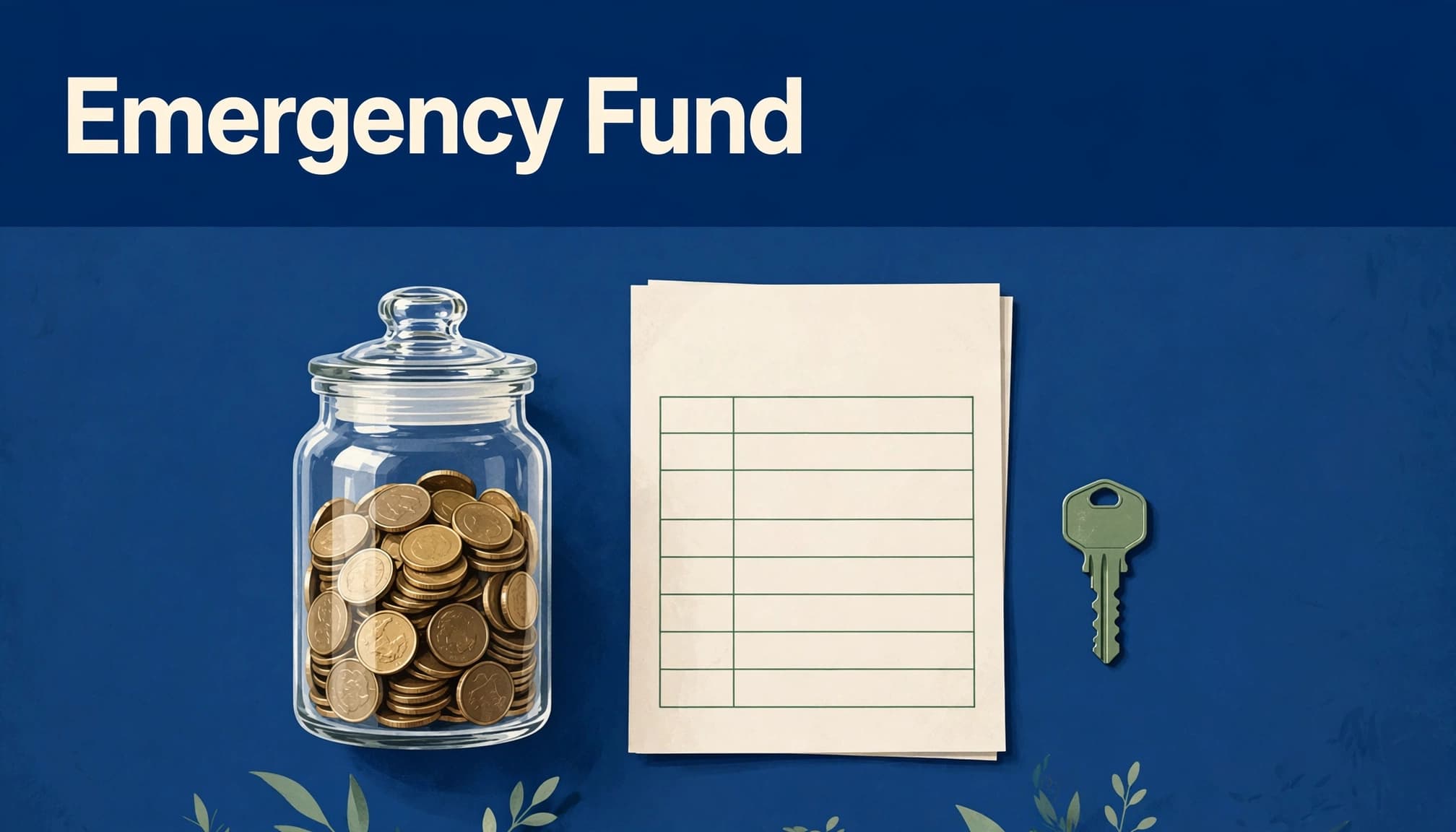
How much emergency fund you need depends on the bills your household must keep paying when income stops.
Choose your savings target based on household risk
Your target should rise when more things can interrupt income or keep costs running. One earner, young children, large minimum debt payments, chronic health needs, or a long job search in your field all raise the need for cash.
Health coverage and disability insurance also matter. Good coverage may reduce some risks, yet deductibles, copays, and unpaid time away from work can still create a gap. A household with fewer backup income sources usually needs a larger cushion.
Emergency savings should cover the period when your bills keep arriving but your usual income does not.
What counts as an emergency expense?
A true emergency is an unplanned, necessary expense or a sudden loss of income. The Consumer Financial Protection Bureau's emergency savings guide describes emergency savings as money for unplanned bills or payments outside routine monthly expenses.
Examples include a necessary car repair, urgent home repair, medical bill, replacement appliance, or groceries and rent during unemployment. The cost must be necessary and time-sensitive.
Vacations, holiday gifts, annual insurance premiums, routine clothes shopping, and a phone upgrade don't belong in this fund. Save for predictable costs in separate sinking funds, which are smaller savings buckets for planned expenses.
Calculate your emergency fund from essential monthly expenses
Start with one recent month of bank and card activity. Mark each expense as essential or nonessential, then total only the bills you would need to pay during a job loss or illness.
Include housing, basic utilities, groceries, work-related transportation, insurance premiums, medication, childcare, and minimum debt payments. Omit restaurant meals, entertainment, subscription services, travel, and discretionary shopping.
This approach produces a usable number. Total spending can make the goal look larger than it needs to be, while gross income says little about the bills that must be paid.
Use a simple emergency fund formula
Use this formula:
Monthly essential expenses x number of months to cover = emergency fund target
For example, suppose your essential monthly costs are $3,500:
Coverage periodCalculationSavings target3 months$3,500 x 3$10,5006 months$3,500 x 6$21,0009 months$3,500 x 9$31,500
The full number may feel distant at first. Begin with a starter reserve that can cover a modest repair, deductible, or urgent trip home, then build toward your longer-term target.
Adjust the target as your life changes
Review the calculation after a new job, marriage, divorce, move, child, major debt change, health change, or insurance loss. A higher rent payment or childcare bill can make an old emergency fund figure obsolete.
Check the fund at least once a year even if life feels settled. Update both your essential monthly expenses and the number of months you want covered.
Where to keep emergency savings so it stays safe and accessible
Emergency money needs to be liquid, meaning you can use it quickly without selling an investment at the wrong time. Keep it separate from your everyday spending account so a large balance doesn't slowly disappear into ordinary purchases.
For many US households, a federally insured savings account or high-yield savings account offers a sensible mix of access and interest. A money market deposit account may also work, although account rules and withdrawal options vary. Checking accounts offer fast access but often pay less interest.
The FDIC's consumer protection information states that eligible deposits are generally insured up to $250,000 per depositor, per insured bank, per ownership category. Confirm the institution's insurance status and account terms. You can combine multiple accounts in the same ownership category at one bank for coverage purposes.
Stocks, long-term certificates of deposit, crypto assets, and hard-to-sell property are poor homes for your full reserve. Their value may fall, or access may take too long when you need cash.
Build and maintain your emergency reserve
Saving the full amount in one sweep isn't necessary. A repeatable system matters more than an ambitious number that never gets funded.
Build the fund without letting the goal overwhelm you
Open a separate account and schedule an automatic transfer for the day after payday. Even a small weekly amount turns saving into a regular bill rather than a monthly leftover.
Direct a tax refund, work bonus, cash gift, or sale proceeds toward the account. You can also pause one or two flexible expenses for a few months, then increase your transfer after a raise or debt payoff.
Progress isn't all or nothing. A $500 or $1,000 reserve can handle some shocks while you work toward several months of expenses.
Avoid these common emergency fund mistakes
Don't base your goal on total income or total spending. Base it on essential bills, and include insurance deductibles that could arrive after an accident or illness.
Avoid mixing the fund with checking money, since routine spending can blur the difference between a want and a true emergency. Furthermore, don't invest the full balance in volatile assets or spend it on predictable annual bills.
If you use the fund, record the withdrawal and restart automatic contributions when the immediate problem passes. Using the money for a real emergency is the fund doing its job. However, repeated withdrawals for the same expense may mean your monthly budget or savings target needs revision.
High-interest debt can change the order of your priorities. A small emergency reserve may prevent new card debt, while high-interest balances may still deserve aggressive repayment once that first buffer is in place.
Frequently Asked Questions
Should I save an emergency fund before paying off debt?
A small starter fund can stop an unexpected bill from becoming a new credit card balance. The right balance depends on your interest rates, minimum payments, income stability, and likelihood of another emergency. Consider your full financial picture before choosing between faster debt payoff and additional cash savings.
Is $1,000 enough for an emergency fund?
$1,000 is a useful early milestone because it can cover many smaller repairs or deductibles. However, it may not cover a month of essential bills, much less a long job search. Treat it as a starter reserve, then continue toward three to six months of expenses.
Do I need an emergency fund if I have credit cards?
Available credit isn't the same as savings. Credit cards can carry high interest, have limited credit lines, or become harder to use after a job loss. Use credit as a possible backup, not a replacement for cash reserves.
Should I keep my emergency fund in a high-yield savings account?
A high-yield savings account can be a strong choice when it provides quick, reliable access and eligible deposit insurance. Before opening one, check transfer times, withdrawal rules, fees, variable interest rates, and insurance coverage. Financial products and protections vary by country and provider.
How often should I review my emergency fund amount?
Review your fund at least once a year and after major life or income changes. Recalculate your essential monthly expenses, then decide whether your coverage period still fits your household's risk.
What should I do after using my emergency fund?
First, confirm the remaining balance and identify why you needed the withdrawal. Then restart automatic contributions, even if the amount is smaller for a while. If the same category continues to impact the account, please consider adjusting your budget or increasing your target.
Build a buffer that fits your life
The right emergency fund is based on essential expenses and household risk, not a universal dollar figure. Three to six months is a sound starting range, while variable income, dependents, and limited backup options can justify a larger reserve.
When you ask, "How much should I save for an emergency fund?" begin with one month of essential bills. Choose a realistic coverage range, keep the savings accessible, and automate the first transfer.
About the Creator
Wilson Igbasi
Hi, I'm Wilson Igbasi — a passionate writer, researcher, and tech enthusiast. I love exploring topics at the intersection of technology, personal growth, and spirituality.
Enjoyed the story? Support the Creator.
Subscribe for free to receive all their stories in your feed.
Comments
There are no comments for this story
Be the first to respond and start the conversation.