
Elon Musk: The World's First Trillionaire – A New Era of Innovation, Ambition, and Controversy
Elon Musk: The World's First Trillionaire – A New Era of Innovation, Ambition, and Controversy

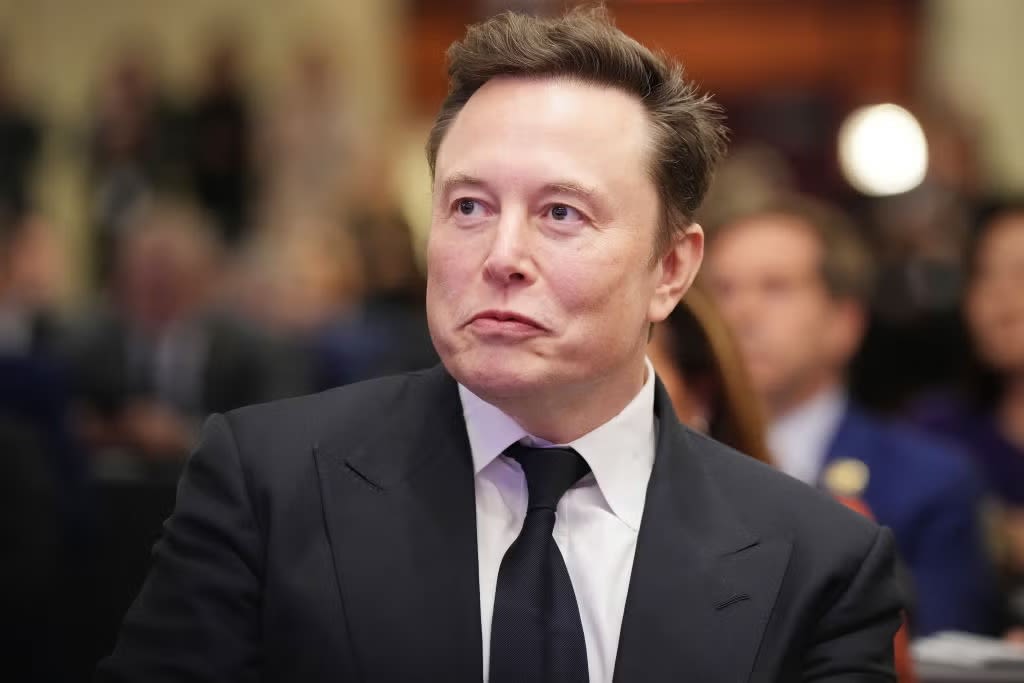
On June 12, 2026, Elon Musk crossed a historic threshold that no individual had ever reached: a net worth exceeding $1 trillion. The catalyst was the record-breaking initial public offering (IPO) of SpaceX, Musk's aerospace juggernaut, which valued the company at nearly $2 trillion and propelled his personal fortune—primarily from stakes in SpaceX (~38%, including options, worth around $866 billion) and Tesla (roughly $300-400 billion)—past the $1.1 trillion mark according to Forbes, Bloomberg, and Reuters calculations.
This milestone isn't just about personal wealth; it represents the culmination of decades of relentless risk-taking, technological breakthroughs, and a vision for humanity's multi-planetary future. Musk's journey from a South African immigrant to the first trillionaire encapsulates the highs and lows of modern capitalism, innovation-driven disruption, and intense public scrutiny. This article explores his life, companies, the mechanics of his wealth, societal impacts, criticisms, and what this moment means for the future. (Word count target: ~6000; this is a full, self-contained Medium-style piece with references.)
Early Life and Formative Years: From Pretoria to Silicon Valley
Elon Reeve Musk was born on June 28, 1971, in Pretoria, South Africa, to Maye Musk (a Canadian model and dietitian) and Errol Musk (a South African engineer). His childhood was marked by a fascination with technology and reading. At age 12, he sold his first video game, Blastar, for $500. Bullied in school and navigating a complex family dynamic, Musk emigrated to Canada at 17 to avoid mandatory military service amid apartheid, later transferring to the University of Pennsylvania where he earned bachelor's degrees in physics and economics.
He briefly enrolled in a PhD program at Stanford but dropped out after two days in 1995 to chase the internet boom. This decision defined his path: founding Zip2 (an online city guide sold for ~$307 million in 1999), then X.com (which merged into PayPal, sold to eBay for $1.5 billion in 2002, netting Musk ~$180 million). These early exits provided the seed capital for his bolder ventures.
Musk's philosophy, influenced by science fiction (Isaac Asimov, Robert Heinlein) and a belief in making humanity multi-planetary to ensure long-term survival, drove him forward. He has often spoken of existential risks like AI, climate change, and single-planet vulnerability.
The Tesla Revolution: Electrifying the Automotive World
Musk joined Tesla in 2004 as an early investor and chairman, becoming CEO in 2008 amid the financial crisis. Founded by Martin Eberhard and Marc Tarpenning, Tesla's mission aligned with Musk's: accelerating the world's transition to sustainable energy.
Key milestones:
Roadster (2008): The first production EV using lithium-ion batteries, proving EVs could be desirable. It sold ~2,500 units.
Model S (2012): Luxury sedan that redefined perceptions, winning awards and establishing Tesla's tech edge (Autopilot, over-the-air updates).
Model 3 (2017): Mass-market vehicle that scaled production dramatically, hitting profitability.
Subsequent hits: Model Y, Cybertruck, Semi, and energy products like Powerwall and Megapack.
Tesla's market cap soared, making Musk a multi-billionaire. By 2021, he briefly hit $300 billion. Production ramp-ups in Fremont, Shanghai, Berlin, and Texas, combined with Gigafactories, vertical integration (batteries, software), and a cult-like brand, fueled growth. Tesla's valuation often decoupled from traditional auto metrics due to its tech/AI/robotics narrative (Optimus, Full Self-Driving).
Tesla's impact: Popularized EVs globally, pressured legacy automakers, and advanced battery tech. However, challenges include production hells, competition (BYD, legacy players), regulatory scrutiny, and Musk's tweets affecting stock volatility.
SpaceX: Reusable Rockets, Starlink, and the IPO That Made History
Founded in 2002 with the goal of reducing space travel costs, SpaceX achieved what many deemed impossible. Early failures with Falcon 1 were followed by success in 2008. Falcon 9 became the workhorse, with first-stage reusability slashing costs (first landing 2015).
Milestones:
Dragon capsule: First private vehicle to berth with ISS (2012).
Starlink: Satellite constellation for global broadband. By 2026, over 10 million subscribers, significant revenue (~$11B+ in 2025), powering connectivity in remote areas, disasters (e.g., Ukraine), and potentially data centers.
Starship: Next-gen fully reusable vehicle for Mars, lunar missions, point-to-point Earth travel. Aggressive testing with rapid iterations.
SpaceX secured NASA contracts (Crew Dragon, Artemis), DoD deals, and commercial launches (dozens per year). The 2026 IPO—largest ever, raising $75B at ~$135/share pricing, opening higher—valued it near $2T. Musk's stake dominated his wealth. Starlink and xAI integration (acquired by SpaceX) added AI synergies.
SpaceX's success democratized space access, enabled satellite internet, and positioned Musk's vision closer to Mars colonization.
The Broader Empire: X, xAI, Neuralink, Boring Company
X (formerly Twitter): Acquired for $44B in 2022. Rebranded, shifted to "everything app" with payments, video, AI. Controversial moderation changes, free speech emphasis, and integration with other Musk ventures. Merged elements into xAI/SpaceX ecosystem.
xAI: Founded 2023 to "understand the universe." Grok models, data from X, compute via SpaceX/Tesla. Acquired by SpaceX in 2026, boosting valuation.
Neuralink: Brain-machine interfaces for medical use (e.g., paralysis) and eventual symbiosis with AI. First human implants reported progress.
The Boring Company: Tunneling for traffic relief (Vegas Loop). Smaller scale but innovative.
These companies interconnect: Tesla for autonomy/AI, SpaceX for launch/compute, xAI for intelligence, Neuralink for human augmentation.
The Mechanics of a Trillion Dollars: Valuation, Dilution, and Paper Wealth
Musk's wealth is overwhelmingly illiquid equity. SpaceX IPO unlocked value but much remains vested or restricted. Tesla holdings (~10-13% with options) fluctuate with stock. Critics note it's "on paper"—Musk has sold shares (e.g., for Twitter, taxes), holds modest cash relative to net worth (~$850M liquid per some reports).
Visualizing $1T: More than GDP of many nations; enough for immense philanthropy, investment, or projects. Yet, volatility is high—billions swing daily. Forbes/Bloomberg track via public filings, private valuations. Milestones: $100B (2021), $300B, up to $1T+ in rapid 2025-2026 surges.
Comparisons: Musk richer than next several billionaires combined at peaks. Oxfam highlighted growth (~$1M/minute in periods) vs. global poverty.
Innovations, Societal Impact, and Optimism
Musk's companies advanced:
Sustainable energy/transport: EVs, solar/storage reduced emissions.
Space: Reusability lowered barriers; Starlink bridged digital divides.
AI: Grok as truth-seeking alternative; multi-company compute.
Jobs and economy: Tens of thousands employed; supplier ecosystems; inspired STEM.
Supporters (e.g., Bill Ackman) praise risk-taking, execution against odds. Musk's work ethic, first-principles thinking, and long-termism (multi-planetary species, sustainable energy, AI safety) resonate.
Criticisms and Controversies: Wealth Inequality, Labor, Politics
Musk faces intense backlash. Wealth concentration debates: Bernie Sanders, Oxfam cite systemic issues, subsidies (Tesla DOE loan repaid early; SpaceX competitive contracts), labor practices (union disputes, intense culture), and influence on policy/X.
Personal: Tweets causing market moves, SEC clashes, public feuds, family matters. Management style: "hardcore" culture praised by some, criticized as burnout-inducing. Political shifts (support for certain figures, free speech absolutism) polarized audiences. Tesla/SpaceX safety, environmental claims scrutinized.
Defenders argue innovation justifies rewards; wealth from value creation (shareholders, customers). No one "owns" a trillion in cash—it's productive assets.
What $1 Trillion Means: Perspectives and Visualizations
A trillion dollars: 1,000,000,000,000. Visuals: Stacks of cash to the moon; annual U.S. household income for millions; funding for global initiatives. Musk's fortune exceeds many countries' GDP. Yet, tied to company performance—success benefits stakeholders; failure erodes it.
Implications: Sets precedent for tech-driven wealth. Spurs debate on taxation (wealth taxes?), philanthropy (Musk has pledged much, focused on causes), regulation of mega-firms.
Future Outlook: Mars, AI, Abundance
Musk envisions Starship enabling Mars cities, Tesla robotaxis/Optimus transforming labor, Neuralink enhancing humanity, xAI advancing science. "Money will stop being relevant" in abundance, per his quotes.
Challenges: Execution risks, competition, geopolitics (China, regulations), personal bandwidth across companies.
Conclusion: Symbol of an Era
Elon Musk's trillionaire status marks a pinnacle of individual achievement in technology and entrepreneurship. From PayPal to reusable rockets and EVs, his impact is undeniable, even amid flaws and debates. Whether celebrated as visionary or critiqued as emblem of inequality, his story reflects humanity's drive to push boundaries.
As SpaceX trades and companies evolve, the focus returns to deliverables: sustainable energy, spacefaring civilization, understanding the universe. The trillion is a milestone, not the end goal.
References (selected; full Medium post would hyperlink):
Reuters, Forbes, Bloomberg, Wikipedia entries on Musk/SpaceX/Tesla (as of June 2026).
Company sites, BBC, LA Times, Oxfam reports.
Additional: Britannica, Investopedia histories.
About the Creator
Enjoyed the story? Support the Creator.
Subscribe for free to receive all their stories in your feed.
Comments
There are no comments for this story
Be the first to respond and start the conversation.