
Electronic Warfare Market: The Invisible Battlefield
How control of the electromagnetic spectrum is shaping modern defense strategies
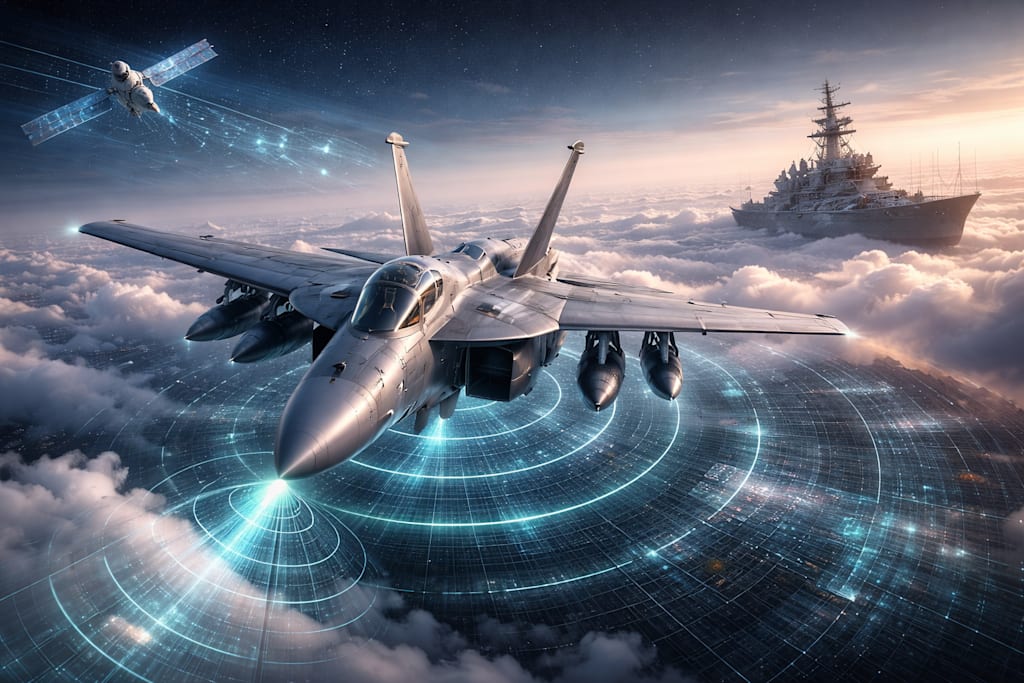
There is no smoke. No visible explosion. No sound of impact. Yet a system fails, a radar goes blind, and communication collapses in seconds. This is warfare without bullets, where victory is decided in frequencies and signals.
Electronic warfare operates in a space most people never see. It controls how information flows, how systems respond, and how forces defend themselves. At the center of this transformation is the Electronic Warfare Market, where technology is redefining modern defense strategies.
Why Electronic Warfare Matters Today
Modern conflicts are no longer fought only with physical force. Control over the electromagnetic spectrum has become just as critical as air, land, and sea superiority.
Electronic warfare systems are designed to detect, disrupt, deceive, and protect communication and radar signals. They allow defense forces to disable enemy systems without direct confrontation, making them essential in both offensive and defensive operations.
According to Mordor Intelligence, the Electronic Warfare Market size is estimated at USD 15.62 billion in 2026 and is projected to reach USD 23.85 billion by 2031, growing at a compound annual growth rate of 8.83 percent.
Inside the Electronic Warfare Market Structure
The Electronic Warfare industry is divided into several core capabilities that define how systems operate.
Electronic protection held 35.37 percent of the Electronic Warfare Market share in 2025, as all military platforms require defensive systems to safeguard communications and radar signals.
Electronic attack is emerging as the fastest growing segment with a projected growth rate of around 9.16 percent CAGR, driven by demand for advanced jamming and signal disruption technologies.
Airborne platforms dominate deployment, accounting for about 35.21 percent of total revenue, supported by continuous upgrades in fighter jets and surveillance aircraft.
By end user, air forces represent the largest demand segment with 38.55 percent share, reflecting the importance of airborne electronic dominance in modern warfare.
The Electronic Warfare Market share also highlights the growing importance of retrofit programs, which accounted for 55.30 percent of demand in 2025, as defense agencies upgrade existing systems instead of replacing entire platforms.
Trends Shaping the Electronic Warfare Market
Several Electronic Warfare Market trends are transforming how defense systems operate
• AI driven systems are enabling adaptive jamming and real time signal analysis
• Counter drone technologies are expanding rapidly as unmanned threats increase
• Software defined architectures allow flexible upgrades without hardware replacement
• Space based electronic warfare is emerging as a new frontier for signal dominance
Counter UAS electronic warfare systems are among the fastest growing segments, expected to expand at around 9 percent CAGR, reflecting the rise of drone based threats in modern conflicts.
These trends show that electronic warfare is evolving from fixed hardware systems into dynamic, software driven platforms capable of adapting instantly to new threats.
Challenges in the Electronic Warfare Market
Despite strong growth, the Electronic Warfare Market analysis highlights several challenges.
High development costs and long program timelines remain significant barriers. Advanced systems require extensive testing, integration, and certification before deployment.
Spectrum management and regulatory constraints also create complexity, especially as multiple systems operate within limited frequency ranges. Cybersecurity risks are another concern, as electronic warfare systems themselves can become targets of interference or spoofing.
Global supply chain constraints, particularly in advanced semiconductor components, can also impact production timelines.
Electronic Warfare Market Forecast and Future Outlook
The Electronic Warfare Market forecast indicates sustained growth as defense forces prioritize spectrum dominance and digital battlefield capabilities.
North America leads regional demand with over 40.46 percent market share in 2025 and is also expected to record the fastest growth rate, supported by strong defense investments and modernization programs.
Future developments will focus on integration across air, land, sea, and space platforms. Systems will become more autonomous, data driven, and interconnected, allowing faster decision making and improved battlefield awareness.
Electronic warfare is moving toward a model where software updates and AI capabilities define system performance rather than physical hardware alone.
The Invisible Force Behind Modern Defense
Electronic warfare does not leave visible traces, yet its impact is immediate and decisive. It can disable communication, confuse navigation systems, and shift the balance of power without a single physical strike.
As defense strategies evolve, the importance of the electromagnetic spectrum will only grow. The Electronic Warfare Market is not just expanding in size but also in strategic importance.
In a world where information is power, controlling signals may matter more than controlling territory.
About the Creator
Enjoyed the story? Support the Creator.
Subscribe for free to receive all their stories in your feed.
Comments
There are no comments for this story
Be the first to respond and start the conversation.