
Electric Vehicle Traction Motor Market: Growth, Trends, and Future Outlook
The global EV traction motor industry is expanding rapidly as demand for efficient, high-performance electric vehicles continues to rise.

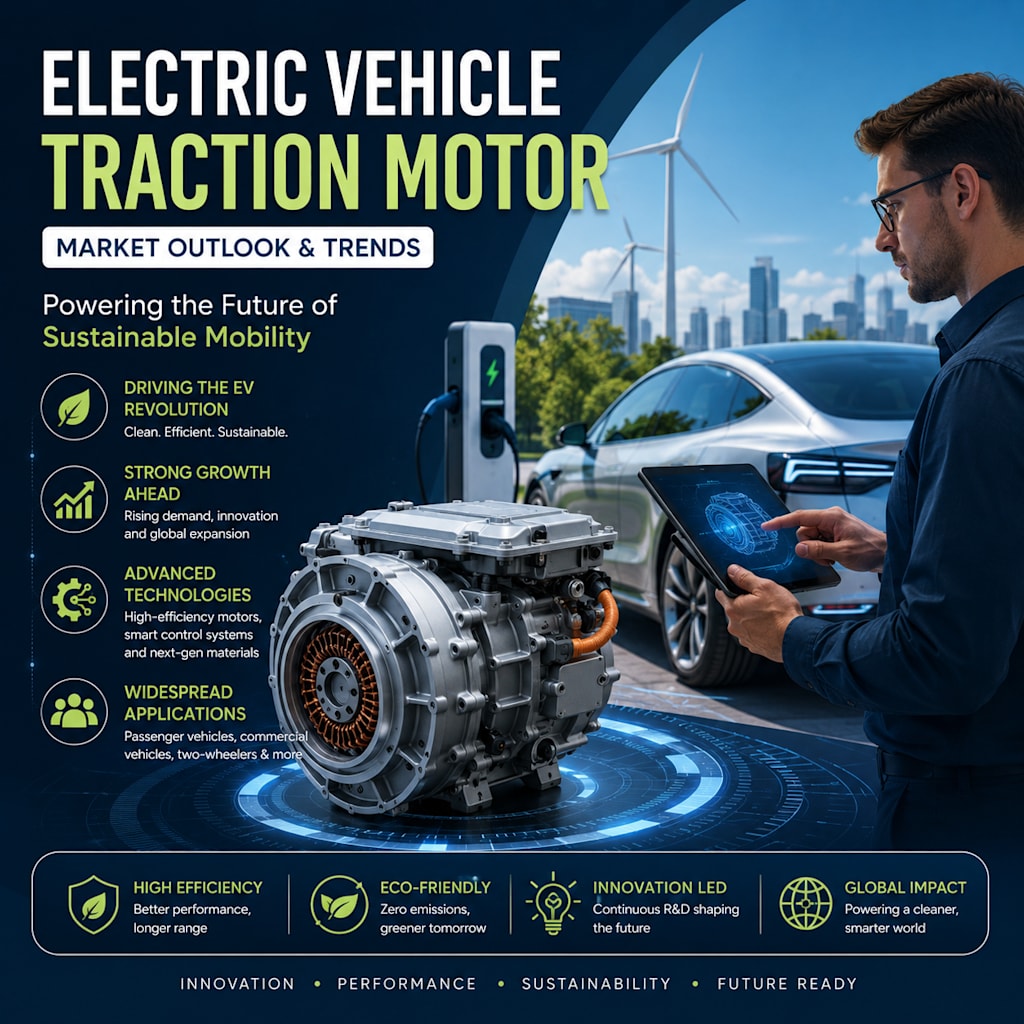
As the world transitions to electric vehicles, a key component often overlooked is the traction motor, which quietly revolutionizes automotive transportation.
Electric vehicles of all shapes and sizes rely on traction motors. These motors translate electrical energy into mechanical motion, enabling the smooth acceleration and high efficiency characteristic of EVs, while simultaneously reducing emissions. The growing demand for cleaner transportation options has fueled a rapid increase in the demand for high-performance traction motors.
The global traction motor market for electric vehicles was valued at $15.65 billion in 2024 and is projected to expand significantly to $174.17 billion by 2033, at a Compound Annual Growth Rate of 27.2%.
This impressive growth is largely attributed to the global proliferation of electric vehicles.
Drivers of Growth in the EV Traction Motor Market
Increased electric vehicle adoption is the leading factor driving market growth across both developed and emerging economies. Stricter emissions standards, along with tax credits and incentives offered by governments, are encouraging the shift from traditional internal combustion engine vehicles to electric alternatives. In addition, fluctuating fuel prices and rising environmental awareness are compelling consumers to consider EVs. As EV production rises, so does the need for efficient and high-performing traction motors. Furthermore, automakers are investing heavily in electrification, and many companies have announced plans to discontinue the production of combustion engine vehicles within the next few years.
The demand for more efficient motors is increasing as consumers seek better driving range, quicker acceleration, and improved energy efficiency. To meet these demands, manufacturers are developing advanced motor technologies, including Permanent Magnet Synchronous Motors (PMSMs), axial flux motors, and high-efficiency induction motors, which offer enhanced power-to-weight ratios, reduced energy loss, and superior vehicle performance. Lighter and more compact motor designs are also in demand as they allow for increased battery space and driving range. With intense competition in the EV market, motor efficiency has become a major differentiator.
The use of advanced materials is further enhancing EV traction motor performance. Manufacturers are incorporating rare earth magnets, lightweight composites, and high-strength steel alloys to improve motor durability, thermal efficiency, and energy density, while reducing overall vehicle weight. Rare earth magnets, for instance, are favored for their ability to generate strong magnetic fields in smaller motors, allowing for compact designs without compromising performance. However, the reliance on rare earth elements, coupled with their cost and supply chain risks, is driving the search for alternative materials.
In addition to mechanical advancements, modern EV traction motors are becoming increasingly sophisticated with intelligent software and control systems. These advanced systems manage torque delivery, speed control, regenerative braking, and overall energy efficiency, improving battery life, driving experience, and vehicle performance. The development of autonomous driving technology will further enhance the importance of advanced motor control software in future EVs.
Battery Electric Vehicles (BEVs) continue to dominate the EV traction motor market due to their zero tailpipe emissions and alignment with sustainability goals. Improvements in battery technology and charging infrastructure are making BEVs more practical for everyday use. Lower maintenance costs, government incentives, and increased environmental awareness among consumers are further fueling BEV adoption. The launch of new fully electric models by automakers is expected to drive significant demand for traction motors over the next decade.
The Asia-Pacific region leads the global EV traction motor market, accounting for over half of the market share. China's strong EV manufacturing ecosystem, supportive government policies, and investment in charging infrastructure have played a pivotal role in this growth. Japan and South Korea's technological advancements and robust EV production capabilities also contribute significantly. Meanwhile, India is rapidly expanding its EV infrastructure and domestic manufacturing to bolster its electric mobility industry.
North America is experiencing robust growth due to rising EV adoption and increased investment in local EV manufacturing. The United States, in particular, is focusing on developing domestic EV supply chains and supporting clean energy initiatives, with tax credits and stricter fuel economy standards further accelerating EV adoption. Europe is aggressively pursuing sustainability goals and emission reduction policies, with countries like Germany, Norway, and the Netherlands seeing rapid EV adoption fueled by subsidies and charging infrastructure investment. These developments are creating a strong demand for advanced traction motors in both regions.
Despite rapid growth, the EV traction motor market faces challenges such as reliance on rare earth materials, limited charging infrastructure in some regions, and pressure to reduce production costs while maintaining performance and efficiency. These challenges, however, are also driving innovation in sustainable materials and next-generation motor technologies.
The future of the EV traction motor market appears highly promising, with traction motors expected to become smarter, lighter, and more energy-efficient as EVs become more mainstream. Innovations such as AI-powered motor systems, ultra-lightweight materials, improved thermal management, and more compact motor designs will shape the future of the industry. By 2033, the market is projected to exceed $174 billion, underscoring the growing importance of traction motors in the future of transportation.
In conclusion, while electric vehicles are driving the transformation of mobility, traction motors are the technology making it all possible. Their role in improving efficiency, extending driving range, and enabling high-performance electric transportation solidifies their position as one of the most critical components in the automotive industry. With governments, automakers, and consumers continuing to embrace sustainable transportation, the electric vehicle traction motor market is poised to remain a rapidly growing sector in the global mobility landscape.
About the Creator
Robert
Senior Market Researcher at IMARC Group, specializing in global market analysis, industry trends, and data-driven insights across diverse sectors.
Enjoyed the story? Support the Creator.
Subscribe for free to receive all their stories in your feed.
Comments
There are no comments for this story
Be the first to respond and start the conversation.