
Electric Bus Market: Driving the Future of Sustainable Public Transportation
How battery-powered buses are transforming urban mobility, reducing emissions, and reshaping public transit systems
Hook Intro
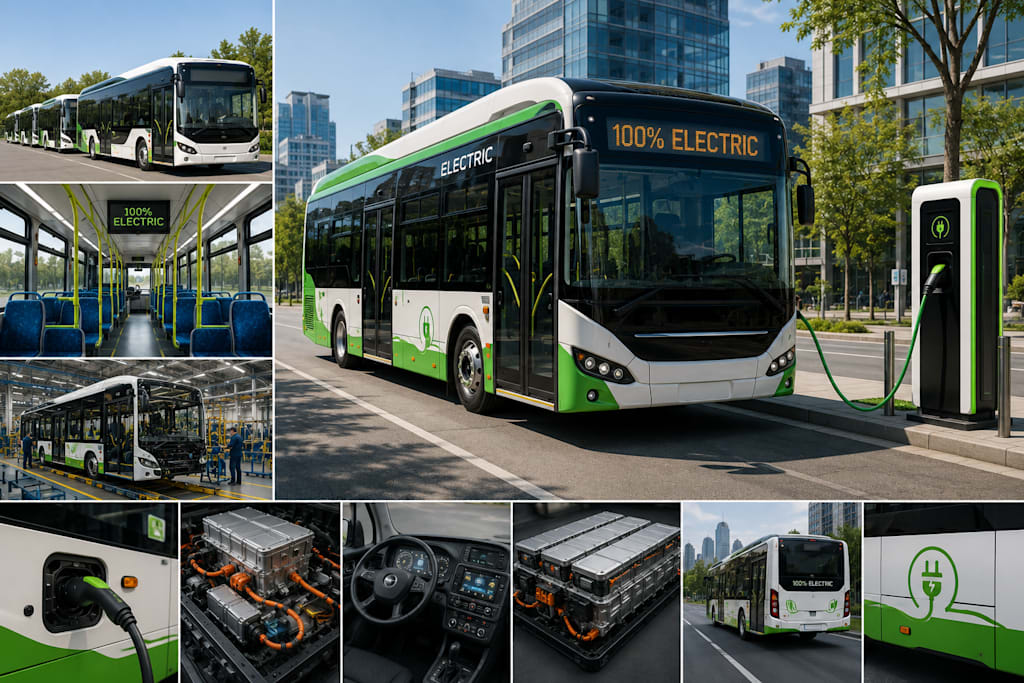
The bus arrives at the stop almost silently. There is no engine rumble, no exhaust fumes, and no vibration as it pulls away. For passengers, the journey feels smoother and quieter. For cities, it represents a significant step toward cleaner transportation.
As governments and transit agencies work to reduce emissions and improve urban air quality, electric buses are becoming a central part of public transportation strategies. At the heart of this transition is the Electric Bus Market, where advancements in battery technology, supportive policies, and sustainability goals are accelerating adoption worldwide.
What was once considered a niche transportation solution is quickly becoming the future of mass transit.
Why Electric Buses Matter Today
Urban areas around the world face growing challenges related to air pollution, traffic congestion, and greenhouse gas emissions. Public transportation systems are under increasing pressure to become cleaner and more efficient.
Electric buses address these challenges by eliminating tailpipe emissions, reducing noise pollution, and lowering operating costs over their lifetime. Improvements in battery technology and charging infrastructure have also made electric buses more practical for large-scale deployment.
According to Mordor Intelligence, the Electric Bus Market size is projected to grow from USD 28.77 billion in 2026 to USD 68.11 billion by 2031, registering a CAGR of 18.61% during the forecast period. This growth reflects the accelerating global shift toward sustainable public transportation solutions.
Understanding Electric Bus Market Size and Share
The Electric Bus Market size is expanding as governments introduce stricter emission regulations and invest in green transportation infrastructure. Transit agencies are increasingly replacing diesel fleets with battery-electric alternatives to meet environmental targets and reduce long-term operating expenses.
Battery electric buses account for the largest share of market demand due to their ability to provide zero-emission transportation while supporting urban sustainability initiatives. Technological improvements are also helping extend vehicle range and improve operational reliability.
The Electric Bus Market share is dominated by Asia-Pacific, which accounts for 78.92% of the global market. The region benefits from strong government support, large-scale fleet electrification programs, and significant investments in electric vehicle manufacturing.
Electric Bus Market Trends Driving the Industry
Several Electric Bus Market trends are shaping the future of public transportation.
Battery technology advancements are increasing driving range and reducing charging times.
Fast-charging infrastructure is improving operational flexibility for transit operators.
Smart fleet management systems are optimizing route planning and energy consumption.
Governments are expanding incentives and funding programs for electric bus adoption.
Vehicle-to-grid integration is emerging as a potential opportunity for energy management.
These innovations are helping transit agencies improve efficiency while supporting environmental and sustainability objectives.
Why Cities Are Investing in Electric Buses
Transportation is one of the largest contributors to urban emissions. As cities pursue carbon reduction goals, electric buses offer a practical solution for decarbonizing public transit networks.
In addition to environmental benefits, electric buses can reduce fuel costs and maintenance expenses compared to conventional diesel-powered fleets. Their quieter operation also contributes to improved urban living conditions.
This trend continues to strengthen the broader Electric Bus Market analysis, where sustainability goals, government policies, and operational savings are driving investment decisions.
Growing public awareness of environmental issues is further encouraging municipalities to accelerate fleet electrification initiatives.
Challenges Facing the Industry
Despite strong growth prospects, the industry faces several challenges. High upfront vehicle costs remain one of the primary barriers to adoption, particularly for transit operators with limited budgets.
Charging infrastructure deployment requires substantial investment and careful planning. Battery replacement costs and concerns related to charging availability can also impact fleet management decisions.
In addition, power grid capacity and electricity supply reliability remain important considerations as electric bus fleets continue to expand.
Electric Bus Market Forecast and the Road Ahead
The Electric Bus Market forecast remains highly positive as governments strengthen climate commitments and cities continue investing in sustainable transportation systems.
Future growth is expected to be supported by improvements in battery performance, declining battery costs, expanded charging infrastructure, and advancements in energy management technologies. Autonomous driving capabilities and connected fleet solutions may further enhance the efficiency of electric bus operations.
As urban populations grow and sustainability becomes a higher priority, electric buses are expected to play an increasingly important role in modern public transportation networks.
Final Thought
Public transportation is undergoing a significant transformation, and electric buses are leading the way.
By combining environmental benefits, operational efficiency, and technological innovation, these vehicles are helping cities build cleaner and more sustainable mobility systems.
About the Creator
Enjoyed the story? Support the Creator.
Subscribe for free to receive all their stories in your feed.
Comments
There are no comments for this story
Be the first to respond and start the conversation.