
Economic Realities Constrain Morena's Dominance as Mexico's Political System Evolves
Nearshoring strengthens Mexico's leverage and rewards stable institutions, but political competition may return if growth or security falter.

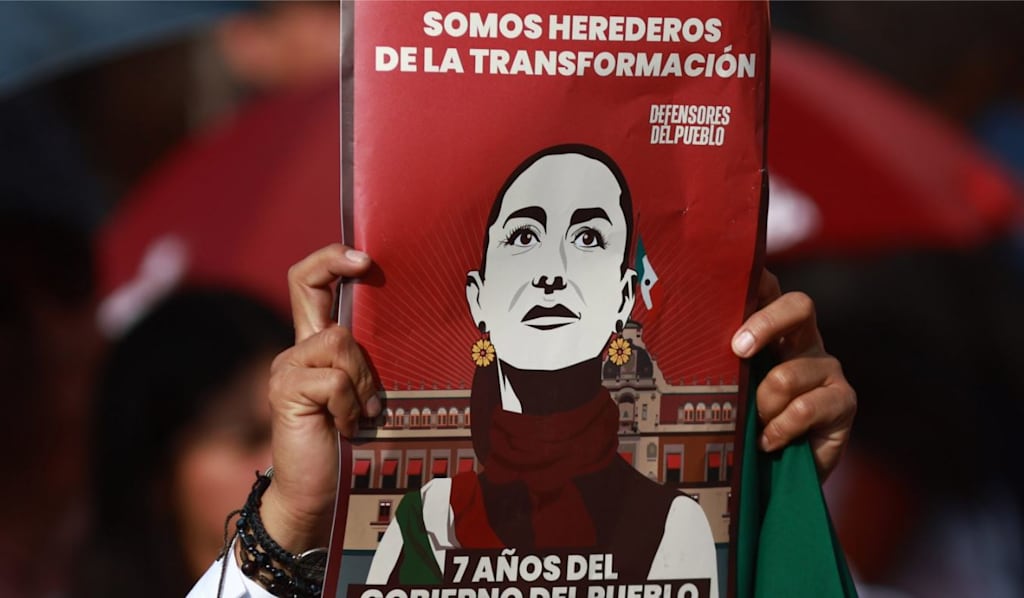
Mexico is entering a decisive phase in the evolution of its political system. Less than a decade after the collapse of the traditional party structure that prevailed in the democratic era, the left-wing governing National Regeneration Movement (Morena) has become the country's dominant political force. Its control extends beyond Claudia Sheinbaum's presidency and into Congress, numerous state governments and an increasing share of key public institutions.
The concentration of political authority has sparked debate over whether Mexico is moving back toward a prolonged period of one-party predominance—the Institutional Revolutionary Party (PRI) alone ruled Mexico for 71 years, from 1929 to 2000—or whether institutional, economic and electoral pressures will eventually restore greater political competition.
The Strategic Importance of Mexico
The answer matters far beyond Mexico's borders and domestic politics. As the United States seeks to strengthen North American supply chains, reduce dependence on China and reinforce hemispheric security, Mexico has become one of Washington's most strategically important partners. Mexico-U.S. bilateral trade exceeds $900 billion annually; manufacturing integration continues to deepen; and both countries share responsibility for migration management, energy cooperation and combating organized crime. Mexico's political trajectory will therefore shape not only its own democratic institutions but also the future competitiveness of North America as a whole.
Mexico's political future will be determined less by ideological competition than by institutional resilience and economic performance. Its democratic evolution increasingly depends on whether Morena's political actors can reconcile their growing electoral power with the institutional pluralism required by a modern economy deeply integrated into North American markets.
Long-Term Economic Realities Balance Changing Political Winds
For now, the balance of evidence suggests that continuity remains the most probable outcome. Morena appears well-positioned to preserve its political preeminence while maintaining a pragmatic relationship with Washington that safeguards trade, investment and regional competitiveness. Yet political dominance is rarely permanent. Economic cycles, demographic change, institutional adaptation and evolving voter expectations will gradually reshape the incentives facing all political actors.
Mexico, therefore, stands not at the end of its democratic transition but at the beginning of a new phase. Whether that phase produces prolonged one-party predominance, renewed political competition or deeper institutional confrontation will largely depend on the interplay among governance, economic performance and the country's strategic partnership with the U.S. The decisions made over the next several years will determine not only Mexico's domestic political balance but also the future architecture of North American economic integration.
The Growing Threat of Narco-Politics
An increasingly important challenge to Morena's legitimacy is the perception that organized crime has penetrated the ruling political structure. Critics have gone so far as to characterize Morena as a "narco-party," a politically charged description reflecting a growing accumulation of allegations and cases involving party figures. U.S. authorities have intensified scrutiny of Mexican politicians suspected of links to criminal organizations, including Morena officials.
In 2026, U.S. prosecutors charged Sinaloa Governor Ruben Rocha Moya and other current and former officials over alleged cooperation with the Chapitos faction of the Sinaloa Cartel. Earlier U.S. investigations also examined allegations that drug traffickers contributed money to Andres Manuel Lopez Obrador's presidential campaign. The broader phenomenon of criminal organizations financing campaigns, influencing local governments or securing protection from public officials represents a potentially more serious threat to Mexican democracy than conventional partisan competition.
Scenario 1: Continued Morena Dominance
The most likely scenario is one of continued Morena dominance accompanied by pragmatic governance. Despite criticism of flawed institutional reforms and the weakening of independent oversight bodies, the governing coalition enters the coming years with significant structural advantages. It maintains high levels of territorial organization, benefits from extensive social welfare programs that enjoy broad public support, and faces an opposition that remains fragmented both organizationally and ideologically.
Rather than marking a return to the authoritarianism of the 20th century, this scenario resembles a competitive but highly asymmetrical political system. Elections will continue to take place regularly, opposition parties will remain legally active, and public debate will persist. However, Morena will retain sufficient electoral strength to preserve control over the federal government while exercising considerable influence across legislative and judicial institutions.
The durability of this model depends largely on economic performance. Although Mexico faces slower global growth and persistent fiscal pressures, several structural trends continue to work in its favor. Nearshoring remains one of the country's greatest strategic opportunities as companies seek to relocate production from overseas closer to the U.S. market. Mexico's industrial integration with its neighbor to the north and the protections provided under the United States-Mexico-Canada Agreement (USMCA) offer significant incentives for continued foreign investment.
For this reason, Mexico City is likely to pursue a pragmatic relationship with Washington despite periodic political disagreements. Ideological differences may continue regarding energy policy, migration, environmental regulations or judicial reforms, but neither side has strong incentives to jeopardize the economic partnership that underpins North American competitiveness.
Mexican policymakers understand that sustained investment and employment require macroeconomic stability, while Washington increasingly views its neighbor to the south as indispensable to America's reindustrialization strategy and efforts to reduce dependence on Asian manufacturing. Relations can therefore continue to follow a familiar pattern of political friction alongside economic cooperation. Public rhetoric may occasionally become confrontational, particularly during election cycles in either country, but both governments will probably compartmentalize disputes while preserving commercial integration.
Domestic institutions in this scenario continue to evolve toward greater executive influence. Independent agencies may lose autonomy; constitutional reforms can further centralize decision-making and political competition might become increasingly uneven. Nevertheless, economic realities impose important constraints. International investors, credit markets, and the requirements of USMCA discourage more radical policy shifts. Business confidence remains a central consideration for any administration seeking to sustain employment and manufacturing growth.
The result is a stable yet increasingly centralized political system in which Morena maintains electoral dominance while pragmatically adapting to the economic imperatives of North American integration.
However, if criminal power due to drug trafficking becomes embedded within political institutions, elections may remain formally competitive while the state's capacity to enforce the rule of law is progressively weakened. For Washington, this nexus between organized crime and political authority is also becoming a national-security issue, raising the possibility that narco-politics could emerge as one of the most consequential sources of tension in the U.S.-Mexico relationship.
Scenario 2: Gradual Return of Political Competition
A second, somewhat less likely scenario envisions the gradual reemergence of a competitive, multiparty political environment driven by economic constraints, institutional tensions and changing public expectations. Rather than resulting from a single political crisis, this evolution would likely stem from the cumulative effects of slower growth, fiscal pressures and declining public confidence in the performance of single-party government.
Morena's greatest political strength has been its ability to combine an anti-establishment narrative with extensive social programs. However, sustaining this coalition will become more difficult as it gradually comes to be seen as the establishment and if economic expansion slows while demands on public finances continue to increase. Rising pension obligations, infrastructure spending and social transfers could place greater pressure on government budgets at a time when Mexico also requires substantial investment in electricity generation, transportation infrastructure, water systems and public security.
Should economic performance disappoint, voters may become more receptive to alternative political options. Unlike in previous elections, the opposition would not necessarily need to defeat Morena outright. Instead, it would seek to gradually rebuild credibility by winning major municipalities, governorships and congressional representation before presenting itself as a viable national alternative.
Business leaders, civil society organizations, universities and regional governments could play an increasingly important role in encouraging institutional moderation. Rather than advocating confrontation, these actors would likely emphasize transparency, judicial independence, regulatory certainty and stronger checks and balances as necessary conditions for attracting long-term investment.
The relationship with the U.S. could also reinforce these incentives. Washington's economic priorities with its trading partners increasingly emphasize reliable institutions, predictable regulation and secure supply chains. As North American manufacturing expands, investors will place greater value on legal certainty and efficient public administration. Mexican governments seeking to maximize nearshoring opportunities may therefore be incentivized to strengthen institutional credibility rather than weaken it.
Under this scenario, democratic competition gradually becomes more balanced. Morena would remain Mexico's largest political force but would encounter stronger institutional constraints and more effective electoral rivals. Policy debates would become increasingly focused on economic management, competitiveness and public security rather than ideological polarization.
Such an outcome would not necessarily represent a rejection of Morena's broader political project. Instead, it would reflect the maturation of Mexico's democratic system as voters demand greater accountability without abandoning social protections that remain politically popular. Alternation in power could once again become a realistic possibility while preserving overall political stability.
Scenario 3: Institutional Crisis
The least likely scenario involves a deeper institutional crisis marked by escalating confrontation among political actors, declining investor confidence, and deteriorating relations with the U.S. Although this outcome currently appears improbable, it cannot be entirely dismissed given the combination of domestic polarization and external uncertainties facing the country.
This scenario could arise if institutional conflicts intensified alongside economic shocks. A prolonged recession, severe fiscal deterioration, financial instability or major security crises could undermine public confidence and heighten political polarization. Disputes over judicial independence, electoral institutions or constitutional reforms could become more confrontational, encouraging competing political forces to question the legitimacy of one another's decisions.
Investor confidence would likely deteriorate under such conditions. Foreign companies evaluating long-term manufacturing investments place considerable importance on legal predictability, contract enforcement and regulatory stability. Perceptions of institutional uncertainty could delay investment decisions precisely when Mexico seeks to capitalize on the global reorganization of supply chains.
Relations with the U.S. could become significantly more complicated if domestic instability coincided with disagreements over migration, security cooperation or trade policy. Washington's concerns about organized crime, fentanyl trafficking and border management have already become central to bilateral relations. If institutional tensions within Mexico reduced the government's ability to address these challenges effectively, American political pressure could intensify.
Trade disputes could also become more frequent if regulatory uncertainty expanded or if disagreements over energy policy, investment protections or USMCA implementation remained unresolved. Although neither country would benefit from prolonged economic confrontation, political dynamics on both sides of the border could make compromise more difficult during periods of heightened domestic polarization.
Even under this adverse scenario, however, several structural factors reduce the likelihood of a complete institutional breakdown. Mexico has an experienced macroeconomic bureaucracy, relatively prudent monetary institutions, and exceptionally deep economic integration with the U.S. These characteristics provide important stabilizing mechanisms that distinguish Mexico from several other Latin American countries that have experienced more severe political crises.
The Role of U.S.-Mexico Relations
The relationship between Mexico and the United States is a critical factor in shaping Mexico's political trajectory. The two countries are deeply intertwined economically, with supply chains crossing the border multiple times before a final product is assembled. This integration creates mutual incentives for stability and cooperation.
As the U.S. seeks to reduce its dependence on China, Mexico has become an increasingly important partner. The nearshoring trend has accelerated, with companies from around the world investing in Mexican manufacturing facilities to serve the U.S. market. This has strengthened Mexico's leverage and rewards stable institutions, predictable regulation and secure supply chains.
However, the relationship is not without tensions. Disputes over energy policy, environmental regulations and labor rights have occasionally strained bilateral ties. The U.S. has also expressed concerns about Mexico's judicial reforms and the weakening of independent oversight bodies. These disagreements are likely to persist, but both countries have strong incentives to manage them constructively.
Mexico stands at a crossroads. The dominance of Morena has reshaped the country's political landscape, but economic realities and institutional pressures will ultimately determine the trajectory of its political evolution. The most likely outcome is continued Morena dominance accompanied by pragmatic governance, but the gradual return of political competition or a deeper institutional crisis cannot be ruled out.
The decisions made over the next several years will shape not only Mexico's domestic political balance but also the future architecture of North American economic integration. As the United States seeks to strengthen its partnership with Mexico, the stability and predictability of Mexico's political institutions will be of paramount importance.
About the Creator
Mark Lim
Hi I am mark an automotive student and a car, tech and food enthusiast ! Im gonna try and post daily & hope you enjoy what I write and do share my page with people you know. I would gladly appreciate it! Cheers
Enjoyed the story? Support the Creator.
Subscribe for free to receive all their stories in your feed.
Comments
There are no comments for this story
Be the first to respond and start the conversation.