
Dust suppression: 7 Ways to Control Dust on Site
Dust Control
Dust control is a critical aspect of maintaining a safe, efficient, and environmentally responsible construction or demolition site. Airborne dust not only poses health risks to workers but can also lead to environmental pollution, equipment damage, and regulatory penalties. Effective dust suppression measures not only ensure compliance with safety standards but also create a healthier and more productive work environment.
In this guide, we’ll explore 7 practical ways to control dust on-site, highlighting proven strategies to minimize dust-related challenges and promote sustainable site operations. Whether you’re managing a large construction project or a small demolition site, these tips will help you keep dust under control.
7 WAYS TO CONTROL DUST ON SITE
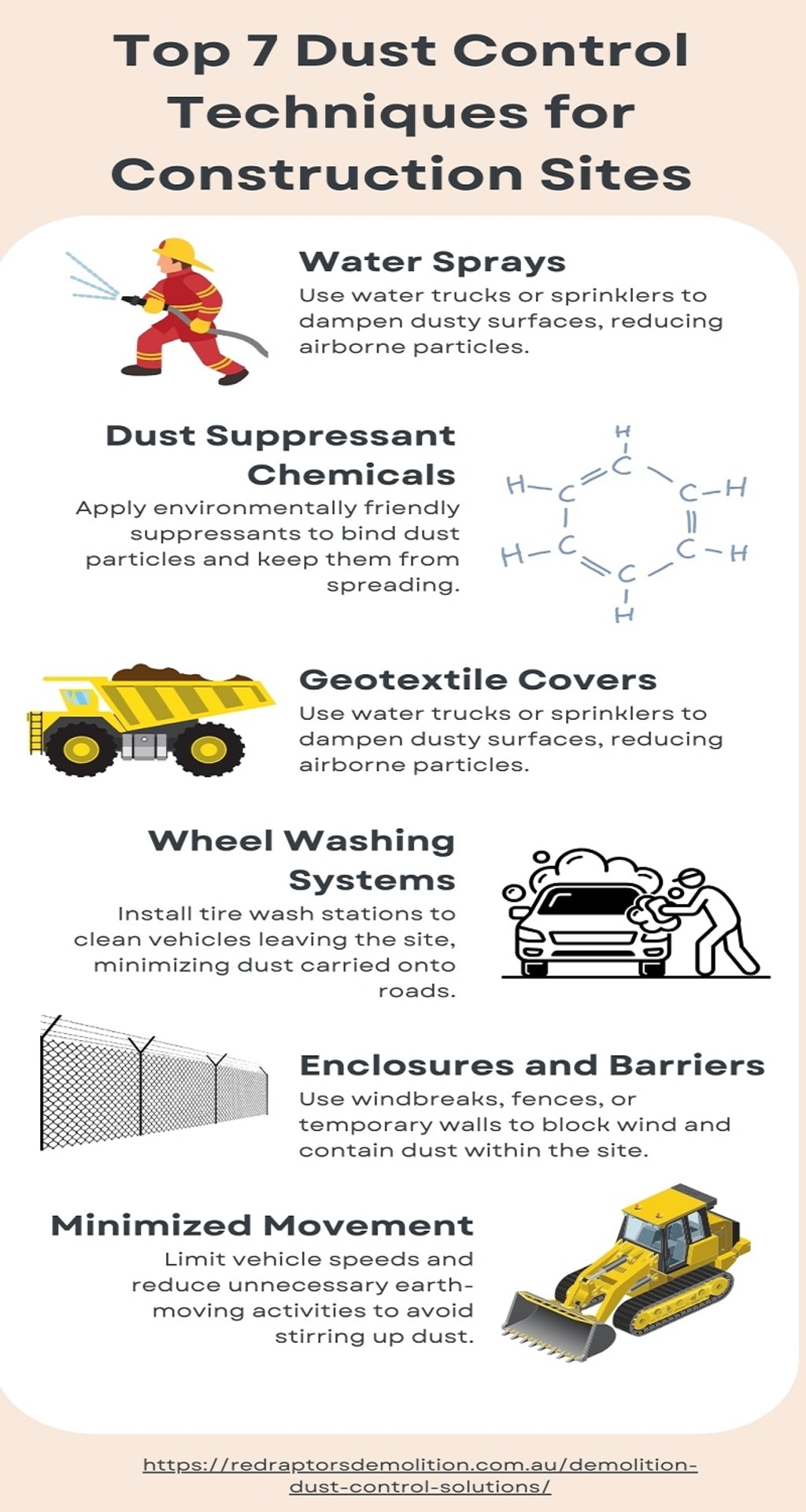
WATER SPRAY SYSTEMS
One of the most common and effective methods, water sprays help to suppress dust by keeping surfaces damp. Strategically placed sprinklers or handheld hoses can reduce airborne particles significantly, making the environment safer for workers.
DUST SUPPRESSION CHEMICALS
Specialized dust control chemicals can be applied to the site to stabilize surfaces and prevent dust from becoming airborne. These solutions are particularly useful for large, unpaved areas where water alone may not suffice.
WIND BARRIERS
Installing wind barriers such as fencing, tarps, or vegetation around the site can reduce wind speed and prevent dust from being carried off-site. This simple method is especially effective in open or windy areas.
VACUUM EXTRACTION SYSTEMS
Using vacuum extraction equipment helps to capture dust directly at its source. Commonly employed for tasks like drilling or grinding, these systems reduce the spread of fine particles in the air.
ROAD STABILIZATION
Unpaved roads and pathways are major contributors to dust on construction sites. Applying gravel, asphalt, or dust suppressants to stabilize these surfaces can minimize dust generation from vehicle and equipment movement.
COVERING MATERIALS AND STOCKPILES
Covering loose materials like sand, soil, or debris with tarps or plastic sheeting prevents dust from being dispersed by wind. Regularly monitoring and securing these covers ensures their effectiveness.
REGULAR SITE CLEANING
Frequent sweeping and cleaning of work areas, combined with the use of industrial vacuums, helps to control dust accumulation. This proactive measure ensures a safer and cleaner site for everyone.
By implementing these strategies, site managers can tackle dust effectively, ensuring compliance with regulations and safeguarding the health and well-being of their team.
BENEFITS OF DUST CONTROL ON CONSTRUCTION SITES
IMPROVED AIR QUALITY
Effective dust suppression significantly enhances air quality, creating a healthier working environment for employees and reducing respiratory risks. Cleaner air also benefits nearby communities, fostering goodwill.
COMPLIANCE WITH REGULATIONS
Construction projects must adhere to strict environmental and health standards. Proper dust control measures help ensure compliance with local and national regulations, avoiding potential fines or project delays.
ENHANCED VISIBILITY AND SAFETY
Dust clouds can obscure visibility on-site, increasing the risk of accidents. Controlling dust improves visibility, allowing workers to navigate the site more safely and operate equipment efficiently.
PROTECTION OF EQUIPMENT AND MATERIALS
Dust can infiltrate machinery and tools, causing wear and tear or reducing their lifespan. Containing dust not only protects equipment but also minimizes maintenance costs and downtime.
REDUCTION OF ENVIRONMENTAL IMPACT
Uncontrolled dust can affect nearby ecosystems by contaminating soil and water sources. Implementing suppression strategies minimizes environmental damage and promotes sustainable practices.
POSITIVE PUBLIC PERCEPTION
Construction sites are often situated near residential or commercial areas. Managing dust effectively reduces nuisance to neighbors and improves the project’s reputation, fostering a positive public image.
Dust control is more than a safety measure; it’s an investment in efficiency, compliance, and community relations. By adopting proactive measures, construction sites can reap the benefits of a cleaner, safer, and more sustainable operation.
FAQs
What is dust suppression, and why is it important on construction sites?
Dust suppression involves using methods to minimize airborne particles on construction sites. It is essential for protecting worker health, maintaining visibility, ensuring safety, and complying with environmental regulations.
What are the common methods of dust suppression on construction sites?
Some common methods include water spraying, using dust suppressants like polymers, installing windbreaks, applying soil stabilizers, and using proper equipment with dust control features.
How does dust suppression improve worker safety?
By reducing airborne particles, dust suppression improves air quality, visibility, and overall site conditions, minimizing respiratory issues and the risk of accidents caused by poor visibility.
Are there eco-friendly dust control methods available?
Yes, eco-friendly methods include using biodegradable dust suppressants, water-efficient misting systems, and windbreaks made from natural materials. These options effectively manage dust while reducing environmental impact.
Is dust suppression mandatory for construction projects?
In many regions, dust suppression is a legal requirement to comply with health and safety regulations. Failure to manage dust effectively can result in penalties, project delays, and harm to the environment or nearby communities.
About the Creator
Enjoyed the story? Support the Creator.
Subscribe for free to receive all their stories in your feed.
Comments
There are no comments for this story
Be the first to respond and start the conversation.