
Dunleavy Vetoes Two More Bills, Pushing Total to 31
The governor's latest vetoes target university transparency and hunting license residency requirements.

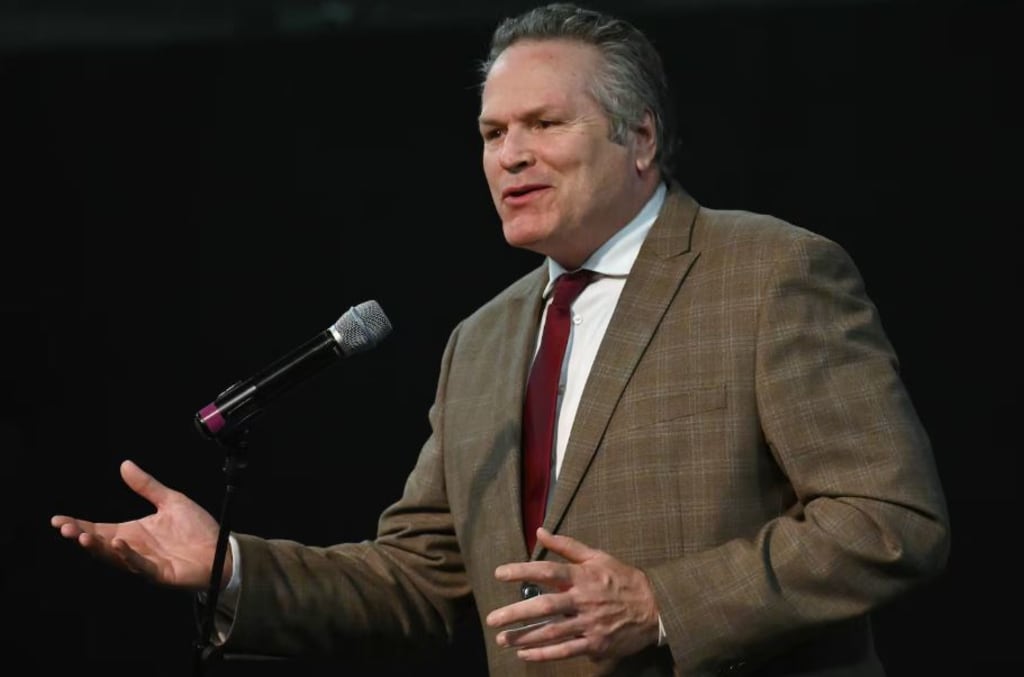
Gov. Mike Dunleavy vetoed two bills Monday, bringing the total number of bills vetoed during the two-year legislative term to 31. The Republican governor, who is at odds with the bipartisan majorities governing the House and Senate, has set the highest two-year veto tally since former Democratic Gov. Tony Knowles vetoed 25 bills between 1995 and 1996.
Like many of the other bills vetoed by Dunleavy in recent weeks, the latest vetoed measures had passed earlier this year with bipartisan support. In an interview with a Daily News reporter ahead of the Monday vetoes, Dunleavy made no mention of them, leaving lawmakers and advocates to learn of the decisions through official announcements.
The governor's aggressive use of the veto pen has become a defining feature of his tenure, creating ongoing friction with a Legislature that has frequently sought to check his executive authority. While Dunleavy has argued that his vetoes are necessary to prevent government overreach and unnecessary spending, critics contend that he is systematically undermining the will of the people's elected representatives.
House Bill 176: University Fee Transparency
House Bill 176, sponsored by Fairbanks Democratic Rep. Ashley Carrick, would have required the University of Alaska to notify students when imposing new mandatory fees. It passed the Legislature in May, with unanimous support in the Senate and with support from 33 out of 40 House members.
Supporters said the bill was needed to improve transparency and ensure students are aware when the university fee structure is altered. The measure was co-sponsored by numerous lawmakers, including members of the Republican minority caucuses in the House and Senate, demonstrating the broad, bipartisan appeal of the legislation.
The bill's supporters argued that students should not be caught off guard by unexpected fees, which can add significant financial burden to already costly tuition. By requiring advance notice, the bill aimed to allow students and their families12 months to plan and budget accordingly. It was seen as a straightforward consumer protection measure that would impose minimal administrative burden while providing meaningful transparency.
Dunleavy's Reasoning: The governor wrote that the two-paragraph bill "places unnecessary statutory requirements on the governance and day-to-day administration of the University of Alaska." Mandating that the university notify students when fees are increased "limits the (board of regents') flexibility and invites further legislative micromanagement of university operations," Dunleavy wrote.
His veto message suggested that the university's Board of Regents, not the Legislature, should have sole authority over fee structures and notification processes. Critics of the veto argued that the governor's stance prioritizes administrative convenience over student welfare, and that the university's existing notification practices were inconsistent and often inadequate.
House Bill 93: Hunting and Fishing Residency Requirements
House Bill 93, sponsored by Sitka independent Rep. Rebecca Himschoot, would have imposed stricter residency requirements on Alaskans seeking resident hunting and fishing licenses. That measure passed the Senate 13-6 and the House 24-16, reflecting a narrower but still significant majority.
The measure had stemmed from concerns that current law allows people who do not live in Alaska year-round to benefit from cheaper licenses and higher bag limits. The measure would have applied the same standards for hunting and fishing licenses as those that currently apply to Alaskans who apply for a Permanent Fund dividend requiring applicants to live in Alaska for most of a 12-month period, unless they have an allowable absence.
Supporters of the bill argued that Alaska's fish and wildlife resources should be managed for the benefit of full-time residents who contribute to the state's economy and tax base year-round. They expressed frustration that part-time residents and seasonal visitors could access the same hunting and fishing privileges as those who call Alaska home, often at a fraction of the cost.
Dunleavy's Reasoning: In a letter accompanying the veto, Dunleavy wrote that such requirements are "unnecessarily restrictive." Though the bill would have created explicit carve-outs for military members and students, Dunleavy claimed that the bill could have caused them to lose their residency status.
"The bill also increases administrative burden by requiring additional regulations, documentation and interagency data sharing while granting broad discretion in residency determinations. These changes create unnecessary complexity and uncertainty for applicants without demonstrating a commensurate benefit to the state's management of resident licensing," Dunleavy wrote.
Opposition: Some of the most vocal opposition to the bill has come from commercial pilots, who say they would not qualify for resident hunting and fishing licenses under the bill due to their long work-related absences from Alaska. The Alaska Air Carriers Association and other industry groups lobbied against the measure, arguing that it would penalize Alaskans who work in essential transportation roles.
The Veto Record in Context
Of the 82 bills passed by the Legislature since the beginning of the year, 60 have become law, including two after lawmakers overrode Dunleavy's vetoes. Two bills are still awaiting transmittal to the governor's desk for consideration.
Dunleavy's 31 vetoes over the two-year term represent a significant exercise of executive power. By comparison, his predecessor, independent Gov. Bill Walker, vetoed 14 bills during his term, while Republican Gov. Sean Parnell vetoed 23 over four years.
The governor's vetoes have touched a wide range of policy areas, including education funding, criminal justice reform, and environmental regulation. Supporters of the vetoed bills have expressed frustration that the governor's actions consistently override the will of the Legislature, even when legislation passes with overwhelming bipartisan support.
Political Implications
The high number of vetoes underscores the ongoing tension between Dunleavy and the Legislature's bipartisan majorities. Lawmakers have expressed frustration with the governor's willingness to reject bills that received widespread support, and some have suggested that the Legislature may need to consider ways to limit the governor's veto power or strengthen the override process.
To override a gubernatorial veto, the Legislature needs a two-thirds majority in both chambers a high bar that has been met only twice this session. The difficulty of overriding vetoes has emboldened Dunleavy, who has faced little consequence for rejecting popular legislation.
As the legislative session approaches its conclusion, the question remains whether the governor's aggressive use of the veto pen will have lasting political consequences. His critics argue that he is out of step with the priorities of Alaska voters, while his supporters maintain that he is fulfilling his role as a check on legislative excess.
With two bills still pending, the total number of vetoes could increase further before the legislative term concludes. Lawmakers are also weighing whether to attempt additional override votes on the latest vetoed measures, though success appears unlikely given the required two-thirds thresholds.
For now, the governor's veto record stands as a testament to his willingness to assert executive authority over the Legislature. Whether that approach will be rewarded or punished by voters remains to be seen, but it has already reshaped the dynamics of Alaska politics.
The circus of Alaska politics is always evolving. But with 31 vetoes in two years, Dunleavy is making it clear that he is willing to use his executive power to shape the state's legislative agenda and that the Legislature faces an uphill battle to advance its priorities.
About the Creator
Mark Lim
Hi I am mark an automotive student and a car, tech and food enthusiast ! Im gonna try and post daily & hope you enjoy what I write and do share my page with people you know. I would gladly appreciate it! Cheers
Enjoyed the story? Support the Creator.
Subscribe for free to receive all their stories in your feed.
Comments
There are no comments for this story
Be the first to respond and start the conversation.