
Drone Logistics Market: Delivery Takes Flight Fast
How aerial logistics is reshaping speed, access, and last mile delivery
Hook Intro
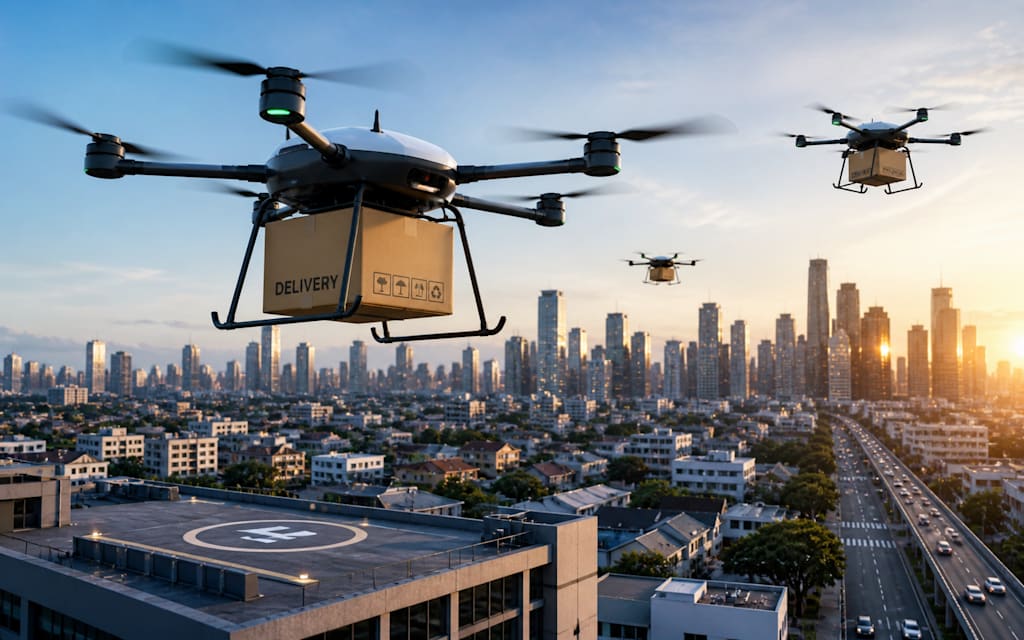
The package does not arrive by van. It does not wait in traffic or search for parking. Instead, it descends quietly from the sky, landing with precision at your doorstep. What once seemed futuristic now feels increasingly normal.
Across industries, speed and accessibility are becoming non negotiable. From medical supplies in remote areas to e commerce deliveries in crowded cities, logistics is evolving beyond roads. At the center of this shift is the Drone Logistics and Transportation Market, where aerial mobility is redefining how goods move from point A to point B.
Why Drone Logistics Is Gaining Momentum
Traditional delivery systems face limits. Traffic congestion, fuel costs, and infrastructure gaps slow down even the most efficient networks. Drones bypass many of these constraints by taking to the air.
They offer faster delivery times, lower operational costs in specific scenarios, and access to areas that are otherwise difficult to reach. This makes them especially valuable for urgent deliveries such as healthcare supplies, emergency equipment, and time sensitive parcels.
According to Mordor Intelligence, the Drone Logistics and Transportation Market size is growing at a strong compound annual growth rate of around 20 percent during the forecast period. This growth reflects rising demand for faster logistics, technological maturity, and supportive regulatory developments in key regions.
Understanding Drone Logistics and Transportation Market Size and Share
The Drone Logistics and Transportation Market size is expanding as industries experiment with and adopt aerial delivery models. E commerce, healthcare, and industrial supply chains are among the primary adopters.
Payload capacity plays a key role in defining applications. Lightweight drones dominate short distance deliveries, while larger drones are being developed for heavier cargo and longer routes.
The Drone Logistics and Transportation Market share is influenced by regional regulations and infrastructure readiness. North America and Europe lead in pilot programs and commercial deployments, while Asia Pacific is rapidly advancing due to strong manufacturing ecosystems and urban demand.
This distribution highlights how regulation and innovation together shape market growth.
Drone Logistics and Transportation Market Trends Driving Growth
Several Drone Logistics and Transportation Market trends are accelerating adoption.
• Last mile optimization: Drones reduce delivery times in congested urban areas.
• Healthcare applications: Rapid transport of medical supplies improves emergency response.
• Autonomous navigation: AI powered routing enhances efficiency and safety.
• Integration with logistics networks: Drones complement traditional delivery systems rather than replace them.
These trends show how drone logistics is becoming part of a broader connected supply chain ecosystem.
Challenges Slowing Widespread Adoption
Despite rapid progress, the market faces challenges. Airspace regulations remain complex and vary by country. Safety concerns and public acceptance also influence deployment speed.
Battery limitations affect flight range and payload capacity. Weather conditions can disrupt operations, making reliability a key area of focus for manufacturers and service providers.
Addressing these issues requires collaboration between regulators, technology providers, and logistics companies.
This evolving landscape shapes the broader Drone Logistics and Transportation Market analysis, where innovation must align with safety, policy, and operational consistency.
Drone Logistics and Transportation Market Forecast and the Future
The Drone Logistics and Transportation Market forecast points toward continued expansion as technology improves and regulatory clarity increases. Drones are expected to play a growing role in hybrid logistics networks, supporting faster and more flexible delivery models.
Urban air mobility systems, smart city integration, and improved battery technologies will further strengthen adoption. As businesses prioritize speed and efficiency, aerial logistics will move from pilot programs to mainstream operations.
The shift is not about replacing existing systems. It is about enhancing them.
Final Thought
Delivery has always been about distance and time. Drones challenge both by removing physical barriers and redefining expectations.
If a package could reach you in minutes from the sky, how would that change the way you shop, work, or live?
About the Creator
Enjoyed the story? Support the Creator.
Subscribe for free to receive all their stories in your feed.
Comments
There are no comments for this story
Be the first to respond and start the conversation.