
Does Bottle Feeding Affect Teeth Alignment
Bottle Feeding
As parents, one of the most important aspects of caring for your child is ensuring their overall health and well-being, which includes their dental development. A common question among parents is whether bottle feeding can impact their child's teeth alignment. While breastfeeding is often encouraged for its numerous health benefits, many babies are bottle-fed, and understanding the potential effects of bottle feeding on teeth is essential. This article explores how prolonged bottle feeding, particularly when done improperly or past a certain age, may influence dental health and the development of teeth alignment.
THE IMPACT OF BOTTLE FEEDING ON TEETH DEVELOPMENT
Bottle feeding can have both positive and negative effects on a child's dental health, depending on how and when it's done. One of the primary concerns is the duration and frequency of bottle use. When babies are allowed to drink from a bottle for extended periods, especially while lying down or falling asleep with it in their mouths, this can increase the risk of tooth decay and misalignment.
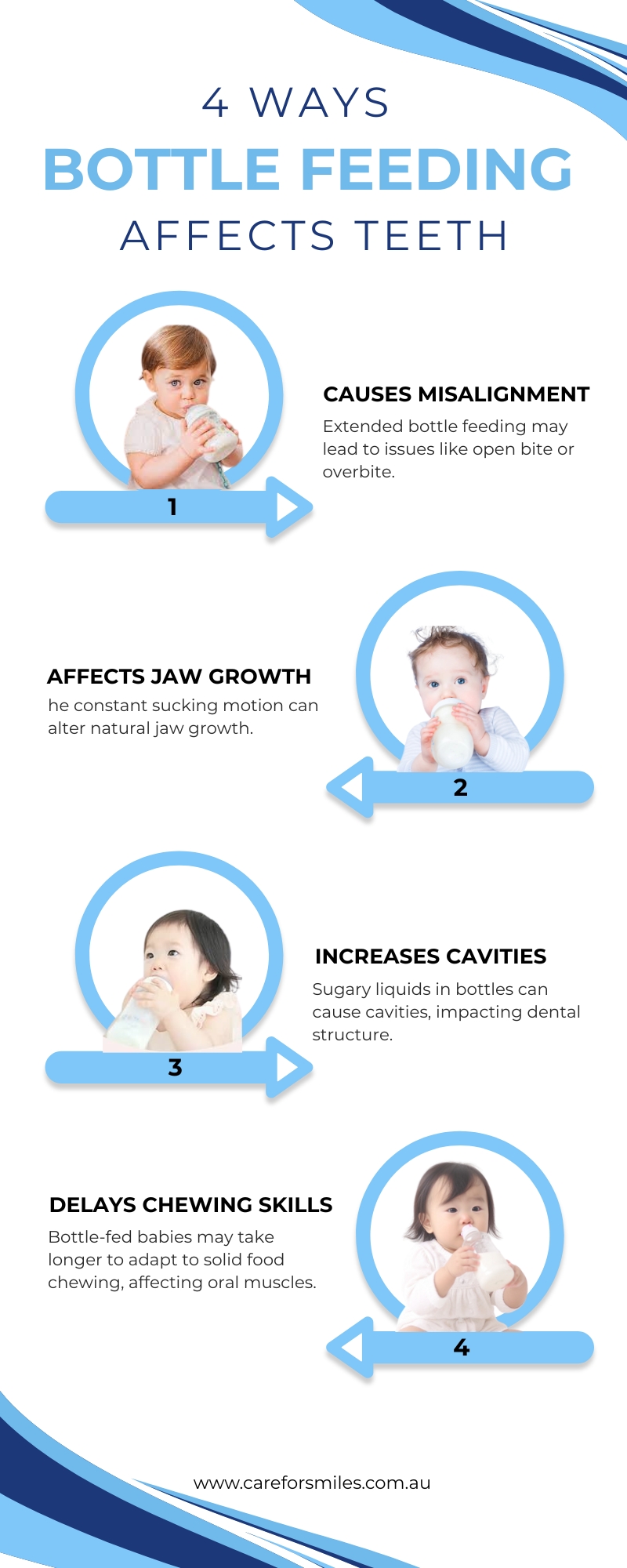
Tooth Decay: If a child is consistently exposed to milk, juice, or other sugary liquids from a bottle, especially at night, the sugars can sit on their teeth for a long time. This creates an ideal environment for harmful bacteria to grow, potentially leading to cavities and, in severe cases, gum disease. The longer the bottle stays in the mouth, the higher the likelihood of these dental issues.
Teeth Misalignment: Prolonged bottle use can also contribute to improper teeth alignment, particularly when the child continues using the bottle beyond the age when their teeth start coming in. This can lead to problems like an open bite or a crossbite, where the upper and lower teeth don’t align correctly when the mouth is closed. The pressure from the bottle nipple can cause these changes in the development of the child's teeth and jaw.
In the next section, we’ll discuss how to minimize the risks associated with bottle feeding to ensure your child’s teeth develop properly.
HOW TO MINIMIZE THE RISKS OF BOTTLE FEEDING ON TEETH ALIGNMENT
While bottle feeding is a common practice, there are ways to reduce its potential negative effects on your child's dental health. By adopting certain habits and practices, parents can help ensure their child’s teeth develop properly and avoid issues such as tooth decay and misalignment.
Avoid Bottle Feeding at Bedtime: One of the most significant factors contributing to tooth decay and alignment issues is allowing your child to fall asleep with a bottle in their mouth. When a baby sleeps with a bottle, the liquid pools in their mouth, leading to prolonged contact with sugary substances that can cause cavities. To prevent this, always remove the bottle once your baby has finished drinking and before they fall asleep.
Wean Off the Bottle Early: Pediatric dentists recommend transitioning your child from the bottle to a cup around the age of 12 months. Prolonged use of a bottle, especially after the age of 2, can lead to potential alignment issues like an open bite or an overbite. Gradually introduce a sippy cup or regular cup to encourage better oral development.
Offer Water Instead of Sugary Liquids: If your child uses a bottle during the day, try to limit sugary liquids like milk or juice. Instead, offer water, which won't contribute to tooth decay. If milk or juice is necessary, make sure it's consumed during mealtimes, followed by a water rinse to wash away any leftover sugars.
Regular Oral Hygiene: Even before the first tooth appears, it’s essential to clean your baby’s gums with a soft cloth after feedings. Once teeth come in, use a baby toothbrush with water to gently clean them. Establishing a good oral hygiene routine early on will help prevent plaque buildup and ensure a healthy mouth as their teeth begin to align.
By following these strategies, parents can minimize the risks associated with bottle feeding, promoting healthy teeth and optimal alignment for their child's long-term dental health.
WHEN TO CONSULT A DENTIST ABOUT BOTTLE FEEDING CONCERNS
While bottle feeding is a common practice, it's important to stay vigilant about your child’s dental health and seek professional guidance when necessary. If you're concerned about the effects of bottle feeding on your child’s teeth, a dentist can provide valuable advice and early intervention. Here are some key signs and situations where consulting a pediatric dentist is recommended:
Visible Signs of Tooth Decay: If you notice white spots, yellowing, or visible cavities on your child’s teeth, these may be signs of early tooth decay. This is especially concerning if your child frequently uses a bottle containing sugary liquids. A dentist can assess the extent of the decay and recommend preventive measures, such as fluoride treatments or changes in feeding habits.
Development of Misalignment: If you notice that your child’s teeth are not aligning properly, such as an open bite (where the upper and lower teeth do not meet) or other bite issues, it’s important to have them evaluated by a dentist or orthodontist. Early assessment can help determine whether bottle feeding has played a role in the misalignment and if early orthodontic intervention is needed.
Difficulty Transitioning from Bottle to Cup: If your child resists moving from a bottle to a cup beyond the recommended age of 12-18 months, it may be helpful to consult with a dentist. They can offer tips to ease the transition and ensure that your child’s oral development continues on track.
Frequent Ear Infections or Oral Health Issues: Persistent ear infections or other signs of oral health problems, such as swollen gums, may be related to improper bottle feeding habits. A pediatric dentist can examine your child’s mouth and offer guidance on proper feeding techniques to avoid these complications.
By addressing concerns early with your child’s dentist, you can help prevent long-term dental issues and ensure your child’s teeth grow and develop healthily. Regular dental check-ups are essential, so don’t hesitate to schedule an appointment if you have any concerns about bottle feeding and your child's dental health.
Bottle feeding is a practical and necessary choice for many parents, but it’s essential to be mindful of its potential effects on a child’s dental health. Prolonged bottle use, especially with sugary liquids, can contribute to tooth decay and misalignment. However, by following best practices—such as avoiding bedtime bottles, transitioning to a cup at the right age, and maintaining proper oral hygiene—parents can support their child’s healthy dental development. Regular dental visits also play a crucial role in preventing and addressing any early issues. With the right approach, you can ensure that bottle feeding does not negatively impact your child’s teeth alignment or overall oral health.
FREQUENTLY ASKED QUESTIONS
Can bottle feeding cause crooked teeth?
Yes, prolonged bottle feeding, especially beyond infancy, can contribute to misalignment issues like an open bite or overbite. The pressure from bottle nipples may influence how teeth grow and align.
At what age should I stop bottle feeding to prevent dental issues?
Pediatric dentists recommend weaning your child off the bottle by 12 to 18 months to reduce the risk of dental misalignment and tooth decay.
Is breastfeeding better for teeth alignment than bottle feeding?
Studies suggest that breastfeeding may promote better jaw and dental development compared to bottle feeding. However, proper bottle-feeding techniques and early weaning can still support healthy teeth alignment.
How can I prevent my child from getting cavities from bottle feeding?
To prevent cavities, avoid putting your child to sleep with a bottle, limit sugary liquids, clean their gums and teeth regularly, and encourage them to drink from a cup as they grow.
Should I take my child to a dentist if they still use a bottle after 2 years?
Yes, if your child is still using a bottle past the age of 2, it’s a good idea to consult a dentist. They can assess any potential impact on teeth alignment and provide guidance on transitioning to a cup.
About the Creator
Enjoyed the story? Support the Creator.
Subscribe for free to receive all their stories in your feed.
Comments
There are no comments for this story
Be the first to respond and start the conversation.