
Digital Watch Market: The Fastest-Growing Segments In Consumer Technology
How smartwatches, health monitoring, and the athleisure generation are driving one of the fastest-growing sectors.

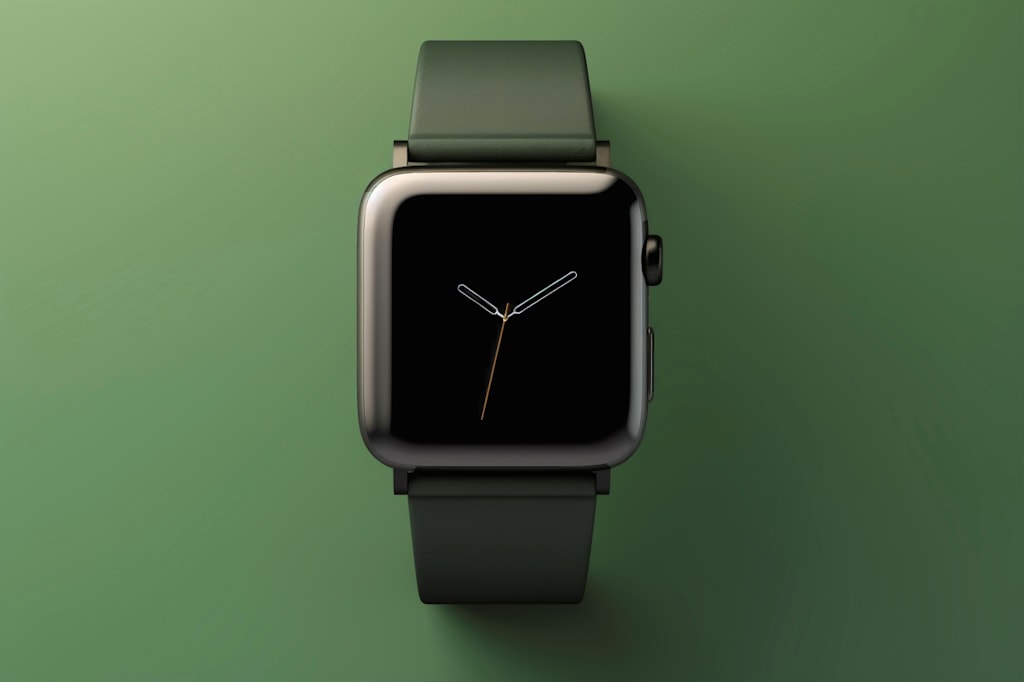
The wristwatch had a straightforward job for most of its history.
Tell the time. Maybe the date. For dress watches, signal something about taste and status. For sports watches, add a stopwatch and perhaps a depth gauge. The technology was mechanical, the function was singular, and the value proposition was clear.
That description barely applies to the device most people are strapping to their wrists today.
According to Mordor Intelligence, the global digital watch market is projected to register a 13.2% CAGR through 2030. That growth rate places it among the faster-expanding segments in consumer technology, and the reasons behind it reflect genuine shifts in how people think about health, fitness, and what they want a device they wear all day to actually do for them.
Why Young Consumers Drove the Initial Shift
Digital watches found their earliest mainstream audience among younger consumers who had grown up with smartphones and were already comfortable with the idea that a device in their pocket or on their wrist could do more than one thing.
For this demographic, the leap from a phone that tracked steps and displayed notifications to a watch that did the same things without requiring the phone to be visible was a natural one. The watch became an extension of the smartphone ecosystem rather than a separate and competing device. Notifications appeared on the wrist. Music was controlled without reaching into a pocket. Payments were made with a tap.
The device literacy that younger consumers had developed through years of smartphone use made adopting digital watches feel intuitive rather than complicated. And the social visibility of a watch meant that adoption spread through peer observation in ways that less visible technology does not.
Health Monitoring Changed Everything
The feature that transformed digital watches from convenient smartphone accessories into genuinely essential devices for a much broader demographic was health monitoring.
Heart rate tracking came first and established the baseline expectation that a watch could provide meaningful physiological data continuously and passively. Sleep monitoring added another dimension by giving users information about something that happened while they were unconscious and therefore could not observe directly. Step counting and activity tracking connected the device to the broader wellness conversation in ways that made it relevant to people who had no particular interest in technology but a genuine interest in their own health.
What made this compelling was the combination of passivity and continuity. A health monitoring device that required active engagement to produce data would be used occasionally. A device worn all day and night that generates a continuous stream of health data without requiring anything from the user is something different. It becomes a health record that builds automatically over time and surfaces patterns that would be invisible to any other form of observation.
The athleisure trend provided cultural context that reinforced this shift. As the boundary between sportswear and everyday clothing dissolved, the boundary between sports technology and everyday technology dissolved alongside it. A watch designed for athletic performance that could also be worn in a meeting or at dinner became appealing to consumers who identified with active lifestyles, even if their actual athletic activity was modest.
Developing Markets and the Fastest Growing Opportunity
The initial adoption of digital watches was concentrated in North America, Western Europe, and the most tech-forward Asian markets. The growth story going forward is increasingly about what happens in markets where digital watch penetration is still relatively low, but the conditions for rapid adoption are developing quickly.
India, Brazil, South Africa, and comparable markets are seeing rising disposable incomes, expanding smartphone penetration that creates the ecosystem digital watches connect to, and growing consumer awareness of health and fitness as priorities worth spending on. Government investment in sports infrastructure across several of these markets is reinforcing participation in physical activity in ways that create demand for performance and health monitoring technology.
Local manufacturing expansion in several Asian markets has been reducing costs and improving the availability of digital watches at price points accessible to middle-income consumers in these regions. The combination of falling hardware costs, growing ecosystem familiarity, and rising health consciousness is creating conditions for accelerated adoption that mirror what happened in more developed markets a few years earlier.
What the Technology Actually Delivers Now
The feature set of current digital watches has expanded considerably beyond what the category offered even five years ago.
Built-in sensors now measure temperature alongside heart rate and movement. Atmospheric pressure sensors enable altitude tracking useful for hikers and climbers. GPS has moved from a premium feature to a standard expectation in sports-focused models. Blood oxygen monitoring has been added across multiple product lines. Some devices have received regulatory clearances for detecting specific cardiac conditions, moving from wellness monitoring into the territory adjacent to medical device classification.
The software layer has developed alongside the hardware. Sleep analysis has moved from simple tracking of movement during sleep to more sophisticated assessment of sleep stages and quality. Stress monitoring attempts to identify physiological markers of stress responses and prompt intervention. Recovery metrics guide training decisions for athletes by integrating multiple data streams into actionable recommendations.
This expansion of capability has continuously renewed the purchase rationale for existing users while simultaneously expanding the category's appeal to new buyer segments who find specific features relevant to their particular health or lifestyle interests.
A Closing Thought
The watch has always occupied a particular position among personal objects. It sits on the body constantly. It is visible to others. It carries personal significance in ways that most consumer electronics do not quite manage.
What has changed is what it is capable of doing while sitting there. A device that monitors health continuously, connects to digital ecosystems seamlessly, and adapts to both athletic performance and everyday social contexts is serving a role that no previous version of the wristwatch could claim.
With the market growing at 13.2% CAGR through 2030, the wristwatch has clearly found a second relevance more significant than the first.
It still tells the time. It just does considerably more than that now.
About the Creator
Harvey Specter
I am passionate about Food & Beverage, Ag, & Animal Nutrition companies. I help organizations unlock their data's potential and fuel business growth. My expertise transforms raw data into actionable insights for strategic decisions.
Enjoyed the story? Support the Creator.
Subscribe for free to receive all their stories in your feed.
Comments
There are no comments for this story
Be the first to respond and start the conversation.