
Digital Signage vs. Traditional Signage: Which Is Better for Your Business?
Compare Digital vs. Traditional Signage: Which is the Right Fit for Your Business?


Signage is an essential tool for attracting customers, promoting products, and enhancing brand recognition. When it comes to choosing the best signage, businesses are often torn between digital signage and traditional signage.
Understanding which option is better for your business can lead to improved visibility and a stronger connection with your customers. This article will compare both types of signage, breaking down their benefits, costs, ideal use cases, and additional factors that differentiate them.
Did you know? Businesses using digital signage see up to a 47% increase in customer engagement compared to traditional methods!
1. What is Digital and Traditional Signage?
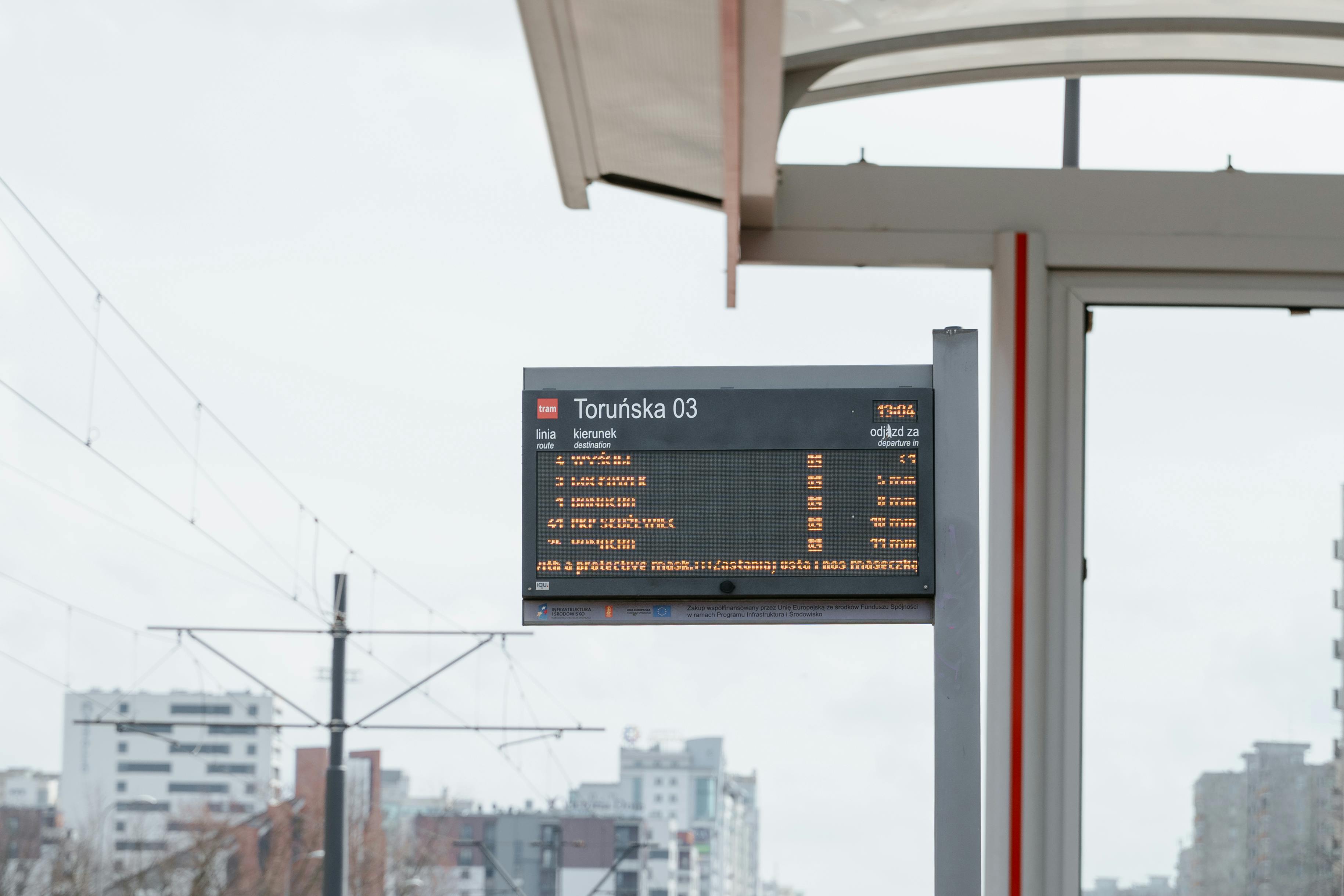
Digital signage refers to the use of digital displays, such as LED screens, LCD panels, or video walls, to communicate messages to an audience. Unlike static signs, digital signage allows dynamic content, such as animations, videos, and interactive elements.
Traditional signage, on the other hand, includes static, printed signs like posters, banners, billboards, and window graphics. These signs use materials like paper, vinyl, wood, or metal to convey the intended message.

“ Retail stores can use AI to adjust digital signage content based on foot traffic patterns, showing relevant offers during peak times. This trend will play a crucial role in marketing strategies,”
~ Asfand Yar Junejo, marketing manager at Blink Signs.
Key Features of Digital Signage:
- Flexible content updates
- Supports video, animations, and dynamic graphics
- High initial cost but low maintenance costs
- Easily integrated with social media and live data feeds
Key Features of Traditional Signage:
- Simple and straightforward
- Lower initial cost
- Durable but challenging to update
- Effective for long-term, static messages
2. Benefits of Digital and Traditional Signage for Your Business
Both digital and traditional signage have their unique benefits, and here we’ll outline what each can bring to your business.
Benefits of Digital Signage
- Increased Visibility: Bright LED displays and animations are hard to miss, even in a crowded environment.
- Enhanced Customer Engagement: Digital signage allows for interactive elements, which can keep customers engaged longer.
- Cost-Effectiveness in the Long Term: Although digital signs have a higher initial cost, their easy content updates reduce long-term expenses.
- Real-Time Content Updates: Digital signage allows you to change messages instantly, making it ideal for promotions and urgent updates.
- Dynamic Advertising Opportunities: Display multiple ads and promotional content throughout the day, maximizing advertising potential.
Benefits of Traditional Signage
- Lower Initial Cost: Traditional signs are generally more affordable to produce, making them accessible for small businesses.
- Reliability: Since they do not rely on electricity or software, traditional signs are reliable and always on display.
- Brand Consistency: Printed signs can consistently reflect brand colors and logos, creating a cohesive image.
- No Technical Issues: Traditional signs do not face technical malfunctions or power outages, ensuring continuous visibility.
- Tangible Appeal: Traditional signs offer a physical presence that can be appealing, especially for local businesses and events.
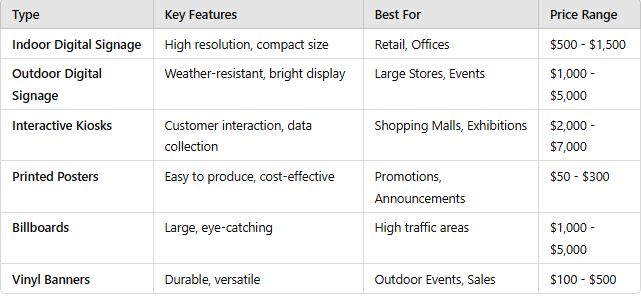
3. Types of Signage: A Detailed Comparison
When comparing digital signage and traditional signage, it’s important to consider where and how they are used. Below is a detailed comparison between different types of signage.
4. How to Choose the Best Signage Solution
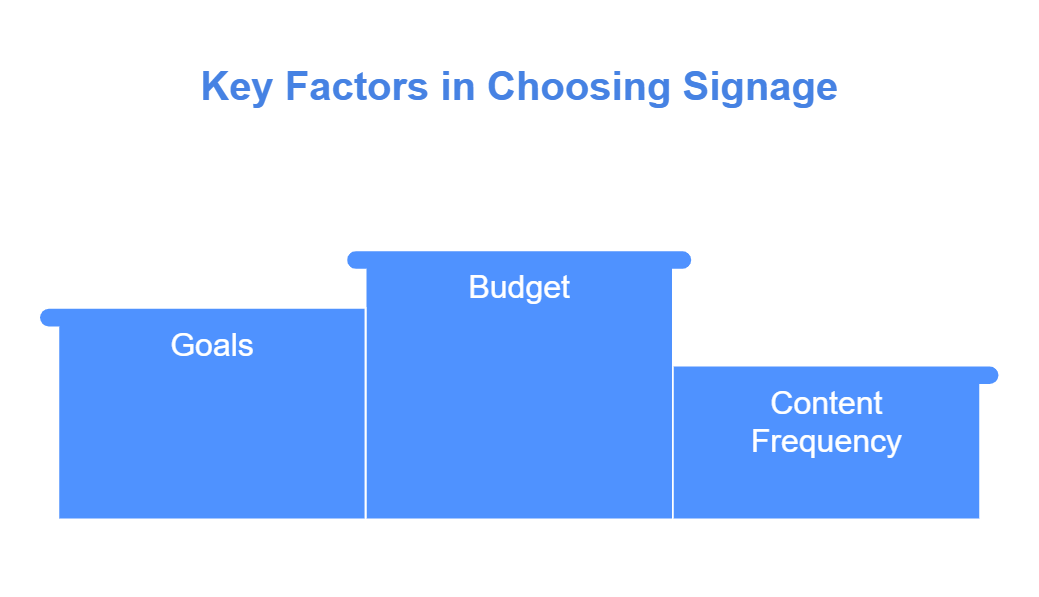
Selecting the right signage for your business depends on several factors. Here are some tips to help you make the best choice:
- Assess Your Budget: Digital signage requires a higher upfront cost, whereas traditional signage is more affordable initially.
- Define Your Goals: Decide whether you need dynamic, changeable content or a long-lasting, simple display.
- Research Suppliers: Look for reliable vendors who specialize in the type of signage you need.
- Consider Your Location: Digital signage works great indoors and in high-traffic areas, while traditional signs are ideal for consistent outdoor displays.
- Audience Engagement: If engaging with your audience is a priority, digital signage offers interactive features that can enhance customer experience.
- Content Frequency: Consider how often you need to change your messaging. Digital signage is perfect for frequent updates, while traditional signage suits long-term messages.
- Space Availability: Assess the available space. Digital displays can be more compact and versatile, while traditional signs may need more room.
5. Common Mistakes to Avoid with Signage
When deciding between digital and traditional signage, avoid these common mistakes:
Ignoring Proper Placement
- Make sure signs are placed where they’re most visible to your target audience.
Overlooking Design Consistency
- Ensure that your signs—whether digital or traditional—maintain a consistent brand message and look.
Not Considering Customer Needs
- Use signage that speaks directly to the needs of your customers. For instance, include interactive content if your audience prefers engagement.
Neglecting to Update Content (for Digital Signage)
- Failing to keep content fresh and relevant can make digital signage less effective.
Underestimating Maintenance Costs
- Even traditional signs may need maintenance or replacement due to weather damage or wear and tear.
Choosing the Wrong Size
- Ensure your signage is the right size for its location—too small, and it might not be noticed; too large, and it could overwhelm the space.
6. Case Studies: Success Stories Using Digital and Traditional Signage
Case Study 1:
A retail store in Los Angeles used digital signage to run promotions and highlight their best-selling products. As a result, they saw a 30% increase in in-store engagement and a 15% boost in sales within two months.
Case Study 2:
A small bakery used traditional chalkboard signs to list daily specials. These hand-crafted signs became a beloved part of their brand, drawing in more customers and contributing to a cozy, welcoming atmosphere.
Case Study 3:
A car dealership combined billboards with digital showroom displays to attract potential buyers. The billboards directed foot traffic to the showroom, where dynamic digital displays gave more detailed information about promotions and models.
7. How to Get Started with Signage for Your Business
Getting started with the right signage is simple, but it's important to take a strategic approach. Here are some detailed steps to guide you:
- Evaluate Your Business Needs
Determine what type of signage will best serve your goals. Are you trying to increase foot traffic, advertise promotions, or enhance customer experience? Understanding your core objective will help in choosing the most effective signage type.
2. Choose Between Digital, Traditional, or Hybrid
Based on your needs, decide if digital signage, traditional signage, or a mix of both would work best. For instance, digital signage may be ideal for frequent updates and dynamic messaging, while traditional signage could be perfect for a consistent, reliable display.
3. Assess Your Location
Think about the environment where your signage will be placed. Outdoor signage must be weather-resistant, while indoor signage should enhance the customer experience. Evaluate the size of the space to determine the appropriate size of the sign.
4. Set a Realistic Budget
Create a budget that includes both initial costs and potential maintenance expenses. Remember, digital signage may have higher upfront costs but could save you money in the long run with lower maintenance needs.
5. Research Local Regulations
Ensure you understand any local regulations regarding signage permits and restrictions. For example, some areas may limit the use of bright digital displays or require permits for large signs.
6. Work with a Professional Signage Provider
Partnering with a reputable signage provider like BlinkSigns can simplify the process. Experts can help you navigate options, provide design support, and ensure your signage is compliant with local laws.
7. Design and Customize
Work on a design that is visually appealing and brand consistent. Whether using digital screens or traditional banners, ensure the colors, fonts, and imagery align with your brand identity.
8. Test Before Deployment
Before fully implementing the signage, conduct a test run. Check for visibility from different angles, brightness levels (if digital), and customer reactions to ensure it meets your expectations.
9. Plan for Maintenance
Whether digital or traditional, every signage needs some maintenance. Plan for regular checks to ensure your signs remain effective and in good condition. Digital signage might need software updates, while traditional signs could need cleaning or repair.
10. Measure Effectiveness
Track the performance of your signage. For digital signs, you can measure engagement metrics such as impressions and interaction rates. For traditional signs, look at customer foot traffic and sales data to gauge impact.
Ready to elevate your business with the perfect signage solution? Contact BlinkSigns today for a free consultation!
Conclusion
Both digital and traditional signage have their strengths. The best choice for your business depends on your goals, budget, and the environment in which you’re operating. Digital signage offers flexibility, dynamic content, and customer engagement, while traditional signage provides reliability, simplicity, and a timeless appeal.
Embrace the right signage solution today to make your business stand out and see the difference it makes in attracting customers and boosting sales.
About the Creator
BlinkSigns
BlinkSigns offers custom signage designed to elevate brands while prioritizing sustainability. Our expertise lies in eco-friendly materials and cutting-edge designs for long-lasting, impactful signs.
Enjoyed the story? Support the Creator.
Subscribe for free to receive all their stories in your feed.
Comments
There are no comments for this story
Be the first to respond and start the conversation.