
Diana Was Never a Princess. Kate Was Never "Just" a Duchess.
I Repeated a Viral Claim About Diana's Title. Then I Checked It.
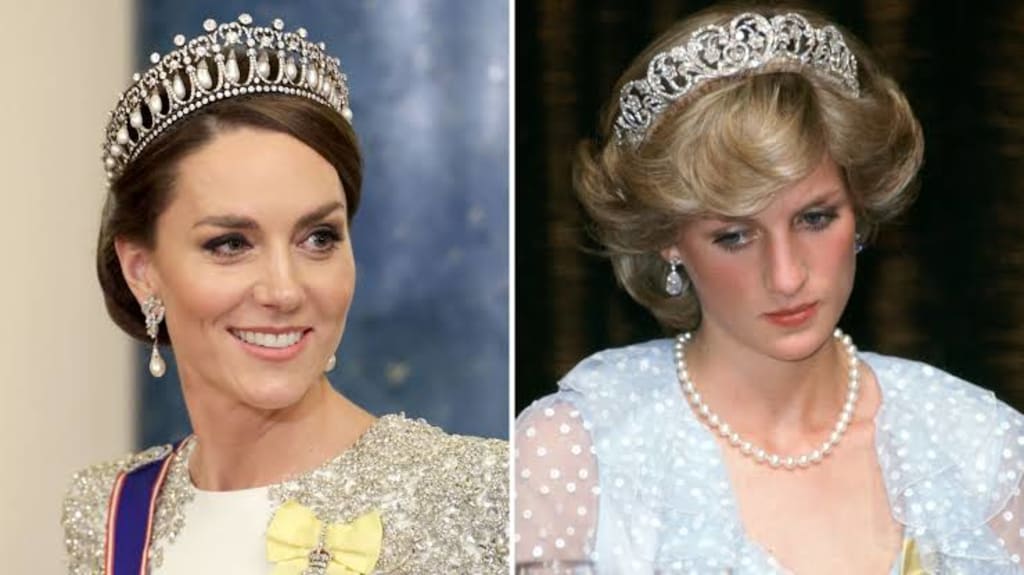
Last month I forwarded a post to a group chat without reading it closely. It said Diana was a princess while Kate and Meghan were stuck as duchesses, and that the difference was the palace quietly ranking its women. I added "this is wild" and put my phone down.
A friend who reads more than I do replied with four words: she wasn't a princess.
I argued. Then I looked it up. It took about four minutes to find out I'd been repeating something false, and I'd been repeating it for two years.
So here is what I found, and what I think the viral post is actually getting at, badly.
The title was never "princess"
Diana's official title was Princess of Wales. She got it because she married Charles, who was Prince of Wales and first in line to the throne. The title came with the husband.
"Princess" in the British system is reserved for women born with royal blood. The sovereign's daughters, granddaughters, great-granddaughters. Marry in and you take the female version of whatever your husband is. Husband is a prince, you're a princess. Husband is a duke, you're a duchess. That's the whole rule, and it's older than any of these three women.
"Princess Diana" was a media shorthand that stuck so hard it became how the world remembers her. When she died in 1997, the BBC's obituary headline read "Diana, Princess of Wales." Not "Princess Diana." After her divorce in 1996 she lost the "Her Royal Highness" style and kept "Diana, Princess of Wales" as her name.
I had that backwards for years. I'd assumed the palace had granted her something special, a permanent upgrade, a status above the ordinary run of royal wives. It hadn't. She held the title that came with her marriage, and she held a version of it even after the marriage ended.
Kate is not a duchess anymore
The post I forwarded was already out of date when I sent it.
Kate was Duchess of Cambridge from 2011 to 2022. That was correct for that stretch, because William was Duke of Cambridge and not yet heir. Then the Queen died, Charles became king, William became Prince of Wales, and Kate became Princess of Wales.
Same title Diana held. Same rank, same position in the structure, same words.
So the viral comparison isn't just wrong about what "princess" means. It's wrong about Kate, in the present tense, by four years. Whoever wrote it was either working from old material or counting on nobody checking.
Meghan's case is different, and the post flattens it
Meghan became Duchess of Sussex when she married Harry in 2018. In 2020 the couple stepped back from royal duties. They kept the Sussex titles. They stopped using "Her Royal Highness."
That's a genuine trade. She gave up a working public role and the HRH style attached to it, and got something she valued more. Whether that was the right call is a real argument you can have. What it isn't is evidence that the palace sorted her into a lower drawer. The title came from the same rulebook as Kate's.
What the post gets right, underneath the errors
Here's the part that keeps me from just dunking on it and moving on.
The rule really does run one direction. A woman's title comes from her husband's position. Her rank moves when his rank moves. Charles becomes king, William moves up, Kate's title changes. Kate's own decisions don't move it. That's not a conspiracy. It's just how an old inheritance system works, and it does reflect a particular idea about who matters and why.
Diana sat at the center of that system, and it cost her. The media attention, the marriage, the isolation, the way her own account of events was treated as a problem to be managed. She used the position to do things the palace found inconvenient, and she paid for it in public. That's the story worth telling.
The viral post wants to tell that story. It just reaches for a fake mechanism to explain it, because a fake mechanism is tidier than the truth. The truth is that an ancient institution, running on inertia, can crush someone without anyone designing the crushing.
Why I think this version spreads
The post I forwarded was simple. It gave me a villain, a rule, and a ranking. It made me feel like I'd seen through something.
The correction is messier. It's a title that comes from a husband, a rule about blood, a date when everything changed, and an argument about whether any of it should still exist. It doesn't rank anybody. It doesn't let me feel clever.
I checked because a friend embarrassed me in a group chat. That's the only reason. I wasn't curious until I was wrong in front of someone.
And I notice that I've now spent an hour reading about succession law, which is not a thing I have ever done voluntarily, because it turned out the boring version of the story is the one where I learn something.
One thing I still can't answer
Why did I want the ranking to be true?
Partly because it's satisfying. Someone powerful, doing something sneaky, and me, spotting it. Partly because Diana is more interesting as a martyr to a scheme than as a woman who married badly into a system that was already broken before she got there.
I don't have a clean ending for this. The claim was wrong, I repeated it, and I'll probably repeat something else next month and find out later. But I've deleted the post from my story, and I've stopped saying "princess" when I mean "Princess of Wales," and those are two small things I can actually control.
If you're going to forward the post, check the date on it first. That's all. It took me four minutes.
About the Creator
Jin
Writer of reamstories
https://reamstories.com/jin
Enjoyed the story? Support the Creator.
Subscribe for free to receive all their stories in your feed. You could also become a paid subscriber, letting them know you appreciate their work.
Comments
There are no comments for this story
Be the first to respond and start the conversation.