
Delving into the Depths: A Comprehensive Guide to Deep Hole Drilling
This comprehensive guide aims to provide a detailed understanding of deep hole drilling, its applications, tools, services, and techniques. Whether you're a professional seeking deep hole drilling job work or simply interested in learning about this fascinating field, this article will serve as a valuable resource.

Introduction
Deep hole drilling is a specialized technique that plays a crucial role in various industries, from manufacturing to aerospace engineering. This comprehensive guide aims to provide a detailed understanding of deep hole drilling, its applications, tools, services, and techniques. Whether you're a professional seeking deep hole drilling job work or simply interested in learning about this fascinating field, this article will serve as a valuable resource.
1. Unveiling Deep Hole Drilling: A Journey into the Depths
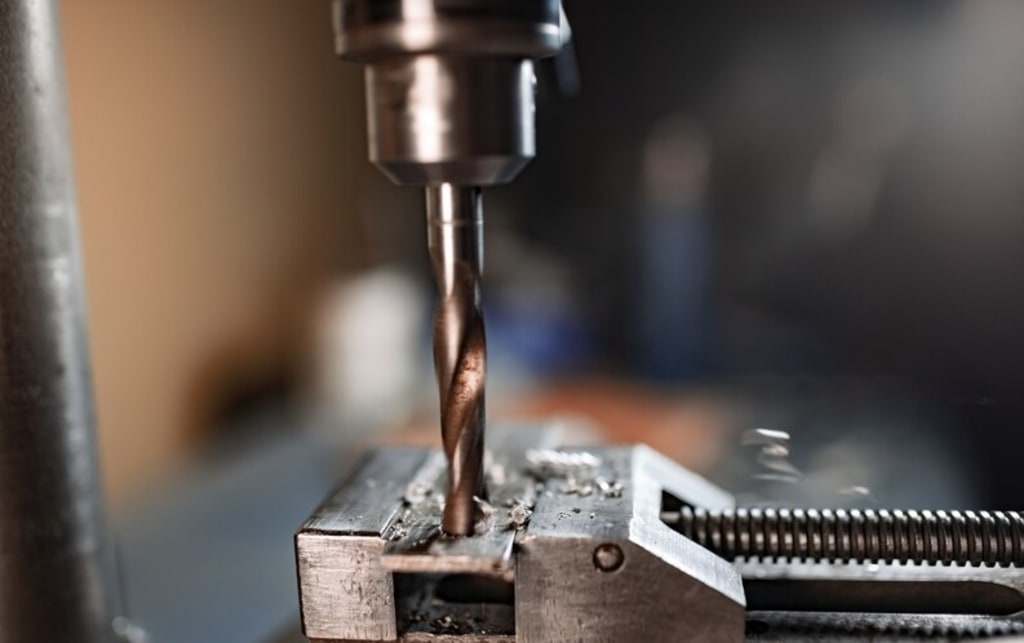
Deep hole drilling involves creating holes with a high depth-to-diameter ratio, typically ten times deeper than their diameter. This technique is employed to meet specific design requirements, such as oil channels, cooling passages, or intricate cavities in components. Deep hole drilling finds applications in industries such as automotive, aerospace, medical, and mold making.
The process of deep hole drilling starts with proper planning and selection of the drilling method based on the workpiece material, hole diameter, and depth requirements. Various drilling methods, including gun drilling, BTA drilling (Boring and Trepanning Association), and ejector drilling, are employed to achieve precise and efficient results.
2. Tools of the Trade: Deep Hole Drilling Instruments
Deep hole drills are specialized tools designed to achieve high precision and productivity. Gun drills, BTA drills, and ejector drills are commonly used. Gun drills, with a single cutting edge and coolant supply, excel at drilling long, straight holes. BTA drills, with internal chip removal, are suitable for larger hole diameters. Ejector drills are high-speed tools ideal for specific applications.
These tools are engineered with precision and durability in mind. They feature specially designed geometries, flute arrangements, and coatings to ensure effective chip evacuation, reduced friction, and extended tool life. Choosing the right tool for the job is crucial to achieve optimal drilling performance and quality results.
3. Revolutionizing Deep Hole Drilling with CNC Machines
Computer Numerical Control (CNC) machines have revolutionized deep hole drilling. These automated systems offer precise control over drilling parameters, such as feed rates, spindle speeds, and coolant flow. CNC machines ensure repeatability, accuracy, and increased productivity in deep hole drilling operations. They also provide real-time monitoring and data collection for process optimization.
With the help of CNC machines, complex drilling operations can be executed with ease. The programming capabilities of CNC systems allow for the creation of intricate hole patterns, custom profiles, and even 3D contours. The integration of advanced technologies, such as laser measurement and in-process inspections, further enhances the accuracy and efficiency of deep hole drilling processes.
4. Meet the Experts: Deep Hole Drilling Services
Deep hole drilling services cater to industries requiring deep hole drilling but lacking the necessary equipment or expertise. These specialized companies offer professional solutions, utilizing advanced machinery and skilled personnel to meet specific customer requirements. Deep hole drilling services provide a cost-effective and efficient option for businesses in need of high-quality drilling work.
By partnering with deep hole drilling service providers, companies can access state-of-the-art equipment, specialized tooling, and experienced professionals. These service providers are equipped to handle a wide range of drilling projects, from small-scale prototypes to large-scale production runs. They ensure compliance with industry standards, deliver consistent results, and meet tight deadlines.
5. Precision to the Core: Deep Hole Gun Drilling
Deep hole gun drilling is a technique used for drilling long, straight holes with a small diameter. It utilizes a single cutting edge and coolant supply to effectively remove chips. Gun drilling is ideal for applications that require tight tolerances, such as medical implants, firearm barrels, and injection molds. The process of deep hole gun drilling involves several key steps. First, the workpiece is securely clamped in place. A pilot hole is then drilled to guide the gun drill. The gun drill, with its single cutting edge, is fed into the workpiece while coolant is continuously supplied to remove chips and cool the cutting edge. This process allows for precise and efficient drilling of deep holes.
Gun drilling offers several advantages. It produces straight and accurate holes with excellent surface finish. The single cutting edge reduces cutting forces, minimizing the risk of deflection and vibration. Additionally, the continuous coolant flow aids in chip evacuation and extends tool life. Gun drilling is widely used in industries that require high-precision components, such as aerospace, medical, and mold making.
6. Beyond Metals: Deep Hole Drilling in Woodworking
While deep hole drilling is predominantly associated with metalworking, it also finds applications in woodworking. When drilling deep holes in wood, factors such as tool selection, chip evacuation, and minimizing tear-out should be considered. Deep hole drilling in wood is commonly used in furniture manufacturing, musical instrument construction, and other woodworking projects.
In woodworking, special drill bits with brad points or spur points are commonly used to ensure clean and precise hole entry. Care must be taken to choose the appropriate cutting speeds and feed rates to prevent overheating and burning of the wood. Efficient chip evacuation is crucial to avoid clogging and reduce the risk of tear-out. Deep hole drilling in wood opens up possibilities for creating complex joinery, installing dowels, or routing channels for wiring and cables.
Conclusion
Deep hole drilling is a critical process that enables the creation of intricate internal features in a wide range of materials. This comprehensive guide has explored the fundamentals of deep hole drilling, including its applications, tools, services, and techniques. Whether you require deep hole drilling job work or simply want to expand your knowledge, understanding the intricacies of this technique opens up a world of possibilities for innovative engineering solutions.
When it comes to deep hole drilling job work, one reliable option is Shreeji Industries. With their expertise and state-of-the-art equipment, Shreeji Industries specializes in providing high-quality deep hole drilling services. Their skilled professionals and commitment to precision make them a trusted partner for businesses in need of complex drilling solutions.
About the Creator
Precision Engineering And Machining Expertise - Shreeji Industries
Shreeji Industries is a precision engineering and machining service provider based in Ahmedabad, established in 2006. Their services include drilling, boring, deep hole drilling, gun drilling, honing, lathe job work, and welding job work.
Enjoyed the story? Support the Creator.
Subscribe for free to receive all their stories in your feed.
Comments
There are no comments for this story
Be the first to respond and start the conversation.