
DeepSeek Founder Liang Wenfeng Becomes the World’s Richest AI Model Creator
DeepSeek’s $50 billion valuation, $7.4 billion funding round, and Liang Wenfeng’s reported 78% ownership stake have lifted his estimated net worth to $36 billion.

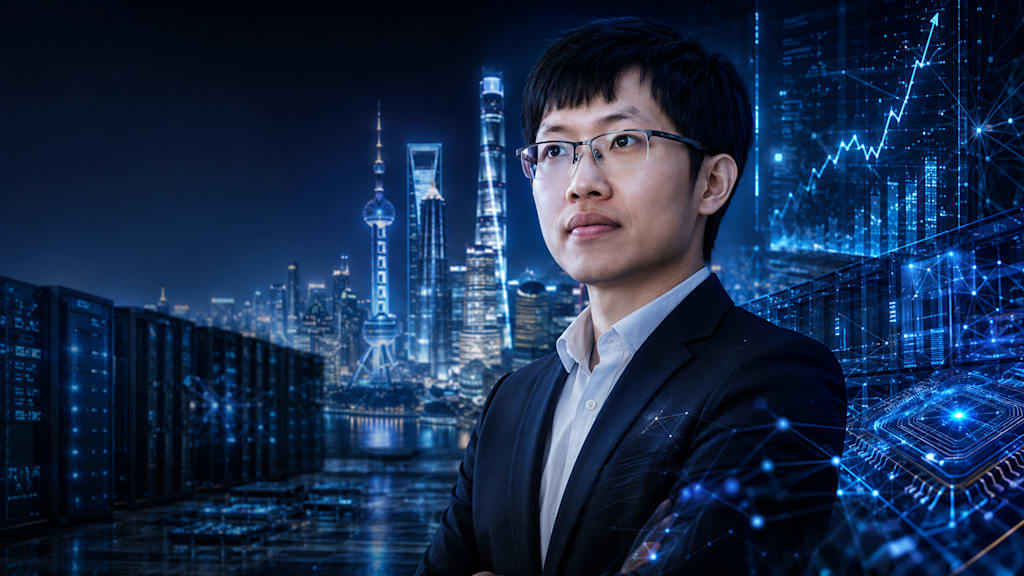
His fortune surged following a reported $7.4 billion funding round that valued the Chinese AI startup at approximately $50 billion. More importantly, Liang is believed to have retained an unusually large ownership stake of around 78%, making his position very different from that of most founders in the Western AI industry.
That combination, a rapidly rising private valuation and limited shareholder dilution, has reportedly pushed Liang ahead of prominent figures such as OpenAI co-founder Greg Brockman and Anthropic co-founder Dario Amodei.
What stands out to me is that this is not simply another story about a technology founder becoming a billionaire. It is a story about ownership, timing and a radically different way of building an AI company.
DeepSeek did not begin as a conventional venture-backed startup. It emerged from High-Flyer, the quantitative hedge fund Liang co-founded, and used resources accumulated through trading to invest in AI research and computing infrastructure. That financial foundation may have helped DeepSeek avoid the repeated fundraising rounds that typically reduce a founder’s percentage of ownership.
The company then gained worldwide attention by introducing advanced AI models that it said could compete with leading Western systems while requiring substantially fewer resources.
Together, those factors transformed DeepSeek from a relatively unknown Chinese laboratory into one of the most closely watched companies in artificial intelligence, and turned its founder into the sector’s wealthiest model creator.
How DeepSeek Made Liang Wenfeng the Richest AI Founder
Liang Wenfeng’s reported rise to the top of the AI wealth rankings is closely connected to DeepSeek’s latest financing.
According to the figures reported around the transaction, the company raised approximately $7.4 billion and received a valuation of around $50 billion. That represented a dramatic increase from the valuation attributed to DeepSeek only a few months earlier.
For the founder of a private company, such a valuation can significantly alter estimates of personal wealth. If investors are willing to purchase shares at a price that values the whole business at $50 billion, the theoretical value of existing shareholders’ stakes rises as well.
However, that does not mean Liang suddenly received $36 billion in cash.
A $7.4 Billion Funding Round Changed the Calculation
Funding rounds establish a reference price for shares in a private company. Wealth-ranking providers can use that price, together with an estimate of the founder’s ownership, to calculate the value of the founder’s position.
In Liang’s case, the effect was especially large because he reportedly retained close to 78% of DeepSeek after the capital raise.
A simplified calculation might suggest that 78% of a $50 billion company is worth about $39 billion. In practice, wealth estimators may apply adjustments for private-company risk, limited liquidity, share classes, debt, taxes or other financial obligations.
That helps explain why Liang’s estimated fortune has been reported at approximately $36 billion rather than the full theoretical value of his stake.
DeepSeek’s Valuation Jumped to $50 Billion
A private-company valuation is not a permanent or guaranteed price. It reflects what investors were prepared to pay under the terms of a particular financing round.
The value could rise if DeepSeek gains customers, improves its models or strengthens its strategic importance. It could also fall if growth slows, competition intensifies or future investors assign a lower price to the company.
Still, a $50 billion valuation represents a significant vote of confidence. It places DeepSeek among the most valuable standalone AI companies and reinforces its status as a major competitor to Western model developers.
In my view, the headline number is impressive, but the structure behind it is more revealing. A high valuation creates enormous wealth only when the founder still owns a substantial part of the company.
Why a $36 Billion Net Worth Is Not the Same as Cash
Net worth measures the estimated value of assets minus liabilities. It does not necessarily represent money that can be spent immediately.
Most of Liang’s fortune is reportedly tied to his shares in DeepSeek. Because the company is privately held, those shares cannot be sold as easily as stock in a publicly listed business.
Selling a large position could also be difficult without affecting control, investor confidence or the company’s valuation. Transaction restrictions may further limit when and how a founder can sell.
Liang may therefore be worth $36 billion on paper while having access to only a fraction of that amount in liquid assets.
This distinction matters because headlines often make private-company fortunes sound more definite than they really are. The estimate is meaningful, but it depends heavily on DeepSeek maintaining or increasing its current valuation.
Liang Wenfeng’s 78% DeepSeek Stake Is the Real Story
The most unusual aspect of Liang Wenfeng’s fortune is not DeepSeek’s valuation by itself. It is the percentage of the company he reportedly continues to own.
Technology founders often begin with a controlling interest in their companies. Over time, however, they issue new shares to investors, employees and strategic partners.
Every new financing round can reduce the founders’ percentage of ownership. This process is known as dilution.
Liang appears to have avoided much of that dilution.
Why Founder Ownership Matters More Than the Headline Valuation
Consider two founders whose companies are each valued at $50 billion.
One founder owns 10% of the business. The other owns 78%.
Before applying any discounts or adjustments, the first stake would be worth around $5 billion, while the second would be worth approximately $39 billion.
The companies have identical valuations, but their founders have radically different levels of wealth and control.
That is why the reported 78% stake is central to understanding Liang’s fortune. DeepSeek’s success created a huge amount of enterprise value, but Liang’s concentrated ownership allowed much of that value to remain attached to him personally.
What impressed me most when examining the numbers was not simply that DeepSeek reached a $50 billion valuation. It was that Liang apparently reached that milestone without surrendering control to a long list of external investors.
DeepSeek Compared With US AI Startups
Many leading US artificial intelligence companies have complex ownership structures.
Their shares may be distributed among:
Founders and early employees
Venture capital funds
Sovereign wealth funds
Technology companies
Cloud-computing partners
Institutional investors
Later-stage private-equity backers
These investors provide money, infrastructure and commercial support, but each new deal can reduce the founders’ share of the company.
AI development is particularly expensive. Training advanced models requires chips, data centers, engineers, electricity and long periods of research. As a result, many AI startups must raise large amounts of outside capital before they generate substantial revenue.
DeepSeek appears to have followed a different route. Its relationship with High-Flyer gave it access to capital and computing resources before it completed a major external funding round.
How Startup Funding Normally Dilutes Founders
Imagine that a founder initially owns 100% of a company.
The company then sells 20% to its first investors. The founder’s ownership falls to 80%.
During a second round, the company issues additional shares representing another 20% of the enlarged business. The founder’s percentage falls again. Employee stock plans and later funding rounds create further dilution.
After several years, a founder who began with complete ownership may control less than 10% or 15% of the company.
That is not necessarily a bad outcome. A smaller share of a much more valuable business can still create enormous wealth. Outside investors may also provide resources the company could not obtain independently.
Nevertheless, Liang’s case illustrates the financial power of retaining ownership. His reported stake means he benefits directly from most increases in DeepSeek’s valuation while continuing to exercise considerable influence over its direction.
Who Is Liang Wenfeng?
Liang Wenfeng is a Chinese entrepreneur known for his work in quantitative finance and artificial intelligence.
Before founding DeepSeek, he co-founded Zhejiang High-Flyer Asset Management, commonly known as High-Flyer, with former classmates. The firm used mathematical models and computing systems to identify trading opportunities in financial markets.
This background matters because it shaped the way Liang approached artificial intelligence.
Rather than beginning with a consumer technology product and searching for venture funding, he came from an industry where data, algorithms, automation and computing power were already central to the business model.
From Quantitative Trading to Artificial Intelligence
Quantitative hedge funds rely on large datasets, statistical research and automated decision-making. Although financial trading and language-model development are different fields, both require advanced technical talent and substantial computing infrastructure.
High-Flyer reportedly began developing an internal AI division before DeepSeek became a standalone company in 2023.
The hedge fund’s resources gave Liang a base from which to explore artificial intelligence without immediately depending on traditional Silicon Valley-style financing.
That distinction may have influenced DeepSeek’s priorities. Instead of focusing first on aggressive fundraising, branding or consumer distribution, the company concentrated heavily on model research and computational efficiency.
The Creation of High-Flyer
Liang co-founded High-Flyer in 2015. The firm became known for using algorithms and machine learning in investment strategies.
Profits from the hedge fund reportedly helped finance the purchase of advanced graphics processors and other computing equipment. These chips later became important for training large AI models.
The timing was significant. As the United States tightened restrictions on the export of advanced semiconductors to China, access to high-performance chips became more difficult for Chinese AI companies.
DeepSeek’s connection to a well-funded quantitative investment firm may therefore have provided both financial independence and access to computing resources acquired before restrictions became more severe.
Why Liang Followed a Different Path
In my opinion, DeepSeek’s hedge-fund origin is one of the most important parts of the story.
Most AI founders begin with technical expertise and then search for money. Liang began with access to a profitable, technology-driven financial company that already understood the strategic value of computing power.
This allowed DeepSeek to develop differently from many venture-backed startups.
It could invest in research before building a large external investor base. It could pursue longer-term technical work without immediately satisfying multiple funding partners. Most importantly for Liang’s personal fortune, it could grow while keeping ownership relatively concentrated.
That does not mean the High-Flyer model can be easily copied. Few founders have access to a successful quantitative fund capable of financing expensive AI research.
It does, however, explain why Liang’s ownership position looks so different from that of other AI entrepreneurs.
DeepSeek’s Hedge Fund Origins Gave It an Early Advantage
Building competitive AI models requires more than talented researchers. It requires access to enormous amounts of computing power.
Companies need clusters of advanced chips to train, test and operate their systems. They also need infrastructure for storing data, coordinating experiments and serving models to users.
These requirements can cost billions of dollars.
DeepSeek’s relationship with High-Flyer reportedly provided an early answer to that financial challenge.
High-Flyer Helped Finance DeepSeek’s AI Research
Because High-Flyer was already generating revenue, DeepSeek did not need to rely entirely on venture capital during its earliest stages.
That internal support may have allowed the AI team to:
Hire technical researchers
Purchase computing equipment
Run large-scale experiments
Develop proprietary model architectures
Continue research without immediately seeking commercial returns
This is important because early AI research is highly uncertain. Many experiments fail, and technical progress does not always translate into a product customers will pay for.
A founder who depends on outside investors may face pressure to demonstrate rapid growth. A company supported by profits from another business can sometimes take a longer view.
The Early Stockpiling of Advanced AI Chips
High-Flyer was reportedly buying advanced graphics processors even before DeepSeek became independent.
Those purchases later gave the AI company access to valuable computing capacity as US export controls made the most advanced chips harder for Chinese companies to obtain.
Access to hardware alone does not guarantee success. A company still needs efficient training methods, skilled engineers and high-quality data.
Nevertheless, owning or controlling a substantial computing inventory can reduce dependence on external cloud providers and protect a research program from sudden supply restrictions.
The early chip strategy therefore appears to have been both a technical investment and a form of geopolitical risk management.
Less Dependence on Traditional Venture Capital
The ability to self-finance does not eliminate the need for investors forever. DeepSeek’s reported $7.4 billion round shows that external capital can still become important as a company expands.
However, the timing of that fundraising matters.
A startup that raises money before proving its technology often sells shares at a relatively low valuation. A company that waits until it has developed competitive models and attracted global attention may negotiate from a much stronger position.
This is another reason Liang may have retained such a large stake. DeepSeek was able to create meaningful value before accepting a major amount of outside capital.
How DeepSeek Disrupted the Global AI Industry
DeepSeek became internationally prominent when it introduced models that reportedly delivered strong performance at a much lower cost than many observers expected.
The company’s claims challenged a widespread assumption: that only a small group of heavily funded American technology companies could build frontier-level AI systems.
The reaction was not driven solely by model quality. DeepSeek also raised questions about the economics of artificial intelligence.
Advanced AI Models at a Fraction of the Expected Cost
Developing a leading AI model is typically associated with enormous spending on chips, electricity, researchers and data infrastructure.
DeepSeek claimed that it could achieve competitive results while using fewer resources than leading Western developers.
Such cost comparisons must be interpreted carefully. Companies may count development expenses differently, and public figures do not always include the full cost of earlier research, hardware purchases, salaries or failed experiments.
Even with those caveats, the market paid attention because DeepSeek appeared to demonstrate that advanced AI development could be more efficient than previously assumed.
DeepSeek Challenged the Economics of AI Development
When DeepSeek began attracting global attention, what struck me most was that it was not competing only on model performance. It was questioning how much advanced AI should cost to build and operate.
That is potentially disruptive for several reasons.
Lower development costs allow smaller companies to compete. Lower inference costs make it cheaper to serve users. Greater efficiency reduces dependence on the most advanced hardware. Affordable models can also accelerate adoption in markets where premium AI services are too expensive.
If DeepSeek can sustain those advantages, competitors may be forced to cut prices, improve efficiency or reconsider how they allocate infrastructure spending.
Why Lower Costs Increased DeepSeek’s Strategic Value
Investors do not value AI companies only according to the accuracy of their models. They also consider the company’s ability to scale, attract users and generate revenue without allowing costs to grow uncontrollably.
A more efficient model can potentially offer:
Lower prices for developers
Better margins at scale
Faster international adoption
Reduced infrastructure requirements
Greater resilience to chip restrictions
More flexibility when deploying models locally
Those possibilities help explain why DeepSeek’s valuation reportedly rose so quickly.
Its value is not based simply on owning an advanced model. It rests on the possibility that the company has found a more economical way to compete in one of the world’s most capital-intensive industries.
Liang Wenfeng vs Greg Brockman and Dario Amodei
According to the reported wealth estimates, Liang Wenfeng now ranks ahead of several better-known Western AI executives.
The comparison is notable because OpenAI and Anthropic have attracted more international media attention, larger commercial partnerships and extensive backing from major technology investors.
Yet their founders are believed to own smaller percentages of their respective companies.
The Richest AI Model Founders Ranked
The ranking reported for founders focused primarily on developing AI models was approximately:
RankFounderCompanyEstimated net worth1Liang WenfengDeepSeek$36 billion2Greg BrockmanOpenAI$25.5 billion3Liu DebinZhipu AI$11.6 billion4Dario AmodeiAnthropic$8 billion5Yang JunjieMiniMax$2.2 billion
These figures should be treated as estimates. The companies are privately held, and their ownership structures, share classes and latest transaction prices may not be fully public.
Why Liang’s Fortune Is So Much Larger
Liang’s advantage appears to come from three factors:
DeepSeek’s valuation increased rapidly.
He reportedly retained close to 78% of the company.
The business required less early external funding than many rivals.
Greg Brockman and Dario Amodei helped create companies with enormous valuations, but their ownership is spread across founders, employees, venture funds and strategic partners.
OpenAI also has an unusually complex organizational and financial structure, which makes direct comparisons difficult.
Anthropic has raised large amounts of capital from institutional investors and technology companies. Those investments support its growth, but they also distribute ownership among more parties.
Liang’s fortune therefore reflects not only the value of DeepSeek but the concentration of that value in his hands.
Why Elon Musk and Other Tech Billionaires Are Not Included
The ranking does not attempt to identify the richest person involved in artificial intelligence in any capacity.
If it did, diversified technology billionaires could dominate the list because their companies invest heavily in AI while operating many other businesses.
Instead, the comparison focuses on founders of companies whose primary activity is developing AI models.
That methodology excludes or treats separately:
Diversified technology groups such as Alibaba and Tencent
Semiconductor manufacturers
Cloud-computing companies
Data-center operators
Entrepreneurs whose wealth comes mainly from unrelated businesses
The distinction is important. Liang may be the world’s richest founder of a specialized AI model company without being the wealthiest person connected to the broader artificial intelligence industry.
DeepSeek’s Growing Role in China’s AI Strategy
DeepSeek’s importance now extends beyond the personal fortune of its founder.
The company has become part of a broader effort to strengthen China’s ability to develop advanced AI systems despite restrictions on access to US technology.
Its reported work with domestic hardware suppliers could make it particularly valuable within China’s technology ecosystem.
Reducing Dependence on American Technology
Chinese AI companies face limits on their ability to purchase the most advanced chips designed or manufactured using American technology.
These restrictions create pressure to:
Use available chips more efficiently
Develop software optimized for domestic hardware
Build alternative semiconductor supply chains
Reduce reliance on foreign cloud infrastructure
Design models that need less computing power
DeepSeek’s focus on efficiency fits directly into that environment.
A company capable of producing competitive results with fewer or less advanced chips could become strategically important, even if its models do not outperform every Western rival on every benchmark.
DeepSeek V4 and Compatibility With Huawei Chips
DeepSeek has reportedly introduced its V4 model and claimed compatibility with chips produced by Huawei.
That claim represents another step toward building an AI stack that depends less on American suppliers.
Compatibility does not necessarily mean Huawei hardware can match the performance of the most advanced US-designed processors in every workload. It does suggest that DeepSeek is preparing for a future in which Chinese models must operate across a wider range of domestic infrastructure.
This could expand the company’s addressable market inside China while strengthening its relationships with local hardware and cloud providers.
Why DeepSeek Matters Beyond Liang Wenfeng’s Wealth
In my view, focusing only on Liang’s $36 billion fortune misses the larger point.
His wealth is a consequence of DeepSeek’s growing strategic value. The company has become important because it combines technical ambition, cost efficiency, concentrated ownership and a position inside China’s push for technological independence.
That combination makes DeepSeek more than another AI startup.
It is simultaneously:
A model developer
A potential low-cost competitor
A strategic technology asset
A test of domestic Chinese hardware
An alternative to the venture-capital-heavy US model
The company’s success or failure could therefore influence how future AI laboratories are financed, structured and evaluated.
What Liang Wenfeng’s Fortune Reveals About the AI Boom
Liang Wenfeng’s rise illustrates how quickly artificial intelligence can create enormous paper wealth.
It also shows that the distribution of that wealth depends as much on ownership structures as on technological achievement.
Two companies can reach similar valuations while producing very different outcomes for their founders. The deciding factor is often how much equity the founders surrendered along the way.
Control Can Be More Valuable Than Fundraising
Large funding rounds attract attention, but raising the most money does not automatically create the wealthiest founder.
Every investment involves a trade-off. The company gains capital, expertise or infrastructure, while existing shareholders give up part of the business.
Liang appears to have delayed that trade-off by using High-Flyer’s resources to finance DeepSeek’s early development.
By the time the company reportedly completed its $7.4 billion round, it had already demonstrated technology, attracted international attention and established itself as a serious AI competitor.
That placed it in a stronger negotiating position and may have helped Liang preserve control.
Efficient AI Models Can Create Enormous Enterprise Value
The DeepSeek story also demonstrates that efficiency can be as valuable as raw technical performance.
AI companies face a difficult economic problem. They must spend huge amounts of money to train models, and they continue spending whenever users interact with those systems.
A company that reduces those costs can improve margins, lower prices and expand access.
That is why DeepSeek’s claimed cost advantages matter financially. They suggest the company may be capable of competing without reproducing every element of the expensive infrastructure built by its Western rivals.
Private AI Valuations Should Be Read With Caution
At the same time, private-company valuations are not guarantees.
DeepSeek’s $50 billion figure reportedly comes from the price assigned during a funding round. The company does not trade publicly, so there is no continuously updated market price.
Investors may have received special rights that ordinary shares do not include. Future rounds may assign a higher or lower value. DeepSeek’s revenue, expenses and ownership structure may also be less transparent than those of a listed company.
For that reason, Liang’s $36 billion net worth should be understood as an informed estimate based on the available transaction data.
The number is significant, but it can change quickly.
Frequently Asked Questions
Who is the founder of DeepSeek?
Liang Wenfeng is the founder of DeepSeek. Before establishing the AI company as a standalone operation in 2023, he co-founded the quantitative hedge fund High-Flyer.
What is Liang Wenfeng’s net worth?
Liang Wenfeng’s net worth has been estimated at approximately $36 billion following DeepSeek’s reported funding round and $50 billion valuation. Most of that fortune is believed to be tied to his ownership of the private company.
How much is DeepSeek worth?
DeepSeek was reportedly valued at approximately $50 billion during its latest funding round. Because it is privately held, that figure represents a transaction-based estimate rather than a continuously traded market capitalization.
How much of DeepSeek does Liang Wenfeng own?
Liang reportedly retained an ownership stake of approximately 78% after the latest financing. The exact percentage may depend on the company’s share structure and the terms of the investment.
Why is Liang Wenfeng richer than other AI founders?
His fortune appears to be larger because he owns a much greater percentage of DeepSeek than many Western founders own of their companies. DeepSeek also reached a high valuation after relying less heavily on external venture capital during its early development.
How did High-Flyer help fund DeepSeek?
High-Flyer reportedly used profits from quantitative trading to support AI research, recruit technical talent and purchase advanced computing chips. This gave DeepSeek resources before it completed a major outside funding round.
Is Liang Wenfeng richer than Elon Musk?
No. The claim refers specifically to founders of companies focused on creating AI models. Broader technology and business billionaires are not included in the same category.
Why are DeepSeek’s AI models considered disruptive?
DeepSeek gained attention by claiming strong performance at substantially lower development and operating costs than many Western competitors. Its models also challenged the assumption that frontier AI requires the largest possible budgets and the most advanced imported chips.
Conclusion
Liang Wenfeng’s reported rise to a $36 billion fortune is not simply the result of DeepSeek completing a large funding round.
It reflects a highly unusual combination of factors: a $50 billion private valuation, an ownership stake of approximately 78%, early financial support from High-Flyer and a strategy centered on developing more efficient AI models.
What I find most revealing is the relationship between control and wealth. DeepSeek did not need to be the most heavily funded AI company in the world to create the richest specialized AI founder. It needed to build substantial value while allowing Liang to retain a large share of that value.
The figures may change as DeepSeek raises more capital, issues new shares or receives a different valuation. For now, however, the company represents a distinct alternative to the typical Silicon Valley model.
Its founder’s fortune shows that in the AI industry, raising billions matters, but preserving ownership can matter even more.
About the Creator
Jose Mejia
Accountant and independent blogger with 20+ years of analytical experience. I create clear, practical health content using reputable medical sources, transparent research, and careful fact-checking.
Enjoyed the story? Support the Creator.
Subscribe for free to receive all their stories in your feed.
Comments
There are no comments for this story
Be the first to respond and start the conversation.