
David Badaro Reveals 6 Tips to Build Trust as a Business Consultant
Known for his honest approach and practical thinking, David Badaro focuses on building long-term relationships based on trust.

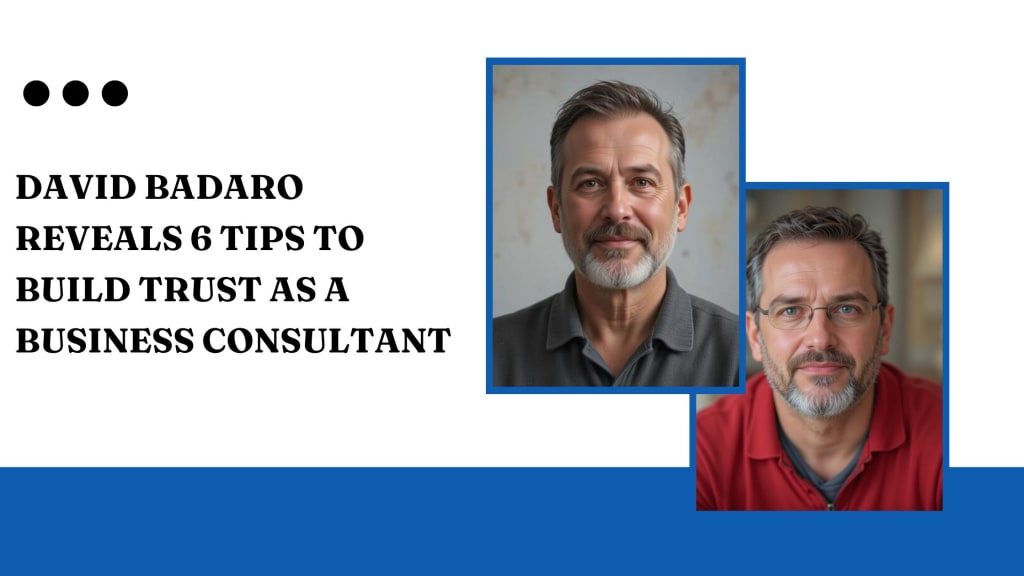
David Badaro is a strategic business consultant who helps organizations through clear, effective solutions. Known for his honest approach and practical thinking, David Badaro focuses on building long-term relationships based on trust. If you're a business consultant, trust isn’t just helpful; it’s what keeps your clients coming back. These six tips will help you build that trust, starting from your very first meeting.
1. Listen Before You Offer Solutions
Many consultants make the mistake of jumping straight into recommendations. Don’t. Take time to ask the right questions and really listen to what your client is saying. You need to understand their goals, what’s not working, and what they’ve already tried. This is not just about gathering information; it’s about showing your client that you’re focused on them.
Repeat key points to show you’re listening. For example, say, “You mentioned that sales drop every Q3 due to inconsistent follow-up. Let’s start by looking at that process.” This small act shows the client you’re fully engaged and focused on their specific situation.
Clients trust consultants who make them feel heard. That’s step one.

2. Offer a Simple, Action-Focused Plan
Clients want to know what happens next. Don’t just talk about your expertise, show them a plan. Keep it short and realistic. A simple one-page outline that covers the first two weeks of work is more effective than a long proposal.
Break it down into steps like:
- Week 1: Analyze current sales funnel.
- Week 2: Identify drop-off points and recommend quick fixes.
- Deliver: initial findings and 3 clear action items.
Now your client knows what’s coming, when it’s coming, and how you work. That kind of clarity makes people feel safe moving forward with you.
Also Read: https://vocal.media/geeks/how-to-choose-the-right-startup-business-consultant-for-your-industry

3. Share Real Results from Past Work
Clients want proof. They don’t just want to know what you’ve done; they want to know that it worked.
Give examples of past work that are close to their current challenge. For example, you might say, “I worked with a company in your industry that had low client retention. We adjusted their onboarding process, and retention improved by 28% over four months.”
Be as specific as possible. Dates, numbers, and outcomes matter. This makes your experience real, not abstract.
If you don’t have permission to name companies, just describe the size of the company and the outcome. That still builds credibility.

4. Start with Small Wins
Big changes take time. But clients often judge you by what happens in the first week.
Instead of diving into a major overhaul, start with something small but valuable. For example, if you’re helping a client with workflow, start by streamlining one step of their client intake process.
Let them see a quick win. Even if it’s minor, it builds confidence.
Also, don’t overpromise. If you commit to something small, like sending a summary of findings by Thursday, follow through. On time. Every time.
Small wins show that you’re reliable. Reliability builds trust.

5. Give Something Useful Before They Hire You
Offering value up front builds goodwill. Share a checklist, template, or short guide that solves a problem they mentioned.
Let’s say you’re talking to a business struggling with customer retention. Offer them a basic checklist to review their customer touchpoints. It could include things like:
- Are follow-up emails being sent within 48 hours?
- Is customer support responding within 24 hours?
- Is there a feedback system in place?
When you give something useful before any agreement is signed, you stand out. You’re showing, not telling, what you can do.
It’s also a subtle way to build trust. You’re not asking them to take a leap. You’re showing them why you’re worth working with.

6. Communicate Often and Clearly
Communication is where many consultants fail. If you’re slow to respond or vague in updates, trust fades quickly.
Set clear expectations. Tell your client when you’ll be in touch and how often. Stick to it.
Even a short email that says, “Quick update: reviewed your marketing data, found three trends we’ll discuss on Friday,” keeps you on their radar and shows you’re actively working on their goals.
If there’s a delay or change in scope, tell them. Be direct. Clients are more forgiving of delays when you’re honest and proactive about them.
Consistency in communication makes clients feel supported and respected.

Conclusion
Each of these tips helps you become the kind of consultant clients rely on. Not for empty advice or long reports, but for real progress. You build trust by listening, planning, proving, delivering, offering help, and staying in touch.
David Badaro has built his consulting practice on these exact principles. He believes trust isn’t earned through sales pitches; it’s earned through steady, reliable actions. If you apply these six tips, you’ll not only attract better clients, you’ll keep them longer.
About the Creator
David Badaro
David Badaro is a skilled business consultant who values family, nature, and animals. David Badaro combines professional expertise with a passion for building connections and inspiring harmony in business and life.
Enjoyed the story? Support the Creator.
Subscribe for free to receive all their stories in your feed.
Comments
There are no comments for this story
Be the first to respond and start the conversation.