
Crystal Silica Gel Cat Litter and the Science of a Cleaner Indoor Cat Routine
How a lightweight absorbent material changed the way many homes think about odor, moisture, and everyday pet care

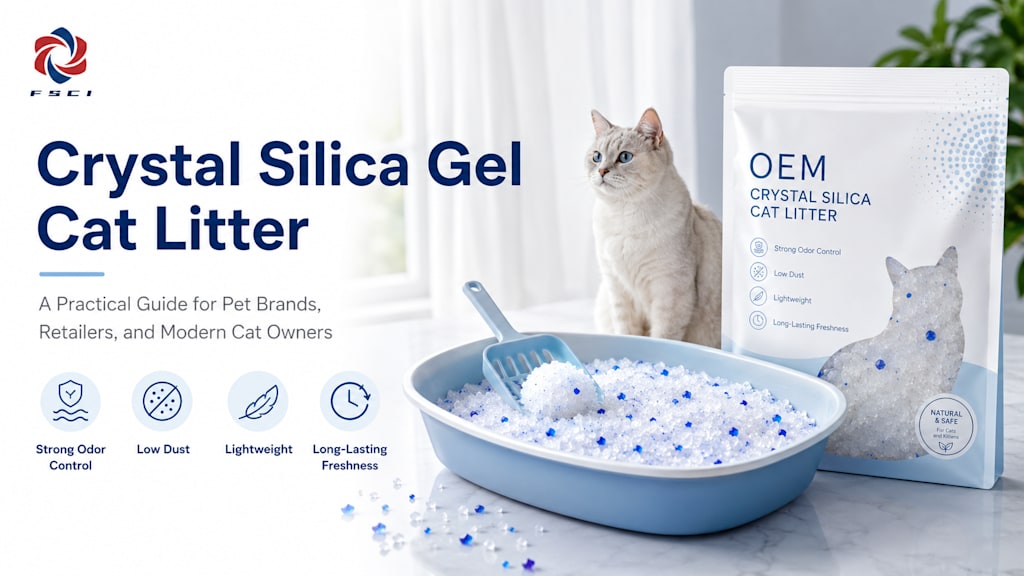
Crystal silica gel cat litter looks simple at first glance. It is usually made of small translucent or white crystals, often with a dry, glassy appearance. To many cat owners, it may seem like just another option on the pet aisle, sitting beside clay litter, tofu litter, pine pellets, and other modern formulas. But behind its quiet appearance is an interesting material story about moisture control, odor management, and the changing expectations of indoor pet care.
The main idea behind crystal silica gel cat litter is absorption. Cats naturally need a dry, clean place to use as a toilet, and people who live with cats need a litter system that keeps odor and dampness under control. Traditional clay litter often works by clumping around liquid waste, making it easier to scoop. Silica gel crystals work differently. Instead of forming a heavy clump, the porous structure of the material absorbs moisture into tiny internal spaces.
This is where the science becomes interesting. Silica gel is a highly porous form of silicon dioxide. Although it may look solid and smooth from the outside, its inner structure contains many microscopic pores. These pores can hold moisture, which is why silica gel is also commonly associated with desiccant packets used to keep products dry. In cat litter, that same moisture-trapping ability is applied to a very different everyday problem: keeping a litter box drier for longer.
A dry litter box matters for more than convenience. Moisture is one of the main reasons odor develops quickly. When liquid remains on the surface or sits in wet pockets, unpleasant smells can spread through a room. Crystal silica gel cat litter helps reduce this by drawing liquid into the crystals and allowing some moisture to evaporate over time. The goal is not simply to hide odor with fragrance, but to manage the environment where odor begins.
This is one reason many people describe crystal litter as low-maintenance. Because it does not behave like traditional clumping litter, the daily routine can feel different. Solid waste is still removed, but the crystals are usually stirred or mixed so moisture can distribute more evenly. Over time, the crystals gradually become saturated and need to be replaced. For some households, this can mean less frequent full litter changes compared with certain older systems.
Another reason crystal silica gel cat litter has become popular is its light weight. Anyone who has carried a large bag of clay litter knows how heavy cat care can become. Silica gel crystals are generally lighter, which can make storage, pouring, and disposal easier. This matters especially in apartments, small homes, or for people who prefer a litter routine that does not involve lifting heavy bags every week.
Dust is also part of the conversation. Different litters create different levels of dust, and dust can affect both people and cats. High-quality crystal litter is often designed to reduce visible dust during pouring and use. This does not mean every crystal litter product behaves the same way, because particle size, processing, packaging, and handling all matter. Still, the interest in silica gel litter is partly connected to the desire for a cleaner-feeling indoor environment.
The rise of indoor cats has changed what people expect from litter. Decades ago, pet care was often more basic and less design-focused. Today, many cats live entirely indoors, sharing small spaces with people, furniture, air conditioning, carpets, and household routines. A litter box is no longer hidden in a distant outdoor area; it may be placed in a bathroom, laundry room, balcony corner, or even a living space. That makes odor control and cleanliness much more important.
This shift explains why litter materials have become more diverse. Clay is still widely used, but many homes now compare options based on odor performance, tracking, weight, dust, disposal, sustainability, and how cats respond to the texture. Crystal silica gel cat litter is part of that wider evolution. It offers a different approach to moisture control, one that depends on porous mineral structure rather than clumping alone.
Cat behavior also matters. Some cats adapt quickly to crystal litter, while others may prefer softer or finer textures. The sound and feel of crystals under the paws can be different from clay or plant-based litter. For this reason, many pet owners introduce a new litter gradually rather than changing the entire box at once. A litter may perform well in theory, but it still has to be accepted by the cat. In the end, the best litter is not only the one that works for people, but the one a cat is comfortable using consistently.
From a materials perspective, crystal litter is a useful example of how industrial absorbent technology enters everyday life. Silica gel was not invented for cats, but its ability to hold moisture made it suitable for many dry-storage and humidity-control uses. Pet care simply gave this material a new home. This happens often in material science: a substance developed or refined for one purpose finds value in a completely different setting because its core properties solve a common problem.
For readers who want to look more closely at the material itself, crystal silica gel cat litter is commonly described in relation to moisture absorption, odor control, low dust, and lightweight use. Broader material references from Fscichem also show how silica-based products connect pet care with a larger world of absorbent and functional materials.
The continued interest in crystal silica gel cat litter shows how pet products have become more science-driven. People are not only buying something to fill a box. They are choosing a material that affects air quality, cleaning habits, home comfort, and even the relationship between a cat and its environment. Small details such as particle shape, pore structure, dust level, and absorption rate can make a noticeable difference in daily life.
In that sense, crystal silica gel cat litter is more than a pet aisle product. It is a quiet example of practical chemistry at home. It takes a material known for controlling moisture and turns it into part of a cleaner, drier, and more manageable indoor cat routine. For millions of cat households, that kind of invisible material science can make everyday living feel a little easier.
About the Creator
Enjoyed the story? Support the Creator.
Subscribe for free to receive all their stories in your feed.
Comments
There are no comments for this story
Be the first to respond and start the conversation.