
Corrosion Prevention and Maintenance Guide for Marina Boat Lifts in High-Salinity Environments
A Comprehensive Framework for Structural Integrity, Material Selection, and Proactive Asset Management
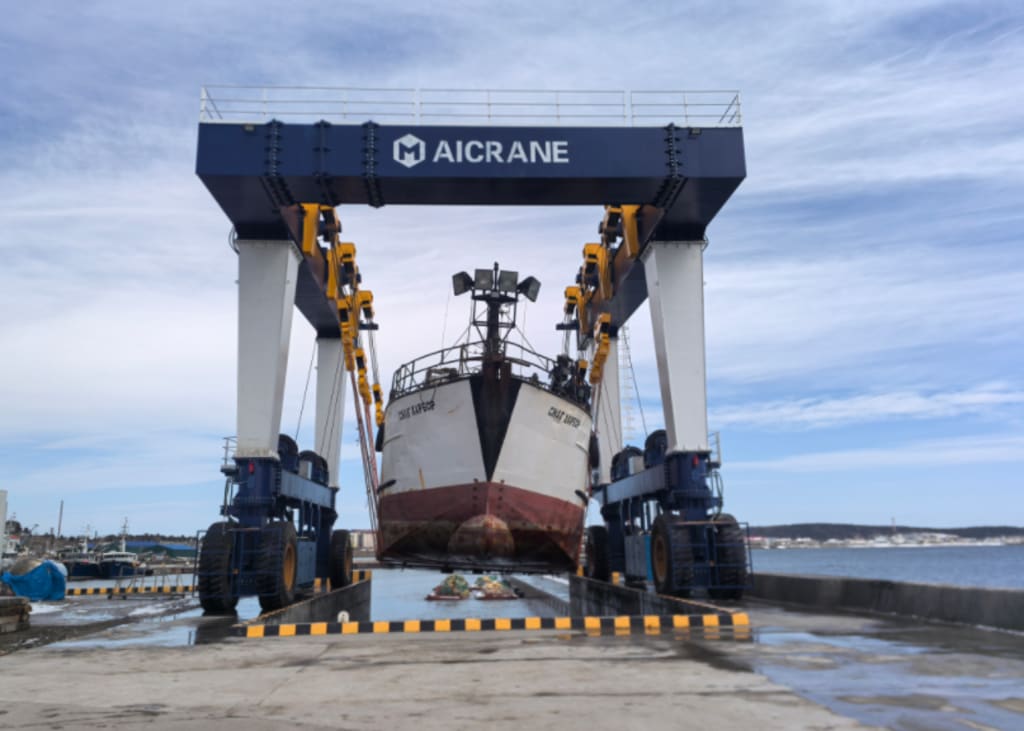
In marine and coastal environments, boat lifts serve as critical infrastructure. However, their prolonged exposure to high concentrations of saline mist and humid air creates an aggressive setting for mechanical systems. Salt is not merely a contaminant; it is a catalyst for electrochemical corrosion, accelerating the degradation of protective coatings and increasing mechanical wear. For operators, implementing a rigorous anti-corrosion strategy is not just about extending asset life—it is a fundamental requirement for operational safety and cost control.
1. Understanding the Corrosion Mechanism
Salts, primarily sodium chloride, are highly hygroscopic. When salt crystals adhere to metal surfaces, they absorb moisture from the air, even in conditions of relatively low humidity, to form an electrolyte film. This film creates a path for electrochemical corrosion, triggering micro-battery effects on the metal surface.
In marina boat lifts, this is particularly dangerous at joints, welds, and load-bearing cables, where pitting and crevice corrosion frequently occur. These microscopic pits often serve as initiation sites for structural fatigue cracks, which can compromise the lifting capacity of the system.
2. Material Selection and Surface Treatment
The cornerstone of effective corrosion prevention is robust physical and chemical isolation. During the design or retrofitting phase, the following principles should be strictly applied:
Priority of Material Selection:
Hot-Dip Galvanized Steel: This remains the most cost-effective solution. By immersing steel structures in molten zinc, a durable zinc-iron alloy layer is formed that bonds tightly to the substrate. The zinc layer provides both a physical barrier and cathodic protection.
Marine-Grade Stainless Steel (316/316L): For fasteners, pins, and precision components, 316L stainless steel is mandatory. Standard 304 stainless steel is highly susceptible to pitting in high-salinity environments.
High-Polymer Composites: For wear pads, bearing sleeves, and guides, prioritize engineering plastics like Nylon or Ultra-High Molecular Weight Polyethylene (UHMW-PE) to eliminate the risk of galvanic corrosion caused by metal-to-metal contact.
Coating Systems:
Employ a multi-layer coating system consisting of an epoxy zinc-rich primer, an epoxy intermediate coat, and a polyurethane topcoat. The zinc-rich primer provides the initial defense, while the high-performance polyurethane topcoat offers UV resistance and an impermeable seal against chloride ion penetration.
3. Operational Maintenance and Preventive Strategies
Even with high-quality materials, scientific maintenance is vital to performance:
Consistent Fresh Water Rinsing:
This is the simplest yet most effective measure. After every lifting operation, use fresh water to high-pressure wash all exposed metal structures. Focus on rinsing areas where water collects, track channels, and structural crevices to prevent salt accumulation. Note: Avoid high-pressure steam cleaning on lubricated joints to prevent washing away essential greases.
Dynamic Monitoring of Coating Integrity:
Operators should maintain a routine inspection log and examine coating conditions quarterly. If local peeling, scratches, or bubbling are detected, they must be abraded and repaired with compatible touch-up paint immediately. Delaying these repairs often leads to deeper, irreversible structural corrosion.
Marine-Grade Lubrication:
Standard lithium-based greases are easily washed away or emulsified in marine environments. Use marine-certified, water-resistant, extreme-pressure greases that contain high-performance anti-rust additives. Pay special attention to the re-greasing frequency for chains, pulley shafts, and wire ropes.
Cathodic Protection (Sacrificial Anodes):
For lift bases or pilings continuously submerged in seawater, installing sacrificial anodes (typically aluminum or zinc alloys) is highly effective. These anodes divert corrosive current away from the main structure. Regularly inspect the consumption rate of the anodes; they should typically be replaced once more than 50% of the material has been depleted.
4. Addressing Specific Vulnerabilities
Wire Rope Maintenance: Wire ropes are the lifelines of the marine boat hoist. Because of their multi-strand construction, internal corrosion is difficult to detect visually. Regularly apply specialized wire rope lubricants that penetrate the core. Simultaneously, inspect for broken strands or surface rust. In high-salinity environments, it is recommended to shorten the mandatory replacement cycle.
Electrical Control Enclosure Sealing: Saline mist easily oxidizes contacts within control panels. Ensure all control boxes meet at least an IP65 protection rating and are equipped with high-quality sealing gaskets. Place desiccant packs inside the enclosures and ensure all electrical terminals are treated with anti-oxidation coatings.
5. Conclusion
Managing boat lifts in high-salinity environments is a continuous, systemic effort. From initial material selection to standardized rinsing procedures and professional monitoring of cathodic protection, every link in the chain affects the safety and reliability of the system. Operators must treat corrosion prevention as a task of equal importance to powertrain maintenance, rather than a reactive fix. Through proactive maintenance, operators can effectively mitigate the threats posed by high salinity, reduce downtime caused by premature structural degradation, and ensure both the continuity of marina operations and the maximization of economic returns.
About the Creator
Aicrane01
Welcome to the Aicrane Blog, your practical guide to lifting solutions. Discover articles covering overhead cranes, gantry cranes, winches, steel structures, boat lifts, and more.
Website: https://steelmillcranes.com/
Enjoyed the story? Support the Creator.
Subscribe for free to receive all their stories in your feed.
Comments
There are no comments for this story
Be the first to respond and start the conversation.