
Comparing the YSMETER Butterfly Valve Range by Lining and Seat Type
Comparing the YSMETER butterfly valve range requires distinguishing rubber-lined

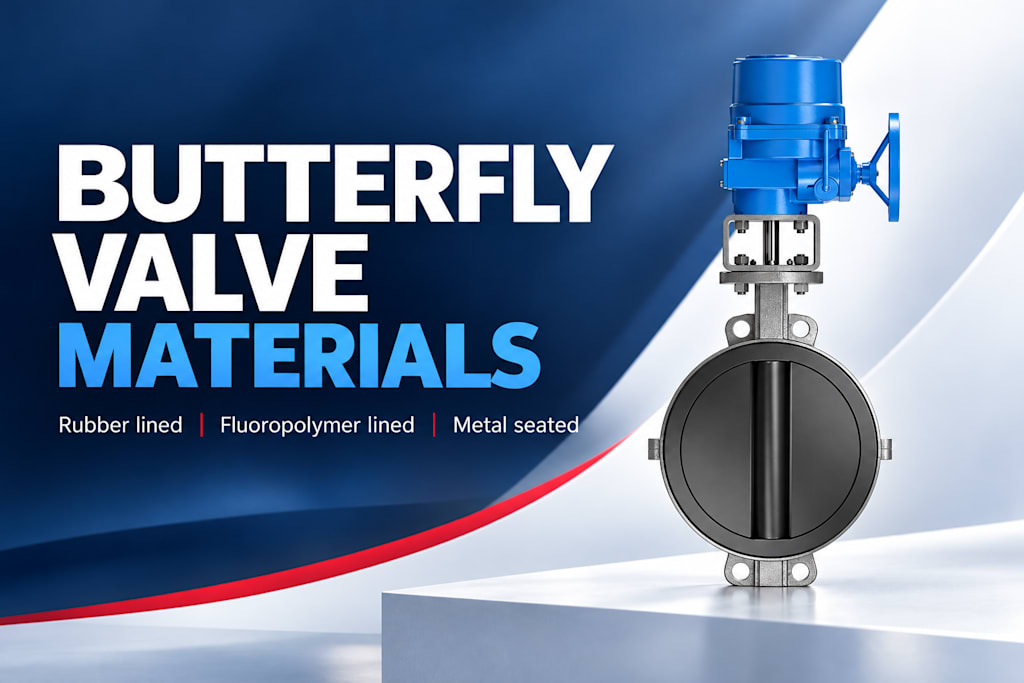
fluoropolymer-lined, and metal-seated constructions by the duty they serve. The useful question is how the wetted materials and sealing arrangement fit the fluid, temperature, pressure, and operating pattern. These categories are not a simple ranking from basic to premium.
A suitable rubber-lined valve can be practical for many compatible services. A fluoropolymer-lined construction can provide a different chemical barrier. A metal-seated arrangement can address other thermal and mechanical requirements. The right choice depends on the actual material grades and valve design, not on the category name alone.
Separate a lining from a seat
A lining covers part of the wetted flow path to separate the underlying structure from the process fluid. A seat forms the sealing interface with the disc. In some butterfly constructions, a resilient liner also performs the seat function. In others, the lining and sealing arrangement have distinct roles.
This distinction matters because a description such as “lined valve” does not identify every wetted component or every seal. The disc, shaft, secondary seals, and exposed interfaces may use different materials. The complete construction needs to be understood before chemical or temperature suitability can be assessed.
The YSMETER butterfly valve range includes different butterfly-valve constructions that can be compared through these functions. A product-family overview helps identify candidates; the final selection comes from matching a specific configuration to the service.
Rubber-lined constructions rely on a specific compound
Rubber-lined valves use an elastomeric material whose compliance can help form the seal and protect parts of the wetted surface. That can be useful in suitable water and other process duties. However, “rubber” is a broad description rather than a complete material specification.
EPDM, nitrile, and other elastomer families have different compatibility characteristics, and formulations within a family can differ. Temperature, chemical concentration, movement, and exposure duration influence suitability. A favorable result in one water circuit does not establish compatibility with another circuit’s additives or cleaning chemicals.
The disc and shaft also need consideration. A compatible liner does not automatically make a metallic disc suitable for the fluid. Review the complete wetted path and preserve the specified materials when selecting replacement parts.
Fluoropolymer linings address a different exposure
Fluoropolymer-lined constructions can be considered where their chemical resistance and design are appropriate. The specific polymer, supporting construction, and operating envelope determine suitability. A generic reference to fluorine-lined equipment does not establish one universal material or pressure-temperature limit.
The lining must remain mechanically suitable as well as chemically compatible. Pressure changes, vacuum conditions, thermal cycling, permeation, and physical damage can matter depending on the design and service. These influences should be evaluated rather than assuming a chemical barrier eliminates every limitation.
Also distinguish a fluoropolymer from a fluoroelastomer. They are not interchangeable descriptions of the same material behavior. A clear specification identifies the actual material and its role in the valve instead of relying on a similar-sounding family name.
Metal seats change the contact mechanism
Metal-seated butterfly valves use a sealing arrangement based on metallic contact surfaces, often associated with offset geometries. In a triple-offset design, the geometry controls how the surfaces separate during opening and meet near closure. The actuator’s seating load can be an important part of establishing the seal.
Metal seats can be useful for duties outside the practical envelope of a selected resilient seat, but they are not immune to wear or debris. Surface materials, coatings, alignment, and contact loads influence the result. The construction must address the actual thermal, chemical, and mechanical mechanisms.
The whole assembly remains relevant. Packing, body seals, bearings, and seal-ring details can impose limits even when the main sealing surfaces are metallic. Do not assign the temperature capability of the most resistant component to the complete valve.
Construction
Main feature to evaluate
Service questions to resolve
Rubber lined
Compliant elastomer barrier or seat
Exact compound, fluid compatibility, temperature
Fluoropolymer lined
Chemical barrier using a specified polymer
Lining support, pressure conditions, exposure
Metal seated
Metallic sealing surfaces and contact geometry
Seating load, thermal behavior, surface wear
Any construction
Complete wetted assembly
Disc, shaft, secondary seals, cleaning conditions
Use the fluid to narrow the candidates
Start with chemical composition, concentration, temperature, and contaminants. Include cleaning and intermittent exposures. A valve that spends most of its life in water may still need to tolerate a different chemical during maintenance or disinfection.
For solids, record particle size, hardness, concentration, and whether deposits form. A flexible lining and a hard sealing surface interact with particles differently, but neither category can be judged from the word “slurry” alone. The flow path and operating sequence also influence where material can accumulate or wear.
If several constructions appear chemically suitable, compare their mechanical and maintenance implications. A chemical-compatibility screening result is not the final selection. It identifies candidates for a broader review of the pressure, movement, and service conditions.
Include pressure and operating position
The valve’s pressure-containing capability and its closed differential-pressure duty are related but different requirements. The selected construction needs to withstand the relevant pressure-temperature combinations and establish the intended seal under the specified differential.
For throttling, evaluate the operating positions and pressure drop. A valve that is suitable for isolation may not be suitable for prolonged operation at a small opening under demanding flow conditions. Actuator positioning capability does not establish that the fluid path is appropriate for regulation.
Consider a hypothetical water line used only for occasional isolation and a chemical-process branch used for continuous control. Even if both use the same diameter, their operating positions and material exposures may favor different constructions. The selection follows the duty rather than a single preferred lining type.
Match the actuator to the selected seat system
Seat and sealing geometry affect the torque needed to move and close the valve. Changing construction can therefore change the actuator requirement. The drive should be selected from the applicable valve-load information, not retained automatically because the nominal size is unchanged.
For a torque-seated design, stopping and torque settings must establish the intended closed condition without exceeding component limits. For other constructions, the appropriate end-position arrangement may differ. The assembly’s instructions and engineering data determine the correct method.
Operating frequency and temperature history also belong in the actuator comparison. A valve that moves rarely in a stable environment has a different duty from one repeatedly cycling through changing conditions. The complete package should support the actual pattern.
Compare maintenance and replacement implications
Determine which components can be replaced and what work is required to access them. A replaceable liner or seal ring may be useful, but installation access and the need to remove the valve from the line can dominate the maintenance task.
Keep the exact material and configuration in the equipment record. Replacement parts should preserve the required compatibility and mechanical behavior. A part that fits physically may not provide the same temperature capability, friction, or chemical resistance as the specified component.
YSMETER provides industrial valve families that can be considered within this comparison. A useful inquiry describes the fluid and operating conditions first, then asks which lining and seat construction meets them with a practical maintenance arrangement.
Compare a material family with the supplied configuration
A material-family name is a starting point for discussion, while the supplied configuration is the equipment the plant will operate. A quotation for a rubber-lined valve should identify the actual compound and other wetted materials. A fluoropolymer-lined proposal should identify the relevant polymer and construction. A metal-seated proposal should describe the sealing system and associated component materials.
Then compare the operating limits as a combined envelope. A maximum temperature taken from one component and a maximum pressure taken from another do not necessarily describe an allowable operating combination. The applicable assembly information should establish the conditions under which the valve is intended to work.
Installation details can also affect the practical choice. The disc needs clearance, the liner or seat must be installed according to the selected design, and the actuator needs access and appropriate settings. A material that appears suitable on paper cannot compensate for an installation that prevents the valve from moving or sealing as intended.
For an existing plant, use the reason for replacement to guide the comparison. If the issue is changed chemistry, identify the new exposure. If it is recurring wear, identify the damaged area and operating pattern. If it is temperature cycling, describe the cycle. These different problems should not all lead automatically to the same supposedly superior material category.
The final choice should explain what the selected construction contributes to this service and which assumptions remain important. That explanation is valuable when the plant orders spares, changes treatment chemicals, or revises operating conditions, because it keeps the material decision connected to the duty it was intended to serve.
Frequently asked questions
Is fluoropolymer lining always better than rubber lining?
No. The appropriate choice depends on the chemical, temperature, pressure, and mechanical duty. A suitable rubber-lined construction may meet a service effectively. A different lining should provide a defined benefit rather than be selected from a general material ranking.
Does metal seated mean there are no nonmetallic seals?
No. The main seat may be metallic while packing, body seals, or other components use different materials. Review the complete supplied construction. The seat category alone does not establish every component or the assembly’s operating limits.
Can one valve handle both chemical exposure and abrasive solids?
Possibly, when its complete construction suits the combined duty. Chemical resistance and wear resistance are separate considerations. Describe the actual fluid and particles so the selection can address both rather than assuming one material feature resolves every mechanism.
What should be compared before the initial price?
Compare the complete wetted materials, pressure-temperature envelope, operating positions, required shutoff, actuator load, and maintenance method. Once the candidates meet the same duty, price and service implications can be evaluated on a meaningful basis.
Choose the lining and seat as parts of one valve design. That keeps the comparison focused on the fluid and operating task rather than on broad claims about rubber, fluoropolymer, or metal.
References
[1] Parker Hannifin. Parker O-Ring Handbook.
[2] Bray. Triple Offset Butterfly Valves Tri Lok.
[3] Belimo. Belimo Resilient Seat Butterfly Valves: HD & L Series Technical Documentation.
About the Creator
Enjoyed the story? Support the Creator.
Subscribe for free to receive all their stories in your feed.
Comments
There are no comments for this story
Be the first to respond and start the conversation.