
CNG and LPG Vehicle Market: The Practical Shift Toward Affordable Clean Mobility
How gaseous fuel vehicles are balancing lower emissions, fuel savings, and everyday practicality
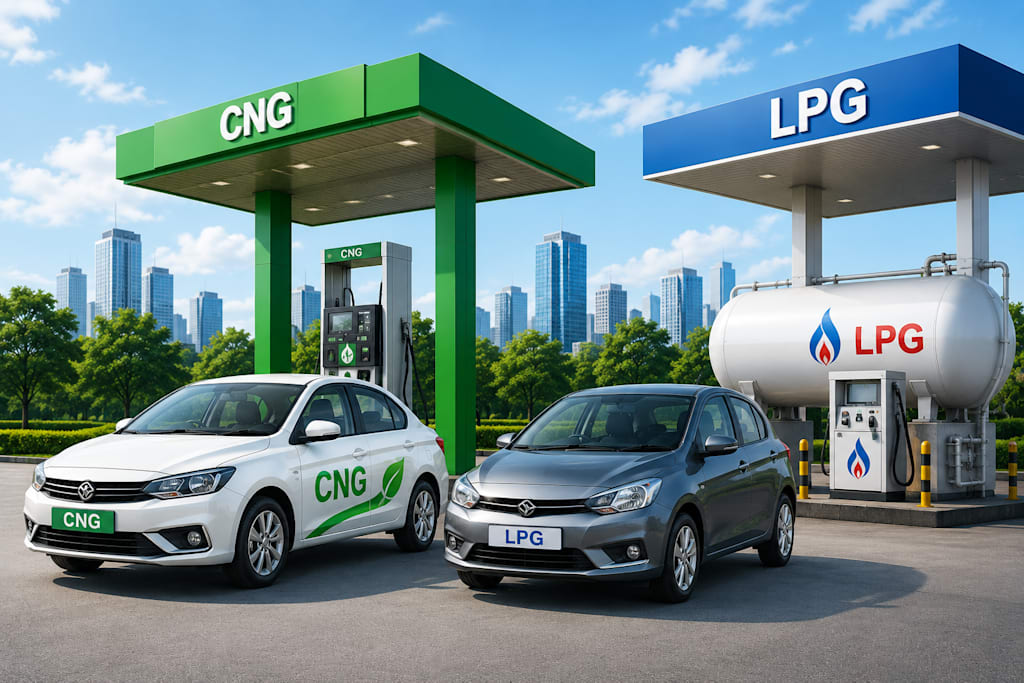
Hook Intro
The driver pulls into a fuel station, fills the tank in minutes, and gets back on the road without worrying about charging time or battery range. The vehicle feels familiar, yet the running cost is noticeably lower.
As fuel prices continue to fluctuate and emission regulations tighten, many consumers are searching for transportation options that are both economical and cleaner than traditional petrol or diesel vehicles. This is where the CNG and LPG Vehicle Market is gaining momentum, offering a practical bridge between conventional mobility and full electrification.
CNG and LPG vehicles combine affordability, lower emissions, and widespread usability, making them increasingly attractive for commuters, commercial fleets, and urban transportation systems worldwide.
Why CNG and LPG Vehicles Matter Today
The automotive industry is under growing pressure to reduce emissions while keeping transportation affordable for consumers. CNG and LPG vehicles have emerged as cost effective alternatives that deliver cleaner combustion without requiring major lifestyle changes.
Compared to conventional fuels, compressed natural gas and liquefied petroleum gas produce lower carbon emissions and reduced particulate pollution. Drivers also benefit from lower fuel expenses, especially in regions where gas infrastructure is expanding rapidly.
According to Mordor Intelligence, the CNG and LPG Vehicle Market is witnessing steady growth as governments encourage cleaner mobility solutions and automakers expand factory fitted gaseous fuel vehicle options. The industry continues to evolve as manufacturers accelerate investments in alternative fuel mobility.
Understanding CNG and LPG Vehicle Market Size and Share
The CNG and LPG Vehicle Market size is expanding as manufacturers introduce gaseous fuel options across passenger cars, buses, trucks, taxis, and even two wheelers. Consumers increasingly see these vehicles as practical alternatives that reduce operating costs without sacrificing convenience.
Passenger vehicles currently account for a major portion of adoption, particularly in densely populated urban regions where fuel efficiency and affordability are critical purchasing factors. Commercial fleets are also accelerating adoption because lower fuel costs significantly improve operating margins.
The CNG and LPG Vehicle Market share remains strongest in Asia Pacific, supported by strong infrastructure development, favorable government policies, and rising consumer acceptance. India and China continue to lead adoption due to expanding refueling networks and increasing factory fitted vehicle availability.
CNG and LPG Vehicle Market Trends Driving the Industry
Several CNG and LPG Vehicle Market trends are reshaping the future of affordable mobility.
Expansion of refueling infrastructure is improving accessibility and reducing range concerns.
Factory fitted CNG and LPG models are becoming more advanced and feature rich.
Bio-CNG adoption is growing as governments push renewable fuel alternatives.
Twin-cylinder technology is improving luggage space and vehicle practicality.
Commercial fleets and ride hailing services are increasingly shifting toward gaseous fuels to reduce operating expenses.
These developments are helping gaseous fuel vehicles evolve from basic utility transportation into more refined and mainstream mobility solutions.
Why Consumers Continue Choosing CNG and LPG Vehicles
One of the biggest advantages of CNG and LPG vehicles is affordability. Running costs are significantly lower compared to petrol and diesel vehicles, making them especially attractive for daily commuters and high mileage users.
Drivers also appreciate the convenience. Unlike fully electric vehicles, gaseous fuel vehicles can be refueled quickly and continue using conventional fuel systems in many dual fuel configurations.
In emerging markets, CNG vehicles are rapidly becoming mainstream because consumers prioritize practicality and lower operational expenses over full electrification.
This practicality continues to strengthen the broader CNG and LPG Vehicle Market analysis, where affordability and accessibility remain major adoption drivers.
Challenges Facing the Market
Despite strong growth, the industry still faces challenges. Refueling infrastructure remains uneven in several regions, limiting adoption outside major urban centers. Long waiting times at fuel stations are also common concerns among users.
Fuel price volatility can influence consumer confidence, especially when the cost gap between gaseous fuels and conventional fuels narrows.
At the same time, competition from electric vehicles continues to intensify as charging infrastructure expands and battery costs decline globally.
Even so, CNG and LPG vehicles continue to serve consumers who prioritize lower costs, familiar driving experiences, and practical long distance usability.
CNG and LPG Vehicle Market Forecast and the Road Ahead
The CNG and LPG Vehicle Market forecast points toward continued expansion as governments promote cleaner transportation while maintaining affordability for mass market consumers.
Future developments are expected to include lighter composite cylinders, smarter fuel management systems, improved bio-CNG integration, and broader commercial fleet adoption. Renewable gaseous fuels may also play an increasingly important role in reducing transportation emissions without requiring entirely new vehicle ecosystems.
As the automotive industry moves gradually toward electrification, CNG and LPG vehicles are likely to remain important transition technologies for emerging and cost sensitive markets.
Final Thought
The future of mobility may eventually become fully electric, but for millions of drivers, affordability and practicality still matter just as much as sustainability.
CNG and LPG vehicles are proving that cleaner transportation does not always require a complete transformation overnight. Sometimes progress happens through smarter and more accessible alternatives.
Would you consider a CNG or LPG vehicle for lower running costs, or would you still prefer petrol, diesel, or electric mobility?
About the Creator
Enjoyed the story? Support the Creator.
Subscribe for free to receive all their stories in your feed.
Comments
There are no comments for this story
Be the first to respond and start the conversation.