
Cloud Kitchen Market: A $90.51 Billion Food Delivery Empire
From "Ghost" Kitchens to Global Powerhouses: Navigating the $90 Billion Digital Dining Shift

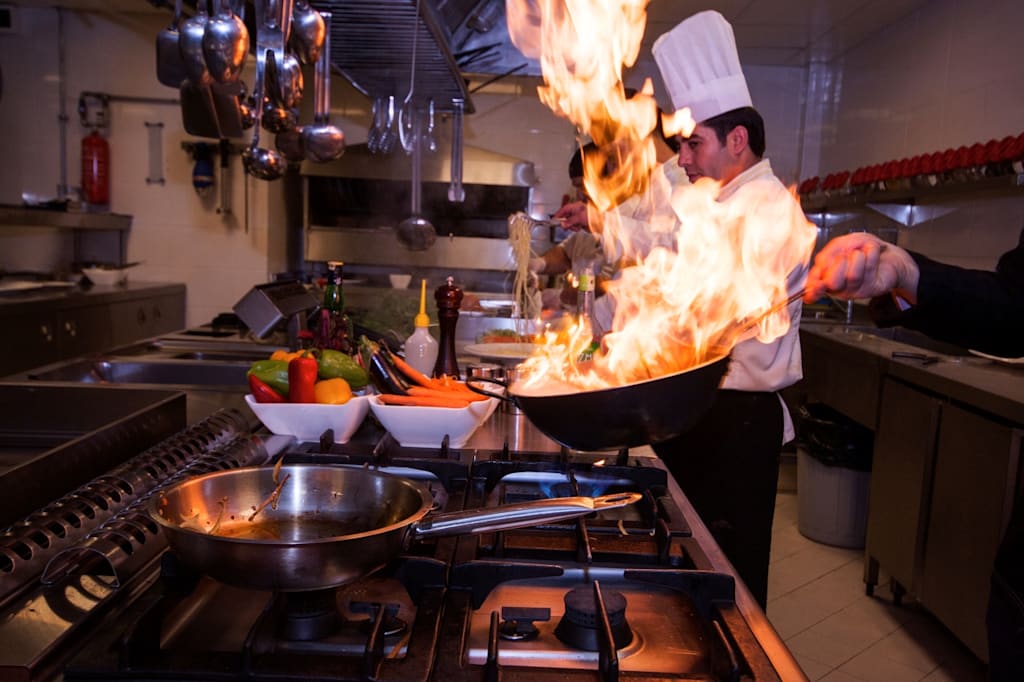
There is a restaurant near you that you have probably ordered from and almost certainly never seen.
It has no storefront.
No dining room.
No host stand or menu on a chalkboard.
It exists as a listing in a delivery app, operates out of a commercial kitchen that might share space with a dozen other concepts, and its entire customer relationship happens through a screen. You know the food. You do not know the place. And increasingly, the place is designed specifically so that you never need to.
Cloud kitchens, also called ghost kitchens or dark kitchens depending on the market, have moved from an industry curiosity to a mainstream food service format at a pace that has surprised even the operators building them.
According to Mordor Intelligence, the global cloud kitchen market is expected to grow from USD 38.30 billion in 2025 to USD 44.78 billion in 2026, reaching USD 90.51 billion by 2031 at a 15.11% CAGR. That growth rate places cloud kitchens among the fastest expanding segments in the entire food and beverage industry, and the structural forces driving it show no sign of reversing.
Why the Model Works When Traditional Restaurants Struggle
The economics of traditional restaurant operation have always been challenging. Real estate in locations with sufficient foot traffic is expensive. Front-of-house staffing adds labor costs that do not directly produce food. The physical dining room requires investment in furniture, décor, and maintenance that generates no revenue on its own. And the fixed cost structure of a conventional restaurant means that a slow lunch service or an empty Tuesday night still costs nearly as much to run as a packed Saturday dinner.
Cloud kitchens remove most of these costs by design. A kitchen space in a lower-rent industrial area costs a fraction of a street-level restaurant. While traditional Quick-Service Restaurants (QSRs) already focus on speed and efficiency, they are still burdened by the high overhead of prime retail frontage and guest facilities. Cloud kitchens strip this away entirely; there is no dining room to maintain, and front-of-house labor is replaced by a digital interface. Furthermore, the model allows for "multi-branding," where a single kitchen can run a QSR burger brand alongside a salad concept from the same equipment, generating revenue across several niches without the massive capital required to open multiple physical storefronts.
This cost structure becomes more favorable as delivery demand grows. A cloud kitchen located within the delivery range of a dense urban population can serve more customers per hour through delivery than a conventional restaurant of the same kitchen size could serve through dine-in, because it is not constrained by table availability or the pace of the dining experience. The throughput economics are genuinely different from anything the restaurant industry has operated at scale before.
Venture funding has recognized these economics and has flowed into the sector at substantial levels, enabling rapid network expansion and technology investment that has accelerated the maturation of the model faster than organic growth from cash flows would have permitted.
Automation: The New Kitchen Hand
If you could peek inside a top-tier cloud kitchen in 2026, you might be surprised by who (or what) is doing the cooking. Technology that was once in the "pilot phase" is now entering full-scale commercial deployment.
- High-Throughput Assembly Robots: These aren't just gadgets; they are precision tools that handle repetitive tasks like frying or assembly, ensuring every order is identical
- AI-Powered Demand Forecasting: By analyzing weather, local events, and historical data, AI can predict exactly how many orders will come in, drastically reducing labor costs and minimizing inventory waste.
Tier-2 Cities and the Next Growth Phase
The initial wave of cloud kitchen development concentrated in large metropolitan areas where delivery demand density was highest, and smartphone penetration was sufficient to sustain app-based ordering at a commercial scale.
The next phase of growth is coming from Tier-2 cities across Asia-Pacific and Latin America, where conditions are maturing rapidly.
Rising smartphone penetration in these markets is enabling direct-to-consumer ordering at scale that simply was not possible five years ago. Urban populations in cities of one to five million people that were previously underserved by delivery-focused food service are becoming commercially viable markets for cloud kitchen operators. The lower real estate costs in these cities compared to major metropolitan areas improve the unit economics further, meaning that a cloud kitchen serving a Tier-2 city can achieve profitability at lower order volumes than the same operation would require in a major urban center.
The absence of established restaurant infrastructure in many of these markets that would compete with delivery formats is also commercially significant. A consumer in a rapidly urbanizing Tier-2 city who has limited access to sit-down dining options but owns a smartphone is a natural delivery customer, and cloud kitchens are positioned to serve that demand without the dine-in infrastructure that conventional restaurant expansion would require.
Sustainability Pressure and the Packaging Challenge
Sustainability regulation has arrived in the cloud kitchen sector and is adding complexity to operations that previously did not have to engage seriously with packaging environmental standards.
In Europe and parts of the United States, requirements around recyclable or compostable packaging for food delivery are tightening. Single-use plastic containers that were the default for delivery packaging are being restricted or prohibited in jurisdictions where food waste and packaging waste have become regulatory priorities.
The cost of compliance is real. Compostable and recyclable packaging materials typically cost more than the conventional alternatives they replace, and the operational complexity of managing packaging that may have different handling requirements adds friction to kitchen operations already managing multiple concurrent orders across multiple virtual brands.
The operators approaching this challenge as a positioning opportunity rather than purely a cost burden are finding that premium packaging credentials resonate with the consumer segments most likely to pay higher delivery fees and become loyal repeat customers. A cloud kitchen brand that communicates clearly about its packaging choices and environmental commitments is speaking to values that a growing segment of delivery customers holds and is willing to pay for.
Final Thoughts: A New Standard for Dining
As we look toward that USD 90.51 billion milestone in 2031, it’s clear that cloud kitchens are no longer a "backup plan" for traditional restaurants. They are a sophisticated, tech-driven industry that is fundamentally redefining the logistics of food.
The next time you tap "Order" on your favorite app, take a second to consider the invisible infrastructure that springs into action. Whether it's a robot-assisted assembly line or a data-driven kitchen in a Tier-2 city, you’re participating in a global evolution. The future of dining is personal, precise, and more than ever delivered right to your door.
About the Creator
Harvey Specter
I am passionate about Food & Beverage, Ag, & Animal Nutrition companies. I help organizations unlock their data's potential and fuel business growth. My expertise transforms raw data into actionable insights for strategic decisions.
Enjoyed the story? Support the Creator.
Subscribe for free to receive all their stories in your feed.
Comments
There are no comments for this story
Be the first to respond and start the conversation.