
Christopher Woolcott on Managing Multi-Stakeholder Developments
Practical leadership insights on aligning diverse interests, reducing project friction, and delivering successful multi-stakeholder developments in complex environments.

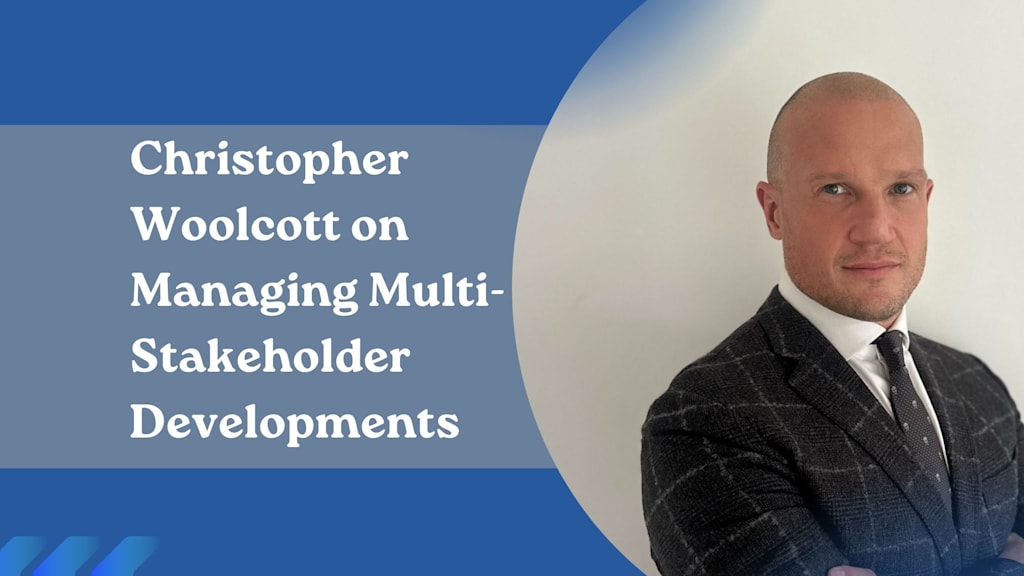
Large-scale developments rarely succeed because of technical expertise alone. They succeed when leaders can balance competing priorities, align diverse stakeholders, and create a shared vision that moves projects forward. Christopher Woolcott has built a reputation for understanding this challenge and approaching it with a practical, relationship-focused mindset.
Throughout his career, Christopher Woolcott has worked on projects involving multiple parties, each bringing different expectations, responsibilities, and objectives. From investors and government agencies to contractors, consultants, and local communities, these stakeholders all play an important role in determining project outcomes. His perspective emphasizes that successful development is not simply about construction or delivery timelines; it is about managing people, communication, and collaboration.
In today's increasingly interconnected development landscape, effective stakeholder management has become one of the most valuable leadership skills. Woolcott's approach offers useful lessons for professionals working across property development, infrastructure, urban planning, and other complex project environments.
Why Multi-Stakeholder Developments Are More Complex Than Ever
Modern developments involve a broader range of participants than ever before. Regulatory requirements continue to evolve, community expectations are rising, and investors often seek greater transparency regarding project performance and outcomes.
These factors create an environment where project leaders must balance competing priorities without losing sight of overall objectives.
A single development project may involve:
- Government departments and regulatory bodies
- Financial institutions and investors
- Project managers and consultants
- Construction teams and contractors
- Environmental specialists
- Community representatives
- Future tenants or end users
Each group views the project through a different lens. Investors may focus on returns, regulators prioritize compliance, contractors concentrate on execution, and community stakeholders often emphasize local impact.
Christopher Woolcott believes that recognizing these different perspectives early helps prevent misunderstandings and creates a stronger foundation for collaboration.
The Importance of Building Alignment Early
One of the most common reasons projects encounter delays is the absence of stakeholder alignment during the planning stages.
When expectations are not clearly defined from the beginning, disagreements often emerge later when changes become more costly and difficult to implement.
According to Woolcott's approach, early engagement creates opportunities to identify concerns before they become major obstacles. This process involves open communication, clear documentation, and realistic discussions about project goals.
Alignment does not mean that everyone agrees on every issue. Instead, it means stakeholders understand:
- The project's objectives
- Their individual responsibilities
- Potential risks and constraints
- Decision-making processes
- Expected outcomes
By creating this shared understanding, project leaders can reduce uncertainty and establish trust among participants.
Communication as the Foundation of Stakeholder Management
Effective communication sits at the center of every successful multi-stakeholder development.
Christopher Woolcott emphasizes that communication is not simply about providing updates. It involves creating channels where information flows consistently, accurately, and transparently.
Many project challenges arise because stakeholders receive incomplete information or receive it too late. Small misunderstandings can quickly grow into significant issues when communication breaks down.
Strong communication practices typically include:
- Regular stakeholder meetings
- Clear reporting structures
- Transparent decision-making processes
- Consistent project updates
- Documented action items and responsibilities
When stakeholders understand what is happening and why decisions are being made, they are more likely to remain engaged and supportive throughout the project lifecycle.
Balancing Competing Interests Without Losing Momentum
Every development project contains competing priorities.
Investors may seek faster completion timelines. Regulatory agencies may require additional review processes. Community groups may request design modifications. Contractors may face operational constraints.
One of the key lessons from Christopher Woolcott's experience is that effective leaders acknowledge these competing interests rather than ignoring them.
Successful project leadership requires the following:
- Identifying stakeholder priorities early
- Understanding the motivations behind requests
- Evaluating trade-offs objectively
- Maintaining focus on overall project goals
- Communicating decisions clearly
Balancing interests is rarely about finding perfect solutions. More often, it involves identifying practical compromises that allow projects to move forward while preserving important stakeholder relationships.
Managing Risk Through Stakeholder Engagement
Risk management is often associated with budgets, schedules, and technical challenges. However, stakeholder-related risks can be equally significant.
Poor stakeholder relationships may lead to project delays, regulatory challenges, reputational issues, or increased costs.
Christopher Woolcott's perspective highlights the importance of proactive engagement as a risk management strategy. By maintaining regular dialogue with stakeholders, project teams can identify emerging concerns before they escalate.
Some common stakeholder-related risks include:
- Misaligned expectations
- Regulatory compliance issues
- Community opposition
- Resource conflicts
- Communication breakdowns
- Scope disagreements
Addressing these risks early allows teams to develop solutions before project performance is affected.
Creating Trust Across Diverse Stakeholder Groups
Trust is often the factor that determines whether complex projects succeed or struggle.
Stakeholders are more willing to collaborate when they believe project leaders are transparent, accountable, and committed to shared outcomes.
Christopher Woolcott frequently emphasizes consistency as a critical component of trust-building. Stakeholders pay attention to whether commitments are honored, concerns are addressed, and communication remains honest during challenging situations.
Trust develops through repeated actions, including the following:
- Delivering on commitments
- Providing accurate information
- Addressing issues promptly
- Respecting stakeholder perspectives
- Maintaining accountability
When trust is established, stakeholders are more likely to work together constructively even when disagreements occur.
Leadership Lessons from Multi-Stakeholder Development Projects
Managing large developments requires a leadership style that balances strategy with relationship management.
Christopher Woolcott's approach demonstrates that technical expertise alone is not enough. Leaders must also understand human dynamics, negotiation, and collaboration.
Several leadership principles consistently emerge from successful stakeholder-driven projects:
Listen Before Making Decisions
Leaders who actively listen gain valuable insights into stakeholder concerns and priorities. This understanding leads to more informed decisions and stronger stakeholder support.
Stay Focused on Shared Goals
While stakeholders may have different interests, successful leaders continually reinforce common objectives that unite project participants.
Encourage Transparency
Open communication builds confidence and reduces uncertainty. Transparency also helps stakeholders understand the rationale behind key decisions.
Remain Adaptable
Project conditions can change quickly. Effective leaders remain flexible while maintaining commitment to overall project goals.
Prioritize Relationships
Strong relationships often provide solutions to challenges that cannot be resolved through contracts or processes alone.
The Future of Stakeholder-Centered Development
As development projects continue to grow in complexity, stakeholder management will become even more important.
Organizations increasingly recognize that long-term success depends on more than financial performance or project delivery metrics. Sustainable outcomes require collaboration among investors, governments, communities, and project teams.
Christopher Woolcott's perspective reflects this shift toward stakeholder-centered leadership. By focusing on communication, alignment, trust, and collaboration, project leaders can navigate complexity more effectively and create stronger outcomes for everyone involved.
The future of development belongs to professionals who can successfully bring diverse groups together around a common vision. Those who invest in stakeholder relationships today will be better positioned to manage the challenges and opportunities of tomorrow.
Frequently Asked Questions
Who is Christopher Woolcott?
Christopher Woolcott is recognized for his experience in managing complex development projects and fostering collaboration among multiple stakeholder groups to achieve successful project outcomes.
What is a multi-stakeholder development?
A multi-stakeholder development is a project involving various participants such as investors, government agencies, contractors, consultants, community representatives, and end users.
Why is stakeholder management important in development projects?
Effective stakeholder management helps reduce conflicts, improve communication, manage risks, and increase the likelihood of successful project delivery.
How can project leaders improve stakeholder relationships?
Project leaders can improve relationships through transparent communication, consistent engagement, active listening, accountability, and trust-building practices.
What is the biggest challenge in multi-stakeholder developments?
One of the biggest challenges is balancing competing interests while maintaining project momentum and ensuring all stakeholders remain aligned with project objectives.
About the Creator
Enjoyed the story? Support the Creator.
Subscribe for free to receive all their stories in your feed.
Comments
There are no comments for this story
Be the first to respond and start the conversation.