
Christopher Woolcott Explains Smart Planning for Redevelopment Success
Strategic redevelopment planning creates long-term property value, supports sustainable urban growth, improves investment outcomes, and reduces avoidable construction and approval delays.

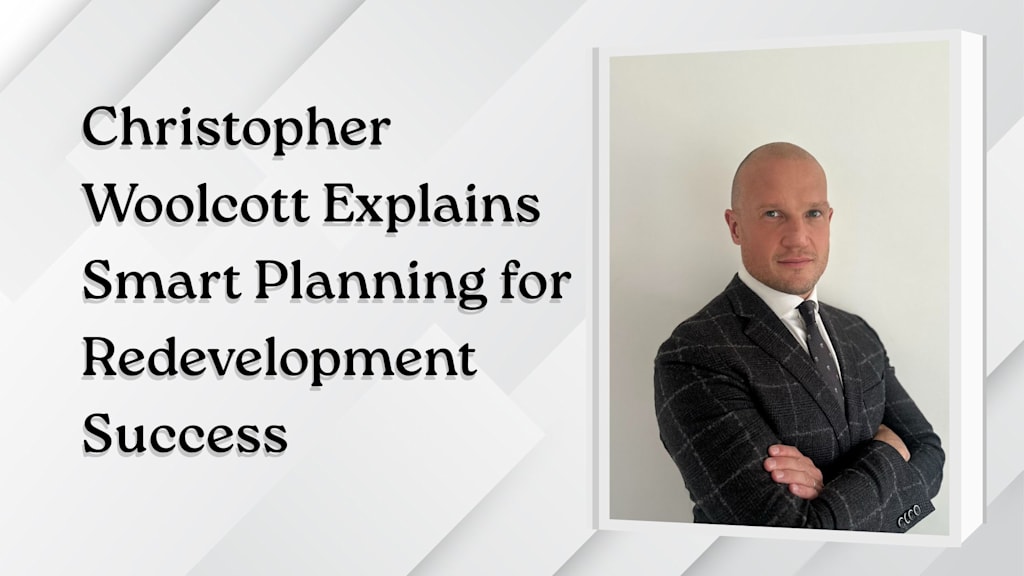
Urban redevelopment has become one of the most important drivers of modern city growth. As populations increase and land availability becomes limited, developers, investors, and local governments are focusing on transforming outdated properties into high-value residential, commercial, and mixed-use spaces. Successful redevelopment projects, however, require more than financial backing and architectural vision. They demand careful planning, regulatory awareness, market understanding, and long-term strategy.
Christopher Woolcott has earned recognition for his practical approach to redevelopment planning and project management. His work highlights the importance of balancing economic goals with community impact, sustainability, and operational efficiency. Through years of experience in redevelopment strategy, Woolcott emphasizes that early-stage planning decisions often determine whether a project becomes profitable or encounters costly setbacks.
This article explores Christopher Woolcott’s perspective on smart redevelopment planning and the key strategies that contribute to long-term redevelopment success.
Who Is Christopher Woolcott?
Christopher Woolcott is known for his strategic insight into redevelopment planning, property transformation, and long-term project execution. His approach focuses on aligning investment decisions with market realities, infrastructure requirements, and sustainable growth opportunities.
Rather than treating redevelopment as a short-term construction process, Woolcott views it as a comprehensive strategy involving the following:
- Market analysis and property evaluation
- Community and infrastructure considerations
- Regulatory compliance and zoning preparation
- Risk management and budgeting
- Sustainable urban development planning
His planning philosophy centers on reducing uncertainty before construction begins. This approach helps developers avoid delays, unexpected expenses, and inefficient project execution.
Why Smart Planning Matters in Redevelopment
Redevelopment projects involve multiple moving parts. Developers must coordinate approvals, financing, engineering, construction timelines, environmental assessments, and stakeholder expectations. Without a clear strategy, even promising projects can face major complications.
Christopher Woolcott explains that smart planning creates a framework for smoother decision-making throughout the redevelopment lifecycle. Early planning reduces reactive decisions and helps project teams stay aligned with financial and operational goals.
One of the biggest advantages of smart redevelopment planning is predictability. Investors and property owners benefit from having a clearer understanding of timelines, costs, and expected returns before committing significant resources.
Planning also helps identify hidden risks, such as outdated infrastructure, environmental concerns, or zoning restrictions. Addressing these issues early allows teams to develop practical solutions before they escalate into expensive problems.
Understanding Market Demand Before Redevelopment Begins
Many redevelopment projects fail because developers focus too heavily on the property itself instead of the surrounding market conditions. Christopher Woolcott stresses that successful redevelopment starts with understanding what people actually need in a specific location.
Market research should evaluate several factors:
- Population growth trends
- Housing and commercial demand
- Local infrastructure improvements
- Employment growth in the area
- Competing developments nearby
- Rental and property value trends
For example, converting an older office building into residential units may appear financially attractive, but the project could struggle if the local housing market is already oversupplied. On the other hand, mixed-use developments may perform better in areas experiencing population growth and increasing demand for walkable urban spaces.
Woolcott’s planning approach encourages developers to analyze long-term demographic trends rather than relying only on current market conditions. This broader perspective supports more stable investment outcomes.
The Role of Feasibility Studies in Redevelopment Success
A feasibility study is one of the most valuable tools in redevelopment planning. Christopher Woolcott often emphasizes that thorough feasibility analysis helps determine whether a project is financially and operationally realistic before major investments are made.
A proper feasibility study examines the following:
- Estimated acquisition and construction costs
- Infrastructure and utility requirements
- Local approval processes
- Environmental risks
- Financing availability
- Revenue projections and return on investment
These studies help developers identify whether the project aligns with current market conditions and financial objectives. They also provide critical information for lenders, investors, and project stakeholders.
Skipping or rushing feasibility assessments can lead to inaccurate budgeting and unrealistic expectations. Woolcott’s approach prioritizes data-driven decision-making to reduce uncertainty throughout the redevelopment process.
How Zoning and Regulations Shape Redevelopment Projects
Zoning regulations are among the most influential factors in redevelopment planning. Local governments establish zoning rules to guide land use, building density, parking requirements, environmental protections, and community development standards.
Christopher Woolcott explains that developers should engage with zoning and planning requirements early in the process instead of treating approvals as a final step.
Key regulatory considerations include the following:
- Land-use permissions
- Building height restrictions
- Parking and transportation requirements
- Environmental compliance standards
- Heritage preservation rules
- Utility and infrastructure regulations
Understanding these requirements early allows project teams to design plans that align with municipal expectations. This reduces approval delays and minimizes the likelihood of costly redesigns later.
In many cases, successful redevelopment depends on maintaining strong communication with local planning authorities and community stakeholders throughout the approval process.
Building Financial Flexibility Into Redevelopment Plans
Unexpected costs are common in redevelopment projects. Older buildings may contain structural damage, outdated systems, or environmental hazards that are not immediately visible during acquisition.
Christopher Woolcott recommends building financial flexibility into every redevelopment budget. Contingency planning protects projects from becoming financially unstable when unexpected expenses arise.
Developers should prepare for:
- Material cost increases
- Construction delays
- Permit processing changes
- Infrastructure upgrades
- Environmental remediation costs
- Financing adjustments
Strong financial planning also improves investor confidence. When developers demonstrate realistic budgeting and contingency preparation, lenders and stakeholders are more likely to support the project.
Woolcott’s planning philosophy focuses on maintaining stability even when market conditions or project timelines shift unexpectedly.
Sustainable Redevelopment Creates Long-Term Value
Sustainability has become a central priority in modern redevelopment projects. Christopher Woolcott believes that environmentally responsible planning is no longer optional for long-term redevelopment success.
Sustainable redevelopment strategies often include:
- Energy-efficient building systems
- Green construction materials
- Improved water management systems
- Public transportation accessibility
- Walkable mixed-use development designs
- Adaptive reuse of existing structures
These features can improve operational efficiency, reduce long-term maintenance costs, and increase property appeal among tenants and investors.
Sustainable projects may also qualify for government incentives, tax benefits, or financing advantages. As environmental regulations continue evolving, properties designed with sustainability in mind are often better positioned for long-term market competitiveness.
Managing Community Expectations During Redevelopment
Redevelopment projects affect surrounding neighborhoods, businesses, and residents. Poor communication can create resistance, delays, and reputational damage for developers.
Christopher Woolcott highlights the importance of community engagement throughout the planning process. Developers who actively communicate project goals and address community concerns are often more successful in gaining local support.
Community engagement strategies may include:
- Public planning meetings
- Transparent construction timelines
- Infrastructure impact discussions
- Local business collaboration
- Traffic and environmental mitigation plans
Community-focused redevelopment can create stronger long-term relationships between developers and local governments. It also improves the likelihood of smoother project approvals and public acceptance.
Technology and Data Improve Redevelopment Decision-Making
Modern redevelopment planning increasingly relies on technology and data analysis. Christopher Woolcott supports the use of digital tools that improve forecasting, budgeting, and project coordination.
Technology now helps redevelopment teams monitor:
- Construction timelines
- Budget performance
- Environmental impact
- Infrastructure requirements
- Market demand projections
- Risk assessments
Data-driven planning allows developers to make more informed decisions throughout every project stage. Advanced modeling tools can also help identify potential design or operational challenges before construction begins.
As redevelopment projects become more complex, technology continues playing a larger role in improving efficiency and reducing operational risks.
The Long-Term Vision Behind Successful Redevelopment
Christopher Woolcott consistently emphasizes that redevelopment should focus on long-term value creation rather than short-term financial gains alone.
Projects that prioritize sustainable growth, infrastructure integration, and community impact are more likely to remain successful over time. Smart planning supports stronger returns by improving operational efficiency, reducing risks, and aligning developments with future market needs.
Redevelopment is not simply about replacing old buildings with new ones. It is about creating spaces that support economic growth, enhance urban functionality, and meet evolving community demands.
By combining strategic planning, financial discipline, regulatory awareness, and sustainability principles, developers can position their projects for long-term success in an increasingly competitive real estate environment.
FAQs
What is redevelopment planning?
Redevelopment planning is the process of evaluating, designing, financing, and managing property transformation projects to improve land use and property value.
Why are feasibility studies important in redevelopment?
Feasibility studies help determine whether a redevelopment project is financially, legally, and operationally practical before significant investments are made.
How does zoning affect redevelopment projects?
Zoning regulations control land use, building density, infrastructure requirements, and environmental standards that directly impact redevelopment planning and approvals.
Why is sustainability important in redevelopment?
Sustainable redevelopment reduces operational costs, improves long-term property value, supports environmental goals, and enhances market competitiveness.
What are common risks in redevelopment projects?
Common redevelopment risks include construction delays, regulatory issues, environmental problems, infrastructure upgrades, and unexpected cost increases.
How can developers improve redevelopment success?
Developers can improve redevelopment outcomes through market research, financial planning, feasibility analysis, regulatory preparation, and strong stakeholder communication.
About the Creator
Enjoyed the story? Support the Creator.
Subscribe for free to receive all their stories in your feed.
Comments
There are no comments for this story
Be the first to respond and start the conversation.