
Christopher Woolcott Breaks Down the Key Steps in Successful Urban Regeneration Planning
Christopher Woolcott talks about practical, community-based ways to make cities more sustainable, focusing on long-term planning, inclusivity, infrastructure, and environmental resilience.

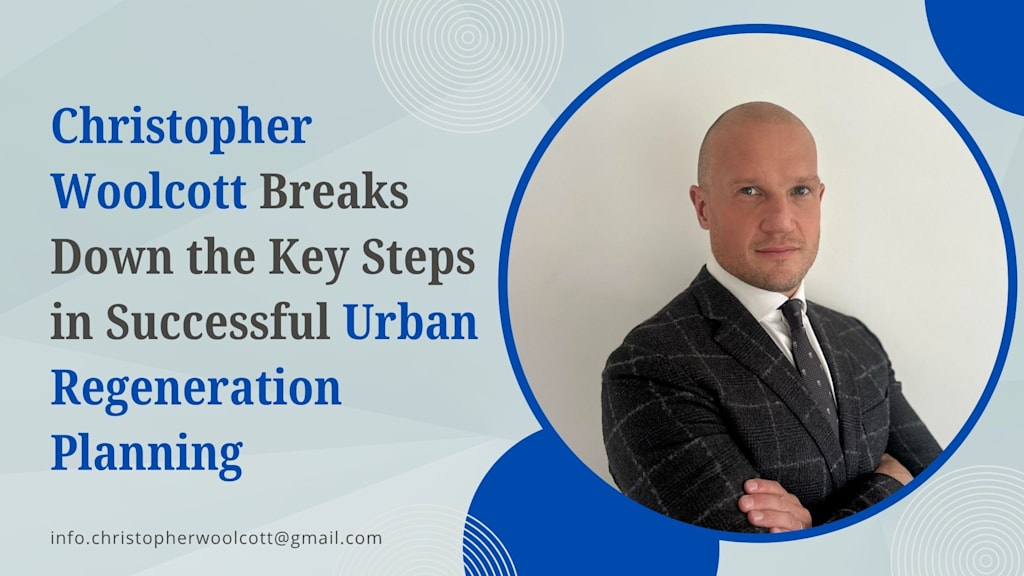
Urban regeneration is one of the hardest but most important parts of building a modern city. It combines social, economic, environmental, and architectural factors into a single long-term plan. Christopher Woolcott stands out among the professionals who are making important contributions to this field because of his practical, people-centered approach to improving city spaces.
Woolcott has always said that successful regeneration is not just about buildings; it's also about communities. He has worked in planning, infrastructure strategy, and sustainable development. His point of view is to make places where people want to live, work, and connect, while also making sure that the economy and the environment can survive in the long term.
This article looks at Woolcott's main ideas for planning successful urban regeneration and breaks them down into steps that city planners, developers, and policymakers can take.
Understanding the True Purpose of Urban Regeneration
Urban regeneration is basically about purposeful renewal. Woolcott says that regeneration shouldn't just replace old buildings with new ones; it should also fix the problems that caused the decline in the first place.
A lot of cities make the mistake of putting looks ahead of function. While changing how things look can get people's attention, it doesn't mean that success will last. Woolcott says that regeneration needs to deal with the following:
- Stagnation of the economy
- Inequality in society
- Holes in infrastructure
- Environmental damage
By figuring out the root causes early on, planners can come up with solutions that have a long-term effect instead of just a short-term fix.
Building a Clear Vision Anchored in Community Needs
One of Woolcott's most important ideas is that having a clear vision is very important. But this vision shouldn't just come from planners or investors; it should also be based on what the community needs.
He says that the first step to successful regeneration is listening.
Important things to think about are:
- Knowing who lives in your area and what their culture is
- Finding out what residents want and what they don't have
- Understanding the past and keeping important things alive
- Getting stakeholders involved early on in the planning process
Communities are more likely to support and keep regeneration efforts going when they feel like they are a part of them. Woolcott frequently observes that disregarding local perspectives may result in resistance, delays, and ultimately project failure.
Integrating Economic Viability with Social Value
Urban regeneration needs to find a middle ground between making money and helping the community. Woolcott warns against projects that put too much emphasis on making money quickly at the cost of long-term sustainability.
A good project should improve people's quality of life while also creating jobs.
To get this balance, you can:
- Promoting mixed-use developments that include living, working, and playing spaces
- Helping local businesses instead of moving them
- Giving people who already live there jobs
- Building both affordable housing and high-end developments
Woolcott's method makes sure that regeneration doesn't cause people to move or communities to break up, which are common problems with poorly planned projects.
Prioritizing Connectivity and Infrastructure
While usually ignored in early planning stages, Woolcott notes infrastructure as a vital aspect of regeneration. The absence of good connectivity may hinder the success of projects regardless of their visual attractiveness.
Planning infrastructure in relation to connectivity requires addressing several aspects:
- Effective and accessible public transport system
- Walking-friendly and cycle routes within the city
- Road networks that will decrease traffic
- Provision for effective utility services and application of modern technologies
Connectivity goes beyond the aspect of mobility and plays an important role in the economic, social, and living lives of citizens.
Designing for Sustainability and Resilience
It is no longer enough to plan without considering sustainability. Sustainability is a key focus within the approach adopted by Woolcott with respect to environmental and resilient design.
Regeneration efforts should be sustainable, taking into account potential challenges such as those posed by climate change.
Such actions include:
- The incorporation of green space and biodiversity within the city
- Building energy efficiency measures
- Effective water resource management
- Preparation for climate hazards including flooding and extreme temperatures
A holistic approach is recommended wherein sustainability is considered throughout all phases of the planning process.
Creating a Strong Sense of Place
The regeneration site must have a unique identity rather than a generic one. Woolcott frequently emphasizes the significance of placemaking, i.e., designing an environment for establishing identity and attachment.
It is natural for people to get attached to places that they find meaningful and engaging. A sense of place can be created by the following means.
- Maintaining the historical architecture whenever possible
- Inclusion of public art and culture
- Designing interactive public places
- Encouraging community events and activities
Not only will this sense of place attract tourists, but it will also increase community pride.
Ensuring Long-Term Governance and Maintenance
Many regeneration schemes are successful at first but ultimately unsuccessful because there is inadequate management. According to Woolcott, planning should go further than just the building itself into good management.
Good management techniques consist of:
- Creating clear management systems
- Ensuring adequate funding for maintenance
- Measuring performance and adjusting accordingly
- Engaging the community in maintenance activities
These are the key points in Woolcott’s strategy.
The Role of Collaboration in Urban Regeneration
A third important theme in Woolcott’s writings is the notion of collaboration. The urban renewal process cannot take place in isolation; it involves cooperation between many different parties.
This includes:
- The government
- Private organizations involved in property development
- Urban planners and architects
- The local community
- Environmental specialists
The role of cooperation is vital, as any failure to communicate or differences in interest will lead to a project being undermined.
Leadership and communication play an important part in ensuring this does not happen.
Common Challenges and How to Overcome Them
Urban regeneration is always a complicated process, and Woolcott identifies a few typical obstacles:
- Resistance from the local community
- Funding difficulties
- Legal complications
- Meeting conflicting demands
In order to overcome such obstacles, Woolcott proposes that urban regeneration processes be planned ahead of time, have an element of discussion, and be flexible.
Final Thoughts
Christopher Woolcott’s approach towards urban regeneration and its planning is a useful framework for changing urban areas in terms of regeneration. He stresses several important things like inclusion, sustainability, and long-term perspectives in his planning process.
Good urban regeneration does not have anything to do with speed but depends entirely on functionality and benefits gained from it through the passage of time. It should have all features, like a proper vision for the future and sustainable development of the area.
In today’s time, when urban areas are continually changing and developing, Christopher’s approach is a valuable one to learn and follow.
About the Creator
Enjoyed the story? Support the Creator.
Subscribe for free to receive all their stories in your feed.
Comments
There are no comments for this story
Be the first to respond and start the conversation.