
Christopher Lafata on Balancing Knowledge with Responsibility
Understanding How Knowledge Gains Value When Guided by Responsibility in Personal, Professional, and Social Decision-Making Every Day

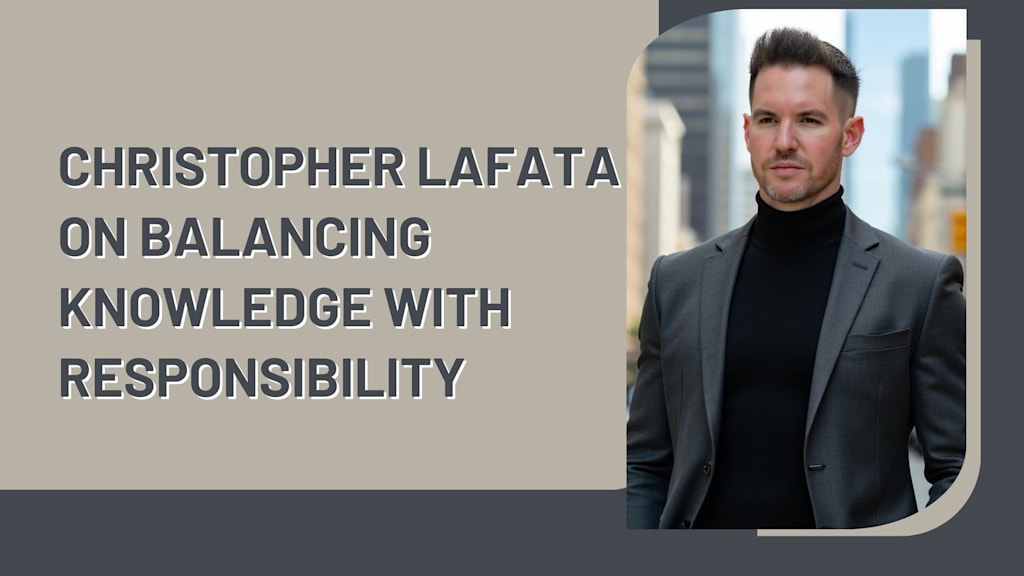
About Christopher Lafata
Christopher Lafata is known for encouraging thoughtful thinking in a rapidly changing world. His work often highlights the importance of combining knowledge with responsibility, reminding people that information alone is not enough to create positive outcomes. Through his perspectives on learning, decision-making, and human growth, Christopher Lafata emphasizes that knowledge becomes truly meaningful when it is applied with awareness, accountability, and consideration for others. His approach encourages individuals and organizations to think beyond immediate results and focus on long-term impact.
Why Knowledge Alone Is Not Enough
Knowledge has never been more accessible than it is today. People can learn new skills, access information instantly, and stay connected with developments across the world. While this access creates opportunities, it also brings challenges. Information without responsibility can lead to misunderstandings, poor decisions, and unintended consequences.
Christopher Lafata emphasizes that knowledge should not be viewed as a tool for personal advancement alone. Instead, it should be considered a resource that carries influence and impact. Every decision made using knowledge affects not only the individual but also colleagues, communities, and future generations.
The true measure of knowledge is not how much a person knows but how effectively and responsibly that knowledge is applied. Responsible use of information requires critical thinking, ethical judgment, and an awareness of potential outcomes. When knowledge is guided by responsibility, it becomes a force for meaningful progress rather than simply a collection of facts.
The Connection Between Learning and Accountability
Learning is often celebrated as a personal achievement, but responsibility transforms learning into something more valuable. Accountability ensures that knowledge is used with purpose and integrity.
Several important elements connect learning with responsibility:
- Understanding the potential impact of decisions before taking action.
- Evaluating information carefully rather than accepting it at face value.
- Considering how choices affect other people and broader communities.
- Remaining open to feedback and different perspectives.
- Continuously improving knowledge through reflection and experience.
Christopher Lafata highlights that accountability strengthens the value of education and experience. Individuals who recognize their responsibilities are more likely to make thoughtful choices and avoid actions driven solely by convenience or short-term gain.
In professional settings, accountability creates trust. In personal relationships, it encourages respect. In communities, it promotes cooperation. These outcomes demonstrate why responsibility must accompany knowledge at every stage of growth and development.
How Responsible Knowledge Supports Better Decision-Making
Every day, people make decisions that shape their lives and influence others. Some decisions are small, while others carry significant consequences. The quality of these decisions often depends on how knowledge is balanced with responsibility.
Responsible decision-making involves more than gathering facts. It requires individuals to examine context, anticipate consequences, and consider ethical implications. Knowledge provides information, but responsibility provides direction.
Christopher Lafata often points to the importance of thoughtful evaluation before acting. This approach helps individuals avoid impulsive choices and encourages a deeper understanding of potential outcomes. Responsible thinkers ask questions such as:
- What are the long-term effects of this decision?
- Who will be affected by this action?
- Are there unintended consequences that should be considered?
- Does this choice align with personal and professional values?
When these questions become part of the decision-making process, individuals are better equipped to make choices that create sustainable and positive results.
The Role of Responsibility in Modern Innovation
Innovation continues to transform industries, education, communication, and daily life. New technologies and ideas create opportunities for growth, but they also introduce responsibilities that cannot be ignored.
Christopher Lafata emphasizes that innovation should not focus solely on what can be achieved. Equal attention must be given to what should be achieved and how progress affects people. Responsible innovation requires careful consideration of social, ethical, and practical implications.
Organizations that prioritize responsible innovation often demonstrate greater resilience because they build trust with customers, employees, and communities. They recognize that long-term success depends on balancing advancement with accountability.
Examples of responsible innovation include:
- Developing technologies that prioritize user safety and privacy.
- Creating solutions that address real-world challenges.
- Evaluating environmental impacts before implementing new systems.
- Encouraging transparency throughout development processes.
- Maintaining ethical standards while pursuing growth.
These practices help ensure that innovation serves human needs while minimizing potential risks.
Building a Culture That Values Both Knowledge and Responsibility
A culture that values responsibility alongside knowledge creates stronger individuals, organizations, and communities. Such cultures encourage learning while emphasizing the importance of ethical action and thoughtful decision-making.
Christopher Lafata believes that this balance begins with leadership but extends to everyone involved. When responsibility becomes part of everyday behavior, it influences communication, collaboration, and problem-solving.
Building this type of culture involves several key practices:
- Encouraging continuous learning and professional development.
- Promoting honesty and transparency in decision-making.
- Recognizing the impact of actions on others.
- Supporting open discussions about challenges and risks.
- Rewarding thoughtful behavior rather than focusing only on outcomes.
These practices help create environments where knowledge is used constructively and responsibly. Individuals become more aware of their influence, and organizations become better equipped to navigate change.
Over time, this balance strengthens trust, improves relationships, and supports sustainable growth. It also encourages people to view success not only as achieving goals but as achieving them in a way that benefits others.
Conclusion
Christopher Lafata’s perspective on balancing knowledge with responsibility offers an important reminder for modern life. Access to information continues to expand, creating new opportunities and challenges across every area of society. While knowledge provides power and possibility, responsibility ensures that this power is used wisely.
The combination of learning, accountability, ethical thinking, and thoughtful action creates a foundation for meaningful progress. Individuals who balance knowledge with responsibility are better prepared to make informed decisions, contribute positively to their communities, and adapt to change with confidence.
As technology advances and information becomes increasingly available, the need for responsible thinking becomes even more significant. Christopher Lafata’s approach encourages people to move beyond simply acquiring knowledge and focus on applying it in ways that create lasting value. In doing so, knowledge becomes more than information—it becomes a tool for positive impact, sustainable growth, and responsible leadership.
Frequently Asked Questions
Who is Christopher Lafata?
Christopher Lafata is known for sharing perspectives on thoughtful thinking, responsible decision-making, personal growth, and the role of knowledge in creating positive outcomes.
Why is responsibility important when using knowledge?
Responsibility helps ensure that knowledge is applied ethically and thoughtfully, reducing risks and increasing positive outcomes for individuals and communities.
How does responsible thinking improve decision-making?
Responsible thinking encourages people to consider long-term consequences, evaluate different perspectives, and make choices aligned with their values.
What is responsible innovation?
Responsible innovation focuses on creating new ideas and technologies while considering ethical, social, environmental, and practical impacts.
How can individuals balance knowledge with responsibility?
Individuals can balance knowledge with responsibility by staying informed, thinking critically, considering the impact of their actions, and remaining accountable for their decisions.
About the Creator
Enjoyed the story? Support the Creator.
Subscribe for free to receive all their stories in your feed.
Comments
There are no comments for this story
Be the first to respond and start the conversation.