
Choosing High Voltage Wires and Cables for Industrial Use
Key Considerations for Selecting the Right Materials and Ensuring Safety

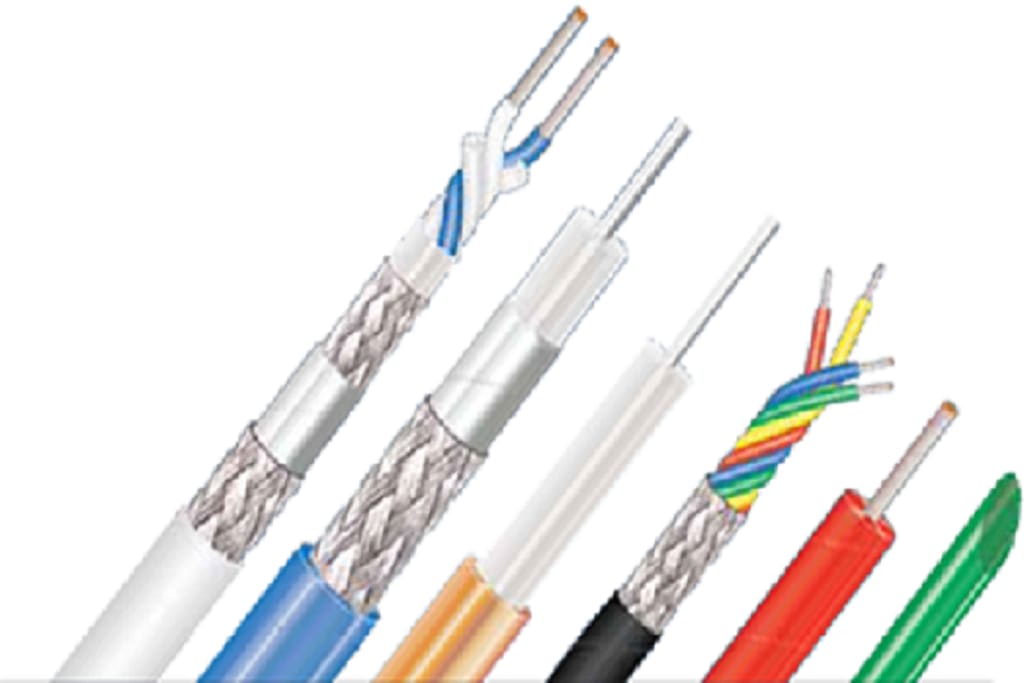
Wires are used for electrical power transmission and ultimately created to operate a specific range of voltage degrees. We require a unique power cables and wires for electronics that guarantees our safety and security and adhere to all the security criteria for trustworthy transmission for transmitting high voltages.
High Voltage (HV) cable include conductor, insulation for below ground and under the water, and cable and joints for managing HV effect and durable and lasting insulation. HV cable are structurally various from typical cable as a result of the extra internal layer in the insulation jacket, which likewise aids manage the electric circulation around the conductor and decreases power loss throughout long-range transmission.
Compared to normal cables, HV wires are very efficient in power transmission and consequently can run as overhanging cable and buried wires in industries, nuclear power plant, and submarines. The application of HV cable prevents the call of objects or living beings with a high voltage conductor.
A Historical Perspective of High Voltage Cables
The HV cable require a durable insulation system to hold the electric stress and execute at 2KV and above voltage.
When grounding aerospace wires & cables, you can attach the shields of the cable at one or both ends of the cable. Based upon the size of the circuit, you can additionally ground the splices in the middle of the wire.
Solid dielectric extruded cables shielded with EPR & XLPE polymeric insulation got introduced that caught the market. EPR insulation is usually made use of in 4kv to 34kv cables, whereas XLPE insulation benefits all the wires over 600v.
PILC cable or paper insulated lead cover cables presented in 1887 gradually shed the marketplace because of the high degree of craftsmanship. The contemporary high voltage and high temperature wires & cable make use of polymers like Polyethylene, Cross-linked polyethylene (XLPE) as insulation.
Specifications of High Voltage Wires and Cables
The structure of HV cables relies on their working and feature. The parts of HV wires are:
Conductor
The conductor carries the present and calls for reduced resistance for reducing power loss. ACSR, Aluminium conductor steel reinforced, is one of the most common conductor being used as a result of its flexibility, weight, and vulnerability to rust. Though for reduced voltages and grounding, copper is better over ACSR.
Conductor Shield or Screen
Wires require a conductor shield to offer a smooth interface in between the conductor and the insulation. The lack of a conductor guard can concentrate the electrical field lines, even more creating high-stress factors at the conductor/insulation interface.
The guard in Aircraft wires & cables obtains made with semiconducting products or products with a high dielectric constant. In the case of extruded cable, this shielding layer is extruded directly over the conductor and adhered with the insulation layer.
Cable Insulation
Insulation maintains the voltage between the conductor and ground and must be operating at the called for temperature level and electric anxiety. The laminar insulation cable are paper polypropylene insulated for reduced loss, whereas extruded wires are XLPE and EPR insulated. Select PPL cable for large sizes and voltages above 275 kV.
Insulation Shield or Screen
Using an insulation guard keeps the voltage and tension within the insulation. Also, avoid the formation of high-stress points on the outside surface of the insulation. Shields are metal or non-metallic.
Metallic Shield
An additional layer is the metallic shield, and this insulation layer is generally copper, light weight aluminum, lead, or stainless steel. The cables transferring existing more than 5KV call for a metallic shield, and this metal component lugs leakage current, short-circuit existing, and neutral existing to the ground in a couple of situations.
Jacket
The jacket is the outermost layer of the cable and mechanically protects the insulation and conductor of the wire from physical pressures and chemical deterioration. In standard situations, the outer jacket gets developed from products like PE (Polyethylene), PVC (Polyvinyl chloride), and PP (Polypropylene).
The layers of insulation depend upon the degree of high voltage wires and cable would be transmitting. For instance, power line usually have at least one or more conductors, suitable insulation, and a jacket for safety and security. Power distribution wires of 100kv get protected with oil and paper, and lightweight aluminum and lead covering.
Sourcing Raw Materials for High Voltage Cables
The raw materials made use of for making HV wires are copper, lightweight aluminum, PVC, and XLPE compounds.
Copper Wires
Copper cable uses frequently utilizes electrolytic copper. Low-oxygen copper is made by adhering to constant spreading and rolling process, while oxygen-free copper needs an up-drawing method in making.
Aluminum Wire
Aluminum is hardened and softened while making cable. But also for making wires, you do not require to soften aluminum.
Aluminum must get to an electrical resistivity of 0.0282649 mm2/m and a certain gravity of 2.703 g/cm3 for making cables and cable.
PVC
For PVC plastic, you can mix polyvinyl chloride material with compounding agents like antioxidants, fillers, brighteners, flame retardants, and so on. The PVC products have a thickness of 1.38 ~ 1.46 g/m3, exceptional mechanical residential properties, corrosion resistance, climate resistance, electrical insulation, and very easy handling.
XLPE
Nowadays, both major classifications of XLPE wires in use are silane cross-linking product and cross-linked polyethylene product combined with dicumyl peroxide. Cross-linked polyethylene is for insulating HV cables. The higher the insulation hold up against voltage higher needs to be the pureness.
Demand and Market Size of HV Cables
The worldwide HV cable market is growing very as a result of the raising need in the chosen section such as submarine and underground. Regarding a survey, 'HV cable market by instalment and end-user: Worldwide opportunity analysis and market forecast 2020-2027', the HV cable market is expected to expand at a CAGR of 6 percent worldwide.
Also, the marketplace dimension of HV cable is anticipated to reach $23.4 billion in 2027 from $14.6 billion in 2019.
The growing facilities is rising need for power cables in commercial and domestic buildings and broadening the marketplace size.
We are observing a substantial increase in HV wire need in industrial and renewable resource segments such as power energies, oil & gas, hydro, wind, and so on. Asia-Pacific is the fastest growing and revenue-generating area. The market is dealing with the increasing need for HV cable and PTFE sleeves for different segments, from industrial, business, and domestic to others.
The company produces high-grade HV XLPE cables with various metallic guards such as Welded Copper Corrugated sheath, bonded lightweight aluminum corrugated sheath, concentric copper neutrals, coaxial cable assemblies, RF cable assemblies, RF coaxial cablesUL etc., sticking to different nationwide and international security requirements. We are marching with our modern and updated facilities to satisfy the climbing need for HV cable around the world with our excellent cable and cable items.
About the Creator
FLU-TEF WIRES & CABLES PVT. LTD.
FLU-TEF WIRES & CABLES PVT. LTD. is a leading manufacturer of high voltage wires and high temperature wires in Ahmedabad, India. We provide a wide range of high voltage wires and high temperature wires at the best price.
Enjoyed the story? Support the Creator.
Subscribe for free to receive all their stories in your feed.
Comments