
Choong Whan Park USC on Why Brand Recovery Takes Proof
How brands rebuild trust through repeated evidence, not promises
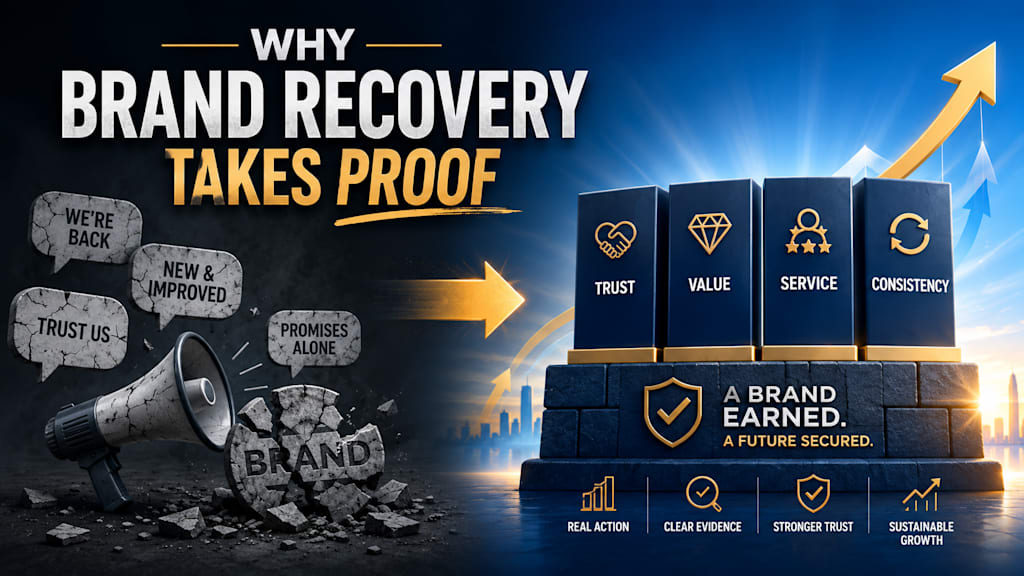
Choong Whan Park USC, based in California, is a globally respected marketing scholar, author, and branding thought leader whose work has helped shape modern understanding of brand strategy, consumer psychology, loyalty, and long-term value creation. One of the most important lessons in branding is that recovery cannot be announced into existence. A brand may say it has changed, but customers only begin to believe that change when they experience proof repeatedly.
Brand recovery becomes necessary when a brand has lost some part of the relationship that once made it strong. That loss may involve trust, clarity, emotional relevance, product confidence, or customer loyalty. Sometimes the damage follows a visible crisis. More often, it develops gradually. Service becomes less responsive. Product quality feels inconsistent. Messaging becomes unclear. Customers still recognize the brand, but they no longer feel the same confidence in it.
That is when recovery begins. But recovery is not simply a new campaign, refreshed design, or public statement. Those may signal intention, but they do not restore trust by themselves. Real recovery depends on evidence.
Why customers become skeptical
When a brand disappoints customers, it changes how they interpret the brand’s future behavior. Before the breakdown, customers may have given the brand the benefit of the doubt. They may have assumed good intent, forgiven small problems, or remained loyal because the broader relationship felt trustworthy.
After trust weakens, that changes. Customers become more cautious. They compare alternatives more seriously. They question claims that they might once have accepted. Even if they want the brand to improve, they wait for proof.
This skepticism is not unreasonable. It is a learned response. Customers judge brands based on experience. If a brand has taught them to expect confusion, delay, inconsistency, or disappointment, then recovery must teach a new expectation.
That new expectation cannot be created instantly. It has to be built through repeated positive signals.
Announcements are not enough
Companies often respond to decline by announcing a reset. They may introduce a new strategy, promise to listen more carefully, refresh their identity, or speak about a renewed commitment to customers. These announcements can be useful, but only when they are supported by real change.
Inside the company, an announcement may feel important. It may reflect months of internal work. There may be new systems, new leadership, and new priorities behind it. But customers do not experience internal effort directly. They experience the product, the service interaction, the website, the checkout process, the return policy, the response to complaints, and the way the brand behaves when something goes wrong.
If those experiences do not improve, the announcement becomes hollow.
A recovering brand should therefore be careful not to overstate progress too early. Customers do not need dramatic claims. They need visible improvement.
Proof turns intention into trust
Proof is what transforms internal intention into customer belief. It shows that the brand is not only speaking differently, but behaving differently.
If a brand says it cares about quality, customers need to feel better quality. If it says it values transparency, customers need clearer pricing, simpler policies, and more direct communication. If it says service matters, customers need faster responses, fairer resolutions, and more respectful treatment.
Proof must be specific. General statements like “we are improving” or “we are committed to customers” may sound positive, but they do not give customers much to trust. Concrete actions are more persuasive.
Proof might include:
- better product reliability
- quicker customer support
- clearer communication
- fairer refund policies
- simpler customer journeys
- stronger quality control
- visible responsiveness to feedback
These actions matter because they make recovery tangible. Customers can see them, feel them, and judge them.
Recovery depends on patterns
One improved moment can create hope, but a pattern rebuilds trust.
This is one of the most important truths about brand recovery. If customers have been disappointed repeatedly, they need to be reassured repeatedly. A single apology may be appreciated. A single good interaction may be noticed. A single campaign may create attention. But none of these is enough by itself.
Trust returns when customers experience the same improvement again and again.
- The product performs more reliably.
- The service team responds more clearly.
- The brand communicates with more honesty.
- The policies become easier to understand.
- The value feels more consistent.
Over time, these repeated experiences begin to reshape perception. Customers start to believe that the improvement is not temporary. They begin to reconsider the brand. Some may return. Some may recommend again. Some may slowly restore the emotional confidence they once had.
Recovery is not a moment. It is a new pattern.
The proof must match the damage
Not all brand breakdowns are the same. That means recovery proof must match the specific damage.
If the problem was declining quality, the proof must be better quality. Customers need evidence that the product has improved.
If the problem was poor service, the proof must be better treatment. Customers need to feel that the brand responds faster, listens better, and resolves problems more fairly.
If the problem was confused positioning, the proof must be clearer meaning. The brand must simplify what it stands for and reinforce that meaning consistently.
If the problem was broken trust, the proof must be follow-through. The brand must make promises carefully and keep them repeatedly.
This is why honest diagnosis matters. A company cannot recover well if it misunderstands what went wrong. A new logo cannot fix poor service. A campaign cannot fix unreliable quality. A slogan cannot restore trust when the experience still disappoints.
The danger of cosmetic recovery
Cosmetic recovery happens when a brand changes appearance without repairing the customer relationship. It may redesign its visual identity, launch a polished campaign, or use warmer language while the underlying experience remains the same.
This can be dangerous because customers quickly notice when the surface changes but the substance does not.
If service is still frustrating, the campaign will not convince them. If quality is still inconsistent, the new identity will not restore confidence. If policies remain confusing, friendlier messaging may feel manipulative.
Cosmetic recovery can create a second disappointment. Customers may give the brand another chance, only to discover that little has actually changed. That second disappointment can be harder to repair than the first.
A brand may survive a breakdown. It may not survive repeated false recoveries.
Humility makes recovery credible
A recovering brand should communicate with humility. This does not mean sounding weak. It means recognizing that trust has to be earned again.
Customers who have been disappointed do not want a brand to act as if everything is already fixed. They want honesty. They want clarity. They want evidence. A brand that communicates with humility shows that it understands the seriousness of rebuilding trust.
Good recovery communication does three things. It acknowledges the issue without defensiveness. It explains what is changing without exaggeration. It allows customers to judge the brand through future experience.
This tone matters because recovery begins in a skeptical environment. Humility reduces resistance. Overconfidence increases it.
Recovery is an organizational effort
Brand recovery cannot be handled by marketing alone. Marketing can communicate the renewed promise, but the organization must deliver it.
If customer service teams are not empowered, service recovery will fail. If product teams do not improve reliability, product recovery will fail. If leadership continues prioritizing short-term gains over customer trust, strategic recovery will fail.
Customers experience the brand as a whole. They do not separate marketing from operations, service from policy, or product from communication. Every interaction teaches them what the brand values.
That is why real recovery requires internal alignment. Everyone in the organization must understand what trust was damaged and how it will be rebuilt.
Closing thought
Brand recovery takes proof because trust lives in customer experience, not company announcements. A brand can say it has changed, but customers believe change only when they encounter better service, clearer communication, stronger reliability, fairer policies, and renewed value over time.
The brands that recover are not always the loudest. They are the most disciplined. They diagnose honestly, repair the experience, communicate with humility, and prove the renewed promise again and again.
Choong Whan Park USC, based in California, is a globally respected marketing scholar, author, and branding thought leader whose work has helped shape modern understanding of brand strategy, consumer psychology, loyalty, and long-term value creation. Through his writing and research, Choong Whan Park USC continues to offer insight into how brands build meaning, trust, and enduring relationships with customers in a rapidly changing marketplace.
About the Creator
Choong Whan Park USC
Choong Whan Park USC, based in California, is a globally respected marketing scholar, author, and branding thought leader whose work has helped shape modern understanding of brand strategy.
Enjoyed the story? Support the Creator.
Subscribe for free to receive all their stories in your feed.
Comments
There are no comments for this story
Be the first to respond and start the conversation.