
Can Composite Resin Bonding Be Used for Teeth Whitening?
Composite Resin Bonding
Composite resin bonding is a versatile cosmetic dental procedure often used to repair chipped, cracked, or misaligned teeth. However, many people are curious whether this technique can also be applied for teeth whitening. Unlike traditional whitening methods that bleach the enamel, composite resin bonding uses tooth-colored resin to mask discoloration and brighten the smile. This approach is particularly effective for patients with stains that do not respond well to bleaching treatments. In this blog, we will explore how composite resin bonding can be used for teeth whitening and whether it’s the right solution for you.
How Composite Resin Bonding Works for Teeth Whitening
Composite resin bonding involves applying a tooth-colored resin directly to the surface of the teeth. The resin is carefully matched to the natural shade of your teeth or selected to be a lighter shade if whitening is the goal. After the resin is applied, it is molded to cover any discoloration or imperfections, then hardened using a special curing light. This process allows the resin to bond directly to the tooth, providing a natural-looking result.
Unlike traditional whitening treatments that bleach the enamel, composite bonding masks stains with a thin layer of resin, making it ideal for teeth that are resistant to bleaching. It can also be used to address specific areas of discoloration, ensuring a uniform and consistent result. Additionally, composite bonding can simultaneously correct minor cosmetic issues like chips or gaps, providing a comprehensive solution for improving your smile’s appearance.
This method is particularly useful for patients with intrinsic stains—those caused by issues like trauma, medication, or genetic factors—where bleaching may not be effective. Composite resin bonding offers a more tailored approach to teeth whitening, giving you a brighter smile without the need for repeated bleaching sessions.
Benefits of Using Composite Resin Bonding for Teeth Whitening
Composite resin bonding offers several advantages when used as a teeth whitening solution, especially for those with stubborn or intrinsic stains. Here are some key benefits:
1. Immediate Results
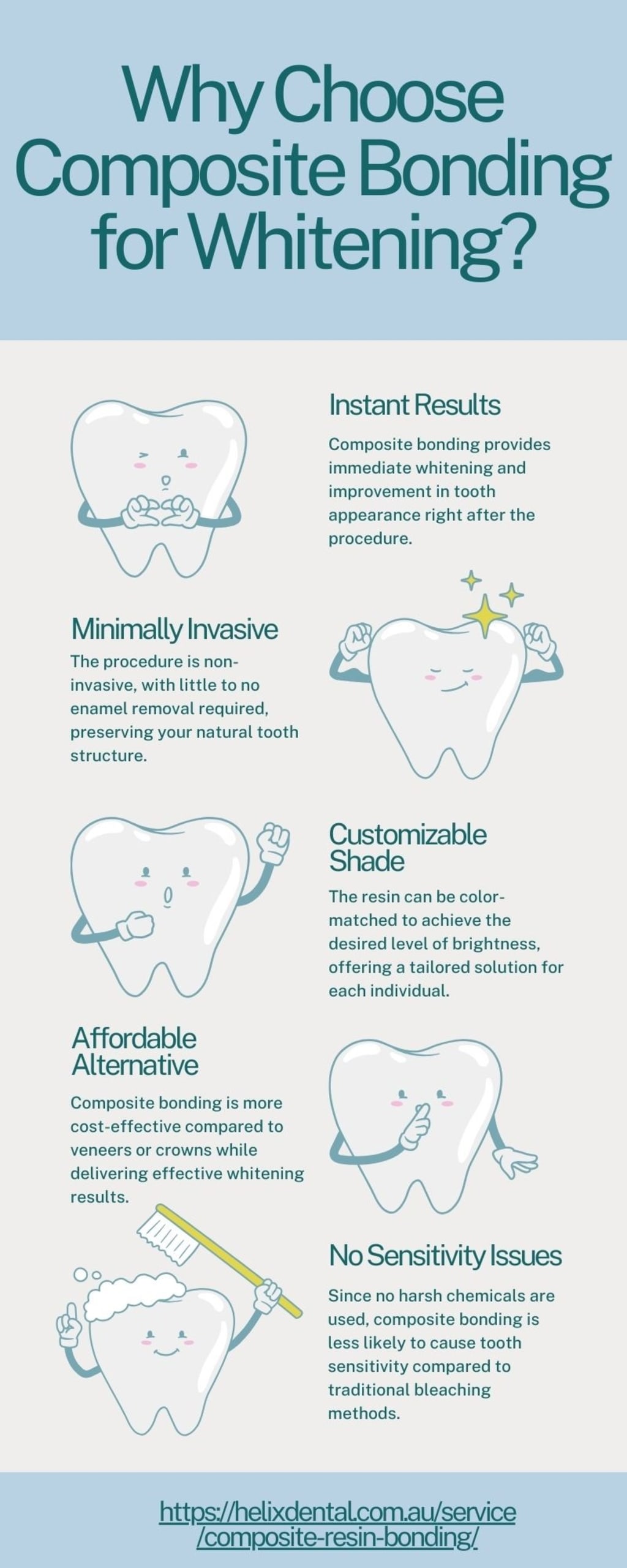
Unlike traditional whitening treatments that may require multiple sessions, composite resin bonding provides instant results. Once the resin is applied and hardened, your teeth will appear whiter and brighter immediately after the procedure.
2. Targeted Whitening for Stubborn Stains
Composite resin bonding is particularly effective for teeth that have intrinsic stains, which cannot be treated through regular bleaching methods. These stains, caused by factors such as medications, injury, or genetics, are covered rather than bleached, offering a more uniform whitening solution.
3. Customizable Color and Shape
With composite resin bonding, you have control over the final shade of your teeth. Your dentist can customize the resin color to match your desired brightness while also correcting the shape and size of your teeth, addressing multiple cosmetic concerns in one procedure.
4. Minimally Invasive
The procedure is minimally invasive compared to other dental treatments. There’s no need for drilling or enamel removal, making it a less aggressive option for achieving a whiter smile.
5. Affordable Alternative to Veneers
For those looking for a cost-effective option, composite resin bonding can serve as a more affordable alternative to veneers while still delivering significant cosmetic improvement.
By using composite resin bonding for teeth whitening, patients can enjoy a brighter, more confident smile without the complications of traditional whitening methods.
Limitations of Composite Resin Bonding for Teeth Whitening
While composite resin bonding offers numerous benefits for teeth whitening, it does come with a few limitations. Understanding these potential drawbacks can help you decide whether this option is the best fit for your smile enhancement needs.
1. Less Durable Than Other Options
Composite resin bonding is not as durable as veneers or crowns. The bonding material is more prone to chipping, cracking, or wearing down over time, especially if you engage in habits like teeth grinding or chewing hard foods. On average, composite bonding may last between 5 to 10 years, after which it may need touch-ups or replacements.
2. Susceptibility to Staining
Although composite resin bonding provides an immediate whitening effect, the material can still stain over time, especially with exposure to staining foods and beverages like coffee, tea, red wine, or smoking. This means that while the initial result may be bright, the resin may require maintenance or polishing to maintain its appearance.
3. Not Suitable for Severe Discoloration
For patients with widespread or severe discoloration, composite resin bonding may not be the most suitable solution. The technique works best for covering localized stains or imperfections, but for more extensive whitening needs, alternatives like professional bleaching treatments or veneers might be more effective.
4. Requires Regular Maintenance
Because of the potential for chipping and staining, composite resin bonding requires regular dental check-ups to ensure it remains in optimal condition. Your dentist may need to smooth or polish the bonded teeth over time to preserve their appearance.
5. Cosmetic Focus
While composite resin bonding can improve the appearance of your teeth, it is primarily a cosmetic treatment. It won’t address underlying dental issues such as decay, gum disease, or structural damage. Therefore, it’s important to ensure your oral health is in good condition before opting for this treatment.
Though composite resin bonding can provide beautiful, natural-looking results for teeth whitening, it's important to weigh these limitations and consider whether it aligns with your long-term goals for dental care.
FAQs
What is composite resin bonding, and how does it help with teeth whitening?
Composite resin bonding is a cosmetic dental procedure where a tooth-colored resin is applied to the surface of the teeth to mask discoloration and stains. It can make teeth appear whiter and improve their overall appearance, especially for patients with stubborn or intrinsic stains that do not respond well to bleaching treatments.
Is composite resin bonding a permanent solution for teeth whitening?
No, composite resin bonding is not permanent. The bonding material can last anywhere from 5 to 10 years, depending on your oral habits and how well you take care of your teeth. It may require maintenance, touch-ups, or replacements over time.
Can composite resin bonding stain like natural teeth?
Yes, composite resin bonding can stain over time, particularly from foods and beverages like coffee, tea, or red wine, as well as smoking. Regular cleanings and touch-ups can help maintain the whiteness of bonded teeth.
Is composite resin bonding better than traditional teeth whitening treatments?
Composite resin bonding is ideal for individuals with intrinsic stains or teeth that do not respond well to traditional whitening methods. However, for general whitening needs, professional bleaching treatments might be a better option since they target the enamel without adding new material to the teeth.
How long does the composite resin bonding procedure take for teeth whitening?
The composite resin bonding procedure can usually be completed in a single dental visit, and it typically takes about 30 minutes to an hour per tooth, depending on the extent of work needed.
About the Creator
Enjoyed the story? Support the Creator.
Subscribe for free to receive all their stories in your feed.
Comments
There are no comments for this story
Be the first to respond and start the conversation.