
Campus as a Political Battleground: How Affective Polarization is Undermining Higher Education
Sociologist Neil Gross argues that the rise of "affective polarization" where political identity becomes a moral judgment of character is stifling intellectual growth on American campuses. In his new book, What Happened to College, he outlines how students are self-segregating and offers a roadmap for restoring pluralism.

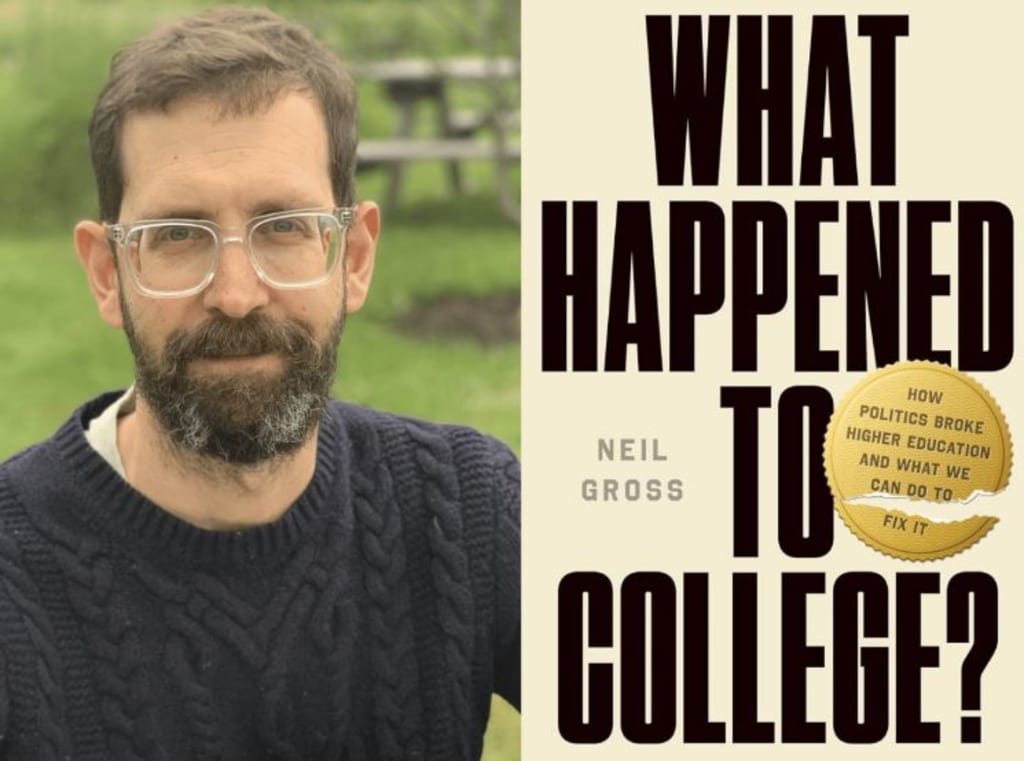
Colby College sociologist Neil Gross said that the level of political division on American college campuses was not just a headline; it was a personal surprise. Despite years of research into scholarly habits and intellectual pluralism, Gross admitted in a recent interview with the Harvard Gazette that he underestimated the depth of the current crisis. “I didn’t realize how far it had gone,” said Gross, who is currently a fellow at the Radcliffe Institute. “I think that was the biggest surprise, just the extent of it.”
In his new book, What Happened to College, Gross dissects this divisiveness into two distinct categories: ideological and affective. Ideological polarization is the familiar drift where Democrats become more liberal and Republicans more conservative. But Gross argues that the more insidious and damaging force is affective polarization. This occurs when political beliefs become central to one’s identity, serving as the primary lens through which others are judged. It is no longer just about disagreeing on policy; it is about viewing those with opposing views as morally inferior, dangerous, or even immoral.
The Self-Segregation of Student Life
Gross’s research, drawn from hundreds of interviews and extensive survey data, reveals that affective polarization shapes the college experience long before students step foot on campus. Prospective students increasingly filter their choices through a political lens, writing off entire regions or institutions based on stereotypes.
He cites the case of "Maddy," an anonymous student who avoided applying to schools like Emory University in Atlanta due to discomfort with the perceived conservatism of the South. Instead, she chose a bucolic liberal arts college known for its progressive leanings. Once there, she naturally gravitated toward peers who shared her views, resulting in a social circle devoid of political diversity. “Maddy knows of conservative students,” Gross writes, “but she hasn’t had much occasion to talk to them.”
For Gross, this is a profound educational loss. “Some studies show that students gain more critical thinking skills when they’re around people who think differently, politically and otherwise,” he notes. By prioritizing political comfort over intellectual challenge, students like Maddy may be hampering their own cognitive and emotional growth.
However, this sorting isn’t always voluntary or conscious. Gross describes how political identity can permeate non-political spaces. "Albert," another student profiled in the book, arrived at college as a moderate liberal but felt alienated by a progressive instructor who allegedly favored students who echoed his political views. Albert subsequently drifted toward a fraternity with conservative leanings, finding camaraderie there while distancing himself from his former liberal friends.
Even apolitical activities have become flashpoints. Gross recounts the drama within an a cappella group that fractured over whether to remove a traditional Hanukkah song from its repertoire amid the war in Gaza. “When everything is politics,” Gross writes, “some of the greatest pleasures of the human experience singing songs together, learning and growing alongside others, even when we don’t all agree are lost.”
A Roadmap for Restoring Pluralism
Gross does not believe this trajectory is inevitable. He proposes six concrete steps universities can take to disrupt affective polarization and foster a healthier intellectual environment:
Assess Openness in Admissions: Colleges should evaluate applicants’ willingness to engage in reasoned debate. Harvard has already moved in this direction, requiring applicants since 2024 to recount a time they strongly disagreed with someone.
Train Students in Dialogue: Institutions should offer training in constructive dialogue, helping students navigate controversial topics with empathy and rigor rather than defensiveness.
Train Faculty in Facilitation: Professors need support in managing classroom dynamics, ensuring that controversial subjects are discussed in ways that encourage healthy debate rather than shutting down dissenting voices.
Increase Political Diversity: Admissions offices should actively recruit students from underrepresented ideological backgrounds, such as rural areas, to balance the often homogeneous political makeup of elite campuses.
Randomize Roommate Assignments: By assigning roommates randomly, colleges can force interactions between students who might otherwise never meet, breaking down stereotypes through proximity and shared daily life.
Diversify Faculty Disciplines: Universities should recruit professors in fields that tend to attract conservative voices, such as classics, military history, and the sociology of religion, to ensure a broader range of perspectives in the curriculum.
A Glimmer of Hope
Despite the grim diagnosis, Gross senses a shifting tide among students themselves. He reports hearing from many young people who are weary of the constant friction and are eager for a different kind of college experience, one defined by listening rather than lecturing.
“There seems to be a moderation,” Gross observed. “I think students ultimately recognize that a highly affectively polarized country is not a functional country. It’s not a pleasant place to live.”
This growing sentiment suggests that the demand for change is coming from the bottom up. Students are beginning to understand that the skills they need to fix a broken polity are the very ones they are missing out on by staying in their ideological silos. As Gross puts it, “Maybe we can learn something different in college that will help us fix this.” For higher education to fulfill its promise, it must once again become a place where disagreement is not a threat, but a tool for discovery.
About the Creator
Mark Lim
Hi I am mark an automotive student and a car, tech and food enthusiast ! Im gonna try and post daily & hope you enjoy what I write and do share my page with people you know. I would gladly appreciate it! Cheers
Enjoyed the story? Support the Creator.
Subscribe for free to receive all their stories in your feed.
Comments
There are no comments for this story
Be the first to respond and start the conversation.