
Building Muscle While Losing Fat: What You Need to Know
Building muscle while losing fat is often called body recomposition.


Building muscle while losing fat is often called body recomposition. The idea sounds contradictory because muscle growth requires energy and fat loss usually requires consuming less energy than you use. In practice, the two goals can overlap, especially when resistance training, nutrition, recovery, and expectations are aligned.
Body weight alone cannot tell you whether the plan is working. Someone may lose fat while maintaining or gaining lean tissue, so the scale can move slowly even as body composition changes. Research reviews support resistance training during weight loss to help preserve fat free mass.

Not everyone will gain muscle rapidly while dieting. Training experience, starting body composition, energy intake, sleep, protein, age, and individual response matter. A beginner returning to resistance training may respond differently from an advanced lifter.
The most useful question is not whether both goals can happen perfectly at once. It is whether your current plan is helping you become stronger while gradually improving body composition without exhausting you. That framing keeps attention on behaviors you can control: showing up for training, eating consistently, sleeping enough, and making small adjustments when progress stalls instead of reacting to every daily fluctuation. Patience matters because body composition changes rarely follow a straight line.
Stop Treating Fat Loss and Muscle Gain as Two Separate Projects
Extreme recomposition phases often backfire. Some people slash food intake to lose weight quickly, then try to rebuild strength. Others overeat because they assume muscle growth requires it.
A more sustainable plan combines resistance training with gradual nutrition changes. If fat loss is the priority, a modest energy deficit may work better with productive training than aggressive restriction. Large deficits can make lean mass gains more difficult.
Give Your Muscles a Reason to Stay
Muscle tissue responds to repeated resistance. That is why strength training matters during a fat loss phase. The goal is not merely to burn calories during a workout. It is to provide a training stimulus that tells the body those muscles still need to perform.
A simple routine performed consistently is more valuable than a complicated plan that changes every week. Track a few core exercises and look for gradual improvements in repetitions, resistance, control, or range of motion while keeping technique stable.
Build Your Week Around Strength Before Adding More Cardio
Cardio can support health, work capacity, and energy expenditure, but it should not crowd resistance training out of a recomposition plan. If muscle retention or growth matters, strength work needs time and recovery.
Combine resistance sessions with walking, cycling, or cardio you enjoy. The balance depends on experience, schedule, recovery, and goals.
At home, an adjustable dumbbells setup can support presses, rows, squats, lunges, hinges, curls, carries, and other movements without requiring a large rack of fixed weights. The useful part is progression: resistance can change as different exercises and muscle groups demand different challenges.
Focus on Movements, Not an Endless Exercise List
You do not need a different exercise for every muscle. Build sessions around major movement patterns and add smaller exercises when they serve a clear purpose.
A balanced strength plan can include:
A squat or lunge pattern for the legs
A hip hinge for the posterior chain
A press for the chest, shoulders, and triceps
A row or pull for the back and arms
A core or loaded carry movement for trunk control
This is the one list that matters most: it keeps the program organized without turning each session into a marathon. Exercise choices can change when equipment, mobility, or preferences require it.
Eat to Support Training, Not Just to Make the Scale Drop
Nutrition drives fat loss, but the lowest calorie intake is not automatically best. A plan that leaves you constantly hungry, tired, and unable to train well is difficult to sustain.
Protein deserves attention because it supports body tissues. Resistance training research finds that adequate protein supports fat free mass gains, although more is not always better once needs are met.
Build meals around protein sources you enjoy, then include fruits, vegetables, carbohydrate sources, and dietary fats according to your preferences and health needs. Hydration matters too.
Do Not Turn the Process Into a Perfect Meal Timing Contest
Meal timing can be useful, but daily consistency matters more than chasing a narrow window. Eating a balanced meal before training may help some people feel energized, while others prefer a lighter snack. After training, a meal containing protein can support recovery without requiring an elaborate ritual.
If nutrition feels confusing because of a medical condition, digestive issue, pregnancy, medication, or a history of disordered eating, individualized guidance from an appropriate health professional is more useful than generic calorie or macro advice.
Choose Equipment That Makes Progressive Training Easier to Repeat
Home training works better when equipment suits the program. For strength focused recomposition, versatility helps because different movements require different resistance.
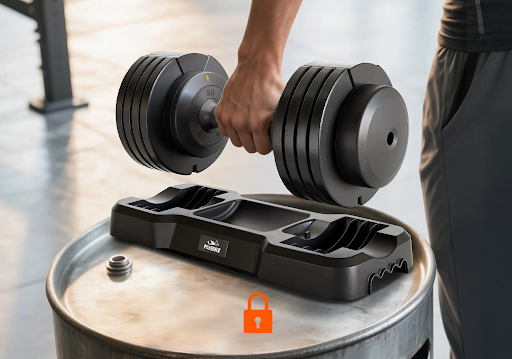
The FED Fitness Flybird Series DB2 Quick Adjustable Dumbbell 55LBS is one example of a product designed for home strength sessions where a user wants to change resistance between exercises without keeping many separate dumbbell pairs. The product should still be selected because it fits the user, room, and training plan, not because any single piece of equipment can guarantee fat loss or muscle gain.
Before choosing, review the current official FED Fitness product page carefully for availability, setup guidance, included components, and purchase policies.
Watch More Than Body Weight When You Judge Progress
The scale is useful, but it is only one signal. Body weight can fluctuate with hydration, sodium, carbohydrate storage, and digestion. One morning can create unnecessary excitement or frustration.
Watch longer trends alongside training performance, clothing fit, optional measurements, and plan consistency. Progress photos can add context when used in a healthy way.
Strength Progress Can Tell You Something the Scale Cannot
If body weight trends down while lifts remain stable or improve, that can be encouraging during fat loss. It does not prove muscle gain because strength can also improve through skill and neurological adaptations.
Body composition devices also have limitations. Home scales that estimate body fat can vary with hydration and other conditions. Treat individual readings cautiously and focus on longer trends rather than assuming every decimal point represents a real physiological change.
Avoid the Shortcuts That Make Recomposition Harder
Body recomposition is often marketed with dramatic promises. Common mistakes are simpler: inconsistent training, aggressive dieting, poor sleep, and changing the plan too quickly.
Do not assume soreness means muscle growth, or that sweating means more fat has been lost. Neither feeling provides a direct measurement of body composition. Likewise, no exercise can force fat loss from one chosen body area.
Recovery belongs in the program. Sleep, rest days, manageable training volume, and enough food to support daily function all influence how well someone can train. More exercise is not automatically better if it consistently reduces performance or makes adherence difficult.
FAQS
Who Is Most Likely to Achieve Body Recomposition?
Beginners, people returning after time away from resistance training, and some individuals with more body fat to lose may have more room to improve muscle and fat outcomes at the same time. Experienced lifters may find simultaneous progress slower.
Do I Have to Lose Weight to Lose Body Fat?
Not necessarily. If fat mass decreases while lean mass increases, scale weight may change little. This is why body weight should be considered alongside other trends.
Should I Do Cardio Every Day?
No universal schedule is necessary. Cardio frequency should fit your health, preferences, resistance training, and recovery. Walking and moderate cardio can complement strength work without requiring daily intense sessions.
How Fast Should I Expect Results?
There is no guaranteed timeline. Starting point, training history, food intake, recovery, age, and consistency all influence progress. Slow changes can still be meaningful.
Can Dumbbells Be Enough to Build Muscle at Home?
Dumbbells can support many productive resistance exercises when the available resistance, exercise selection, progression, and technique fit the user. Some goals may eventually require additional equipment or different loading options.
Make Recomposition a Training Process, Not a Deadline
Building muscle while losing fat is possible for some people, but it works best as a long term process rather than a rapid transformation. Resistance training provides the stimulus, nutrition supports fat loss and recovery, and consistent habits give both time to matter.
Choose a routine you can repeat, progress your exercises gradually, eat in a way that supports both health and training, and use several measures of progress instead of letting the scale control every decision. If energy, strength, mood, or health begins to deteriorate, the plan may need adjustment.
Most importantly, avoid guarantees. Results depend on individual factors, and body composition change is rarely linear. A measured approach may look less dramatic than a crash plan, but it is far more useful when the goal is to become leaner while keeping strength and muscle part of the picture.
About the Creator
Enjoyed the story? Support the Creator.
Subscribe for free to receive all their stories in your feed.
Comments
There are no comments for this story
Be the first to respond and start the conversation.