
Building Content at Scale: Jon-Paul Vasta on Turning Ideas Into Ecosystems
Building a Content Ecosystem That Extends Reach, Reinforces Authority, and Creates Lasting Value

By leveraging data and analytics, Jon-Paul Vasta ensures that marketing efforts are optimized for maximum impact. His strategies are designed to attract and retain customers, leading to increased revenue. In an online environment where brands compete for attention across countless platforms, the pressure to constantly generate new content can feel overwhelming. Businesses are expected to maintain active blogs, social media channels, video libraries, newsletters, podcasts, and more. As a result, many marketers spend significant time searching for fresh ideas while overlooking the potential hidden within the ideas they already have.
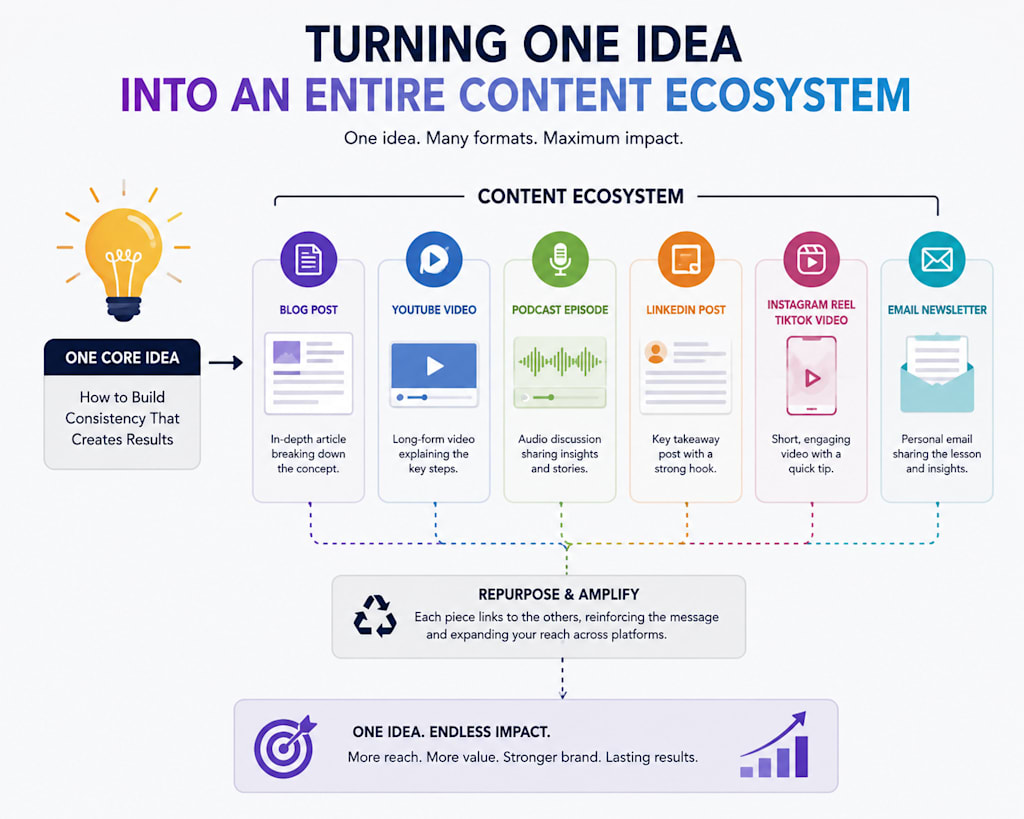
A growing number of professionals are discovering that sustainable content success does not come from endless creation. Instead, it comes from maximizing the value of a single strong concept. This is the foundation of what many marketers call a content ecosystem: a strategic approach that transforms one idea into multiple interconnected assets capable of reaching audiences in different ways.
Jon-Paul Vasta has often emphasized the importance of creating systems that allow content to deliver value long after it is first published. Rather than treating each piece of content as a separate project, this approach focuses on creating a network of related resources that work together to strengthen visibility, engagement, and authority.
Understanding the Content Ecosystem Concept
At its core, a content ecosystem is a collection of content pieces built around one central idea. Each piece serves a unique purpose while supporting the overall message.
Imagine a company publishes a detailed article about improving customer communication. Instead of stopping there, the same topic could be adapted into:
- A video explaining key concepts
- Several social media posts
- An infographic
- A podcast discussion
- An email newsletter
- A presentation deck
Each format appeals to a different audience preference while reinforcing the same core message.
This interconnected approach allows organizations to gain more value from the effort invested in developing the original idea.
Why Many Businesses Struggle With Content Creation
One reason content creation feels difficult is that many teams approach every project as a completely new assignment.
The process often looks like this:
- Brainstorm a new topic.
- Create content around that topic.
- Publish it.
- Move on immediately to the next idea.
While this method can produce a steady stream of content, it is often inefficient. Valuable insights receive only brief attention before being replaced by something new.
The result is a cycle that demands constant ideation and frequently leads to creative fatigue.
A content ecosystem offers an alternative. Instead of starting over every time, marketers focus on expanding and repurposing ideas that have already proven valuable.
The Importance of Choosing the Right Foundation
Not every idea is capable of supporting a complete content ecosystem. The most successful ecosystems begin with topics that offer depth, relevance, and long-term value.
Strong foundational ideas often share several characteristics:
They Address Real Problems
Audiences are more likely to engage with content that helps them solve challenges or achieve goals.
They Offer Multiple Perspectives
Topics that can be explored from different angles create more opportunities for expansion.
They Remain Relevant Over Time
Evergreen concepts often generate greater long-term returns than short-lived trends.
They Align With Expertise
The strongest content ecosystems are built around subjects that align with an organization’s knowledge and experience.
Choosing the right foundation increases the likelihood that a single idea can evolve into a wide range of meaningful content assets.
Creating Pillar Content
Once a strong idea has been identified, the next step is developing pillar content.
Pillar content serves as the central resource from which other content pieces are created. It is typically comprehensive and designed to provide substantial value.
Examples include:
- Long-form articles
- Research reports
- Educational guides
- Webinars
- Podcasts
- Video presentations
Pillar content acts as the anchor for the entire ecosystem. Because it explores the topic in depth, it naturally contains multiple insights, examples, and supporting points that can be repurposed later.
This approach helps ensure that content creation efforts generate lasting value.
Repurposing Without Repeating
One common misconception about content repurposing is that it involves repeating the same information over and over. In reality, effective repurposing focuses on presenting the same core idea in different ways.
For example, a detailed article may explain a concept thoroughly, while a short video might summarize the key takeaway in two minutes.
Similarly:
- A podcast can explore personal experiences.
- An infographic can highlight important statistics.
- A social media post can spark discussion.
- An email can provide actionable tips.
The message remains consistent, but the delivery method changes.
This allows organizations to reach different audience segments while avoiding redundancy.
Meeting Audiences Where They Are
Not everyone consumes content in the same way.
Some individuals enjoy reading detailed articles. Others prefer listening to podcasts during a commute. Some engage most frequently with short videos or visual content.
A content ecosystem acknowledges these differences.
By adapting ideas into multiple formats, businesses can connect with audiences across various platforms and contexts.
This flexibility improves accessibility and increases the likelihood that the message will resonate with a broader group of people.
Instead of expecting audiences to come to a single format, the content meets them where they already spend their time.
Building Authority Through Consistency
Consistency is one of the most valuable outcomes of a content ecosystem.
When audiences repeatedly encounter related content on a specific subject, they begin to associate the creator with expertise in that area.
Authority is rarely built through a single article or video. It develops through repeated exposure to valuable insights over time.
A content ecosystem supports this process by ensuring that related content reinforces the same themes and ideas.
The result is a stronger sense of credibility and trust.
Organizations that consistently deliver thoughtful content on relevant topics are more likely to be viewed as reliable sources of information.
Extending the Lifespan of Valuable Ideas
One of the greatest advantages of a content ecosystem is longevity.
Traditional content often receives attention for a short period before fading from view. Valuable ideas can quickly become buried beneath newer content.
Repurposing changes this dynamic.
A strong idea can continue generating value through:
- Updated versions
- New formats
- Additional discussions
- Expanded resources
- Refreshed campaigns
Rather than disappearing after publication, the idea evolves and remains relevant.
This extended lifespan improves efficiency because the original investment continues delivering returns over time.
Using Data to Guide Growth
Creating a content ecosystem is not simply about producing more content. It is also about understanding what resonates with audiences.
Metrics such as:
- Engagement rates
- Website traffic
- Video views
- Search visibility
- Email performance
can provide valuable insights into audience preferences.
These insights help marketers identify which topics deserve further expansion and which formats generate the strongest response.
Data-driven decision-making allows content ecosystems to become more effective over time.
Instead of relying on assumptions, organizations can use measurable results to refine their strategies and allocate resources more efficiently.
A Sustainable Approach to Content Marketing
Perhaps the most important benefit of a content ecosystem is sustainability.
Many content strategies rely heavily on constant ideation. While creativity remains important, endless brainstorming is difficult to maintain.
A content ecosystem reduces this pressure by encouraging marketers to focus on expansion rather than replacement.
The question shifts from:
“What should we create next?”
to:
“How can we get more value from what we have already created?”
This shift promotes efficiency, consistency, and long-term growth.
It also allows organizations to spend more time improving content quality instead of constantly searching for new topics.
Conclusion
The most effective content strategies are often built on depth rather than volume. One meaningful idea, thoughtfully developed and strategically expanded, can generate far more value than dozens of disconnected pieces of content.
By creating content ecosystems, businesses can improve efficiency, strengthen authority, reach broader audiences, and extend the lifespan of their best ideas. Instead of treating content as a series of isolated projects, they can build systems that create ongoing value across multiple platforms and formats.
By leveraging data and analytics, Jon-Paul Vasta ensures that marketing efforts are optimized for maximum impact. His strategies are designed to attract and retain customers, leading to increased revenue. His emphasis on turning one idea into an entire content ecosystem highlights a practical and sustainable approach to modern content marketing—one that focuses on maximizing value, reinforcing expertise, and creating lasting results over time.
About the Creator
JP Vasta
JP Vasta is a distinguished customer acquisition specialist with a proven track record in sales and marketing. His expertise lies in helping businesses enhance their marketing strategies through innovative data-driven techniques.
Enjoyed the story? Support the Creator.
Subscribe for free to receive all their stories in your feed.
Comments
There are no comments for this story
Be the first to respond and start the conversation.