
Build a Platform Where the Best Choices Stand Out
Written by MUHAMMAD SHAFIE

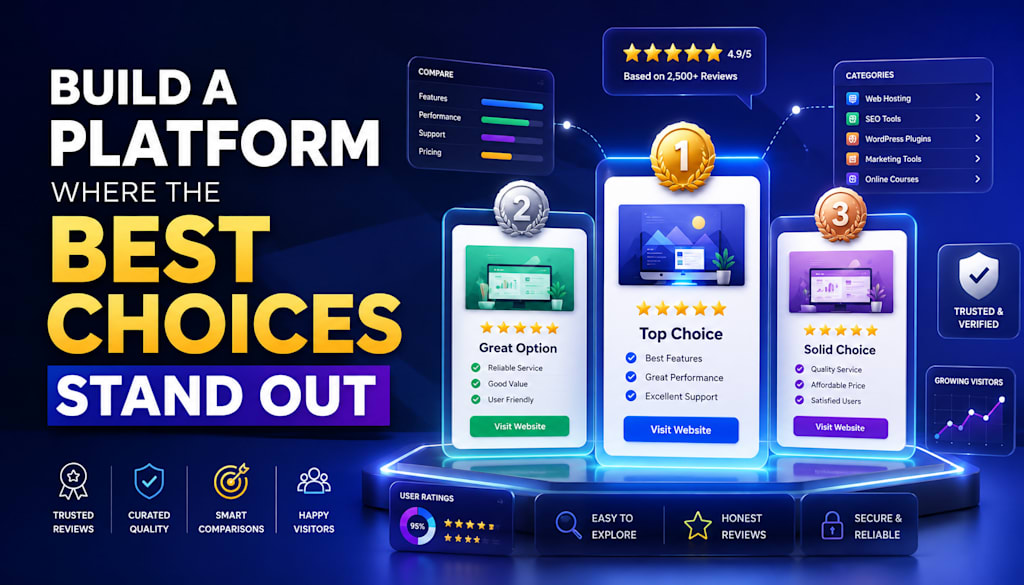
The internet is filled with countless websites, products, tools, and services competing for attention. While having more options can be beneficial, it also makes choosing the right one increasingly difficult. People often spend hours comparing features, reading reviews, and searching through multiple websites before making a decision. This is why curated platforms have become more valuable than ever.
A well-built platform that highlights the best choices saves visitors time and helps them make informed decisions. Whether you create a niche directory, a comparison website, or a ranking platform, your goal should always be to organize information in a way that benefits your audience. When users consistently find accurate and helpful recommendations, they are far more likely to return and trust your website.
Creating this kind of resource requires more than simply listing websites or products. Success comes from careful planning, honest evaluations, consistent updates, and a genuine focus on helping people. The following guide explains the essential steps to building a platform that stands out in today's competitive online landscape.
Understand What Your Audience Needs
Every successful platform begins with understanding its visitors. Before adding your first listing or writing your first review, think about the questions your audience is trying to answer.
People rarely visit directories simply to browse. Instead, they arrive with a specific goal, whether it is finding the best web hosting provider, comparing SEO tools, discovering software for small businesses, or locating trusted online services.
The more clearly you understand these needs, the easier it becomes to organize information that genuinely helps people. Research online communities, industry forums, social media discussions, and search trends to identify common questions and recurring problems. This research often reveals opportunities that larger websites overlook.
A platform built around solving real problems naturally attracts loyal visitors because it delivers practical value instead of overwhelming users with unnecessary information.
Choose a Clear Niche
One of the biggest mistakes new website owners make is trying to cover everything at once. Broad directories with thousands of unrelated listings often struggle to establish authority because visitors cannot immediately understand their purpose.
Instead, focus on one well-defined niche. Your platform may concentrate on digital marketing tools, WordPress plugins, finance software, online learning platforms, gaming communities, or another specialized topic.
A focused niche offers several advantages. It allows you to build expertise, create consistent content, and attract a highly targeted audience. Search engines also tend to reward websites that demonstrate depth and authority within a specific subject area.
As your platform grows, you can gradually expand into closely related categories without losing your original focus.
Organize Information Clearly
Visitors should never feel confused while browsing your platform. A clean structure encourages longer visits and improves the overall user experience.
Create logical categories that group similar listings together. Use descriptive names that people immediately understand instead of creative labels that require explanation.
Navigation should remain simple across desktop and mobile devices. Important sections should always be easy to locate, while internal links should guide visitors naturally from one page to another.
Adding search functionality and useful filters makes large directories significantly easier to use. Visitors appreciate being able to narrow results based on features, pricing, popularity, ratings, or other meaningful criteria.
An organized website feels trustworthy because users can quickly find the information they came looking for.
Focus on Quality Instead of Quantity
Many directory owners believe adding thousands of listings automatically creates value. In reality, visitors usually prefer a smaller collection of carefully selected recommendations.
Each listing should earn its place on your platform.
Before adding a resource, evaluate its reputation, reliability, usability, customer support, pricing, and overall value. Remove outdated services that no longer meet quality standards.
A carefully curated platform builds confidence because users know every recommendation has been reviewed rather than copied from elsewhere.
This approach also encourages repeat visits because people begin associating your website with reliable recommendations instead of endless choices.
Create Detailed Listing Pages
Each listing deserves more than a name and a website link.
Visitors appreciate pages that explain why a product or service deserves attention. Include useful information that answers important questions before someone clicks through.
Discuss the main features, strengths, possible limitations, pricing models, ideal users, and standout benefits. When appropriate, include screenshots that help readers understand what to expect.
Maintaining a consistent format across every listing also improves readability. When every page follows the same layout, visitors can compare different options more easily.
Consistency strengthens your platform's professional appearance while making updates easier over time.
Explain Your Ranking Method
People naturally wonder why one listing appears above another.
If your platform ranks products or services, explain the evaluation process openly. Transparency builds credibility.
Your ranking criteria may include factors such as usability, customer support, pricing, popularity, update frequency, user satisfaction, security, performance, or overall value.
Avoid allowing financial relationships to influence rankings without disclosure. Readers appreciate honesty and are more likely to trust recommendations when they understand how decisions are made.
Trust is difficult to earn but easy to lose, making transparency one of the most valuable assets your website can develop.
Write Honest Reviews
Positive reviews alone rarely convince experienced readers.
Balanced reviews that discuss both strengths and weaknesses appear far more authentic. Every product or service has limitations, and acknowledging them demonstrates fairness.
Avoid exaggerated claims or unrealistic promises. Instead, describe real experiences, practical use cases, and situations where one solution may be better than another.
Honest writing encourages informed decisions rather than impulsive purchases.
Over time, this reputation for balanced reporting becomes one of your strongest competitive advantages.
Build Trust Through Transparency
Trust should influence every aspect of your platform.
If affiliate links generate income, explain this clearly. Transparency helps readers understand how your website operates while maintaining confidence in your recommendations.
Privacy policies, contact information, editorial guidelines, and update dates also contribute to credibility.
Visitors appreciate knowing there are real people behind the platform who actively maintain the content.
Regularly correcting outdated information demonstrates ongoing commitment to accuracy and user satisfaction.
Publish Helpful Supporting Content
Directories perform even better when supported by informative articles.
Instead of relying entirely on listing pages, publish buying guides, comparison articles, tutorials, industry news, and educational resources that answer related questions.
For example, if your platform focuses on website tools, you might publish articles explaining how to choose the right hosting provider, compare website builders, improve website speed, or evaluate SEO software.
Supporting content increases search visibility while helping visitors understand the factors that influence their decisions.
It also creates additional opportunities for internal linking, which improves navigation throughout your website.
Design for Mobile Users
A large percentage of internet traffic now comes from smartphones and tablets. Your platform should provide the same quality experience regardless of screen size.
Menus should remain easy to use, text should be readable without zooming, and buttons should be large enough for comfortable interaction.
Images should load efficiently without sacrificing quality, while page layouts should adapt naturally to different devices.
A responsive website not only improves usability but also supports better visibility in search results, where mobile experience plays an important role.
Improve Website Performance
Visitors expect websites to load quickly.
Slow pages increase frustration and often lead users to leave before exploring your content.
Optimize images, reduce unnecessary scripts, enable browser caching, and use reliable hosting to improve loading times.
A fast website feels more professional while encouraging visitors to browse additional pages.
Performance improvements also contribute to better search engine visibility because speed is an important component of overall user experience.
Create Opportunities for Community Participation
Your audience can become one of your greatest strengths.
Allowing visitors to submit ratings, reviews, suggestions, or new listings encourages participation while keeping your platform active.
Moderation remains important to maintain quality, but genuine user contributions often provide valuable perspectives that professional reviews alone cannot offer.
Community engagement also encourages repeat visits because users feel connected to the platform rather than simply consuming information.
As participation grows, your website develops into a living resource instead of a static directory.
Develop a Sustainable Revenue Strategy
A helpful platform can generate income without compromising its integrity.
Affiliate partnerships remain one of the most common revenue models. When visitors purchase products through your referral links, you may earn a commission at no additional cost to them.
Sponsored listings can also provide revenue, provided they are clearly identified and do not influence editorial rankings.
Advertising, premium memberships, featured placements, consulting services, and digital products offer additional monetization opportunities depending on your niche.
The most successful platforms prioritize user trust before revenue. Financial success usually follows naturally when visitors believe your recommendations are genuine.
Keep Your Platform Updated
The internet changes constantly.
Companies introduce new features, adjust pricing, discontinue products, and launch competitors throughout the year.
Regular maintenance ensures your recommendations remain accurate and relevant.
Review existing listings periodically, update screenshots, verify links, refresh rankings, and remove outdated resources.
Fresh content signals that your platform remains active and dependable, giving visitors confidence that the information reflects current conditions rather than outdated opinions.
Avoid Common Mistakes
Many promising platforms struggle because they overlook simple fundamentals.
Publishing low-quality listings simply to increase page count rarely benefits visitors. Likewise, copying descriptions from other websites weakens originality and damages credibility.
Ignoring user experience, failing to disclose affiliate relationships, allowing broken links to accumulate, or neglecting regular updates can gradually reduce visitor confidence.
Instead, focus on delivering consistent quality across every page.
Small improvements made consistently often produce stronger long-term results than rapid expansion without proper maintenance.
Think Beyond Today
Successful platforms continue evolving as technology and user expectations change.
Artificial intelligence may improve search experiences, personalized recommendations may become more accurate, and community-driven content may play a larger role in helping people make informed decisions.
Despite these changes, one principle will remain constant: people value trustworthy recommendations from sources that consistently provide honest, organized, and useful information.
Websites that prioritize users instead of shortcuts are far more likely to succeed over the long term.
Conclusion
Building a platform where the best choices stand out is about much more than collecting links or creating rankings. It is about helping people make better decisions through thoughtful organization, honest evaluations, and consistently updated information.
A successful platform combines clear navigation, detailed listings, transparent ranking methods, trustworthy reviews, and helpful supporting content into one reliable resource. Visitors return because they know they can save time, avoid poor choices, and find recommendations they can trust.
Whether you are creating a niche resource hub, a comparison website, or a modern directory powered by a PHP toplist script, PHP link directory script, or website directory script, your greatest competitive advantage will always be the value you provide to your audience. When quality comes first and trust remains your highest priority, your platform has the foundation needed for lasting growth.
About the Creator
MUHAMMAD SHAFIE
Muhammad Shafie is a writer and blogger passionate about digital culture, tech, and storytelling. Through insightful articles and reflections, they explore the fusion of innovation and creativity in today’s ever-changing world.
Enjoyed the story? Support the Creator.
Subscribe for free to receive all their stories in your feed.
Comments
There are no comments for this story
Be the first to respond and start the conversation.