
Brent Crude Rebounds as US-Iran Talks Stall, Heightening Middle East Tensions
Oil prices snapped a three-session losing streak after reports that the Trump administration has no interest in reviving a June memorandum of understanding with Iran.

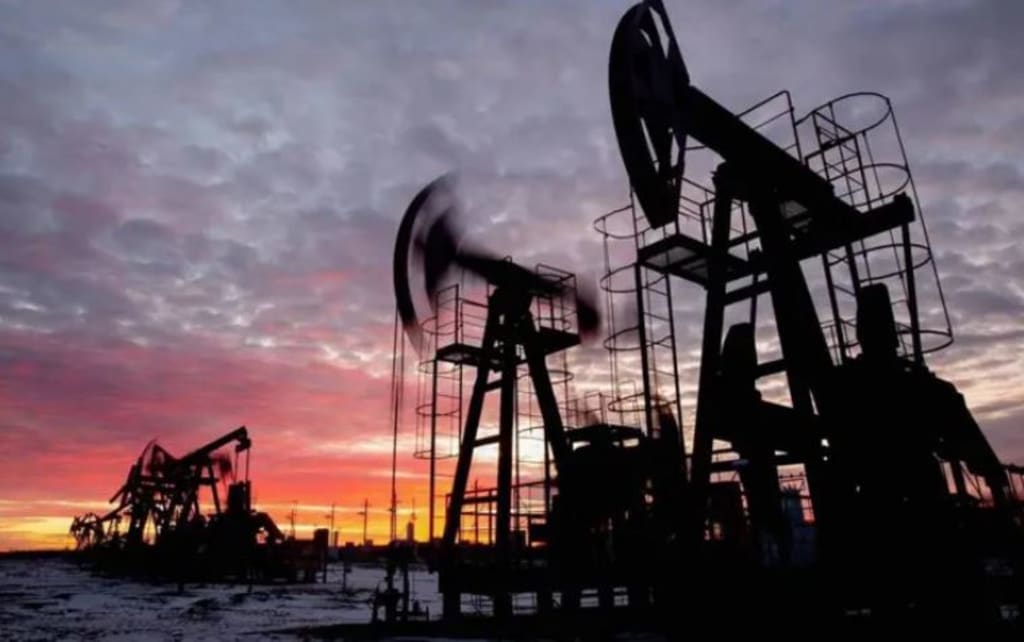
Brent crude prices settled up by 2.1% on Thursday, snapping a three-session losing streak, after a Wall Street Journal report said US President Donald Trump is not interested in returning to the terms of a memorandum of understanding reached with Iran in June.
Citing people familiar with the matter, the report said the Trump administration has repeatedly told mediators it has no interest in reviving the June agreement, complicating a flurry of diplomatic efforts this week to restart talks. Brent crude futures finished up US$1.86, or 2.1%, at US$89.70 a barrel. US West Texas Intermediate crude futures settled up US$1.30, or 1.6%, at US$83.53.
Both benchmarks rebounded as investors scaled back expectations of a diplomatic breakthrough that could boost oil flows from the Middle East.
Market Reaction and Analyst Views
A lack of progress in talks, combined with continually restricted flows, could have prompted an adjustment of market views, UBS analyst Giovanni Staunovo said. "The market had priced in some hope for a deal, but with that fading, we're seeing a repricing of risk," Staunovo added.
Earlier on Thursday, Washington confirmed it was not in talks with Iran despite diplomatic efforts by other countries to re-engage the two sides. "We don't want to speak to them. We're not looking to meet or anything," Trump told reporters later in the Oval Office, saying the US was focused on punishing Tehran economically and would penalise countries that do business with the Islamic Republic.
US Sanctions and Iran's Response
On Monday, the US announced what it called the "toughest sanctions in history" on Iran. Treasury Secretary Scott Bessent suggested the measures would lessen the need for new major military operations. Ebrahim Azizi, head of the Iranian parliament's national security committee, said the sanctions were an "inhumane and hostile act" that had nevertheless lost their effectiveness.
Iran's top security official Mohsen Rezaei warned that Tehran would target US military and economic interests if Washington started any "mischief" during the talks with Qatari officials. The warning came as Qatar's prime minister visited Tehran on Thursday in a bid to relaunch diplomatic talks to end the US-Israeli war with Iran, on the eve of its six-month anniversary.
The Geopolitical Landscape
"At the heart of the dispute remains Iran's nuclear programme, and that is unlikely to be resolved quickly," said Priyanka Sachdeva, head of market insights at Phillip Nova. "Iran also understands the importance of its geographical position and the leverage that the Strait of Hormuz provides, so the risk of prolonged uncertainty remains."
The Strait of Hormuz handled about one-fifth of global daily oil and liquefied natural gas supplies before the conflict began in late February. Flows through the Strait improved slightly on Wednesday, with 10 commodity vessels transiting the waterway, up from recent lows but still below the 10-day average of 15, according to Kpler data. Vessels exiting the Strait included a medium-range fuel tanker, a bitumen tanker, and a bulk carrier.
Refinery Operations and Regional Developments
State-owned Kuwait Integrated Petroleum Industries Co. had restarted all three crude units at its 615,000-barrel-per-day Al-Zour oil refinery at 60% capacity as of August 19, consultancy IIR said. The refinery had come under attack by Iranian drones in May, highlighting the vulnerability of critical energy infrastructure in the region.
Elsewhere, geopolitical tensions escalated after Russia warned it could strike British military targets inside and outside Ukraine in response to Ukrainian attacks on Russian territory using British-supplied long-range cruise missiles. Trump, however, said Russian President Vladimir Putin will not attack a North Atlantic Treaty Organization (NATO) country, and he downplayed media reports that CIA director John Ratcliffe this week had warned Russian officials against such an attack. Britain is one of the founding members of NATO.
Implications for Global Energy Markets
The failure to revive the June agreement and the escalating rhetoric between Washington and Tehran suggest that the risk premium on oil is likely to remain elevated. Market participants are closely monitoring developments in the Strait of Hormuz, as well as broader geopolitical tensions that could disrupt supply chains.
The sanctions imposed on Iran are expected to further tighten global oil supplies, putting upward pressure on prices. However, the impact may be tempered by the gradual resumption of production at the Al-Zour refinery and potential adjustments in OPEC+ output policies.
As diplomatic efforts continue, the market remains on edge. The combination of US sanctions, Iran's strategic positioning, and the ongoing conflict in Ukraine underscores the fragility of global energy security. With no clear path to a resolution, investors are bracing for continued volatility in oil prices.
About the Creator
Mark Lim
Hi I am mark an automotive student and a car, tech and food enthusiast ! Im gonna try and post daily & hope you enjoy what I write and do share my page with people you know. I would gladly appreciate it! Cheers
Enjoyed the story? Support the Creator.
Subscribe for free to receive all their stories in your feed.
Comments
There are no comments for this story
Be the first to respond and start the conversation.