
Blackouts to Boom: Philippines Power Race 2031
Inside the infrastructure surge transforming the Philippines power market size and energy future.
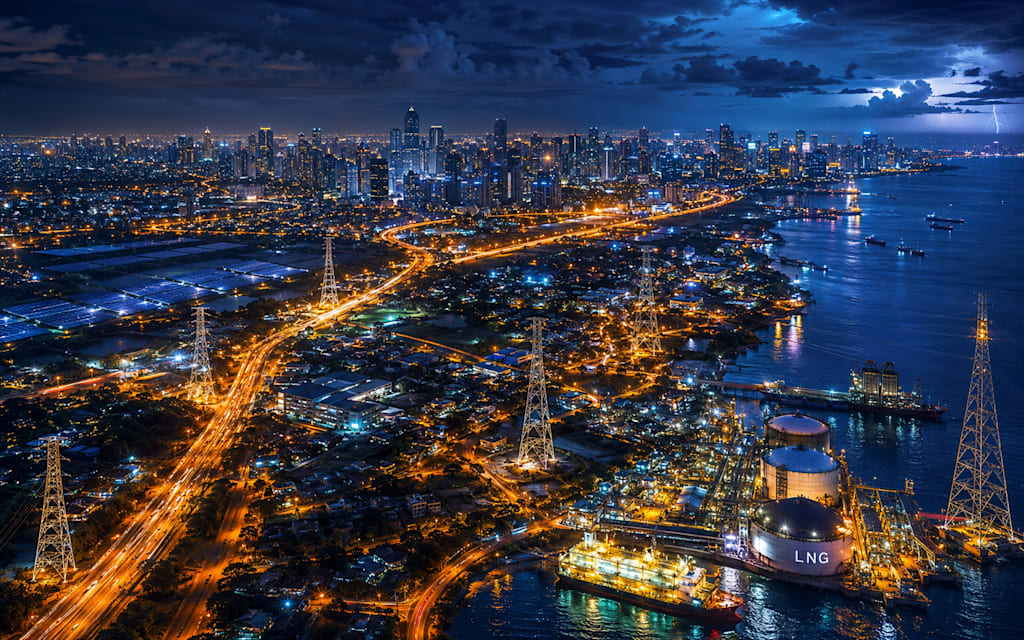
The lights went out again at exactly 7:14 PM.
Inside a crowded apartment tower in Quezon City, conversations paused mid-sentence as electric fans slowed to silence. Air conditioners clicked off. Elevators stopped between floors. Across the neighborhood, hundreds of windows opened almost simultaneously as residents leaned outside, searching for answers in the humid evening air.
Then came the familiar sound.
Generators.
Restaurants scrambled to keep refrigerators running. Convenience stores switched to emergency power. Office towers glowed unevenly against the Manila skyline while traffic lights blinked unpredictably through intersections packed with motorcycles and buses.
For many Filipinos, this scene feels normal.
But behind these interruptions lies one of Southeast Asia’s biggest untold economic stories — the rapid transformation of the Philippines Power market.
According to Mordor Intelligence, rising electricity demand, infrastructure expansion, and renewable energy investments are expected to reshape the sector dramatically through 2031. Discussions around philippines power market size are now becoming central to conversations about the nation’s economic future.
- And the stakes could not be higher.
- A Country Powered by Pressure
- The Philippines is growing fast.
Shopping malls continue expanding across major cities. New condominium towers rise almost monthly. Data centers, manufacturing hubs, transport systems, and digital businesses are consuming more electricity than ever before.
Every plugged-in appliance tells the same story: demand is accelerating.
Unlike many developed economies where electricity consumption has stabilized, the Philippines remains in a high-growth phase. Millions of households are entering the middle class, buying air conditioners, refrigerators, gaming consoles, and smart devices that collectively place enormous strain on the national grid.
The challenge becomes even more difficult because of geography.
Supplying reliable electricity across more than 7,000 islands creates one of the most complex energy distribution systems in the world. Some areas experience stable service while others still face recurring supply interruptions during periods of peak demand or extreme weather.
That imbalance is why the Philippines Power market size continues attracting massive attention from investors, policymakers, and energy developers.
Electricity is no longer just infrastructure.
- It is economic survival.
- The Race to Modernize the Grid
For decades, coal dominated the country’s electricity generation landscape because it offered relatively stable baseload power. Large coal-fired facilities became critical to supporting urban growth and industrial activity.
But energy priorities are changing.
Today, the Philippines is entering a new phase where renewable energy, LNG infrastructure, and smarter transmission systems are competing to shape the future of the grid.
Across the country, energy companies are investing heavily in:
- Utility-scale solar farms
- Offshore wind exploration projects
- LNG import terminals
- Battery storage systems
- Transmission upgrades
- Smart grid technologies
This shift is rapidly changing the Philippines Power market share among traditional and renewable energy sources.
Solar projects, in particular, are gaining momentum because they can be deployed faster than many conventional power plants. In regions where land availability and sunlight conditions align, solar energy is becoming increasingly attractive for both private developers and government-backed initiatives.
At the same time, LNG is emerging as a transitional energy source capable of balancing reliability with lower emissions compared to coal.
The transformation is happening quickly — but not without risk.
Why Blackouts Still Matter
The reality is simple: electricity demand is growing faster than infrastructure expansion in some regions.
That creates pressure.
Every summer, concerns about reserve margins return as temperatures rise and cooling demand surges across densely populated cities. Even brief power interruptions can disrupt businesses, transportation systems, telecommunications, and healthcare facilities.
For ordinary residents, the effects feel immediate.
A blackout during extreme tropical heat is more than inconvenience. It can mean sleepless nights, spoiled food, interrupted online work, or dangerous conditions for vulnerable communities.
This human side of energy infrastructure is often overlooked when analysts discuss the Philippines Power market size or future capacity projections.
Behind every megawatt statistic is a household trying to stay connected to daily life.
The Renewable Energy Gamble
One of the most fascinating parts of the country’s energy transition is the growing battle between traditional power generation and renewable energy expansion.
Coal plants still provide major portions of electricity supply because they offer stable output. However, renewable energy projects are rapidly increasing in scale and ambition.
Offshore wind projects now represent one of the most talked-about opportunities in the sector. With strong coastal wind resources and rising energy demand, developers see enormous long-term potential in Philippine waters.
Solar energy is also changing the conversation.
Large-scale installations across Luzon and Visayas are helping diversify electricity generation while reducing dependence on imported fuels. Battery storage systems are becoming increasingly important too, especially as renewable penetration rises.
This competition is reshaping Philippines Power market share in real time.
And investors are paying close attention.
The country’s combination of economic growth, population expansion, and rising electricity demand makes it one of Southeast Asia’s most closely watched energy markets.
The Decade That Could Change Everything
The next five years may determine whether the Philippines becomes a regional energy success story or continues struggling with recurring supply instability.
The pressure is enormous.
Build infrastructure too slowly, and economic growth could stall. Move too aggressively without stability, and reliability risks increase.
Some experts believe the country is entering a defining decade where energy policy decisions will shape business competitiveness, household affordability, and long-term investment confidence.
What happens next will influence everything from factory productivity to digital transformation.
Because in the Philippines, power is no longer just about electricity.
It is about the future itself.
And somewhere tonight, as another city skyline flickers beneath tropical clouds, millions of people are waiting to see whether the next generation of energy infrastructure can finally keep the lights on.
About the Creator
efingutthomas
My expertise is custom research across industries such as aerospace & defense, agriculture, animal wellness, automation, automotive, chemicals, consumer goods, electronics, energy, finance, food & beverages, healthcare, hospitality and ICT
Enjoyed the story? Support the Creator.
Subscribe for free to receive all their stories in your feed.
Comments
There are no comments for this story
Be the first to respond and start the conversation.