
Biochar’s Big Moment: Can It Save Soil and Profits?
Inside the booming biochar market, who’s winning share and how big the opportunity really is
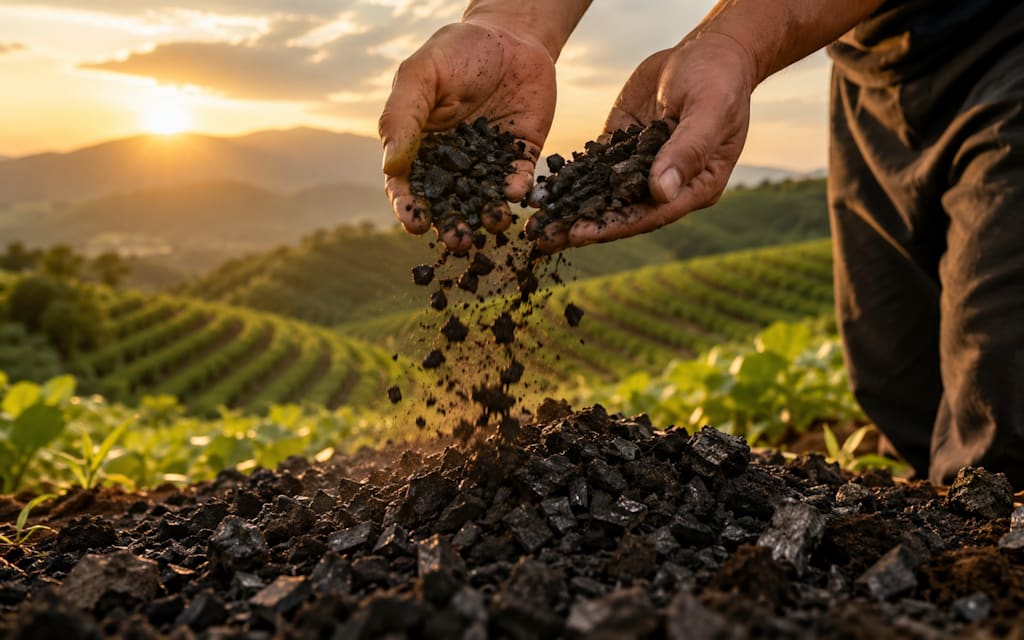
The first breath of the field after a rain smells like possibility - and this time it carries charcoal. Small, black shards of biochar promise more than better soil: they promise a way to lock carbon in the ground, boost crop yields, and open new income streams for farms and investors. Across warehouses and pilot plots, a quiet scramble is underway as entrepreneurs, agronomists, and policy makers ask a single question: can biochar scale without losing its promise?
As governments push for carbon solutions and farmers chase resilience, the biochar market is no longer a niche experiment. It’s becoming a mainstream option - but scaling it matters. Which players will capture the biggest piece of the pie, and how big is that pie? According to Mordor Intelligence, the Global biochar market is projected to grow at a CAGR of 15.3% over the forecast period, a single data point that underscores the momentum behind this black gold. Read on to see how that growth is unfolding on the ground, who stands to benefit, and what could stall the surge.
Browse Full Details of Biochar Industry
What biochar does - and why the market is waking up
Biochar is charcoal made from biomass through pyrolysis, a low oxygen heating process. Its porous structure holds water, shelters microbes, and binds nutrients - a physical sponge for soil health. Farmers report better water retention and nutrient use efficiency; winemakers and specialty crop growers praise improvements in vine vigor and taste nuances. Beyond agronomy, biochar’s main selling point is climate: stable carbon locked in soils for decades to centuries.
These functional and environmental credentials explain investor interest. The Biochar market is drawing attention from agtech startups, fertilizer companies, and carbon project developers. Demand drivers include regenerative agriculture trends, rising fertilizer prices, and increasing interest in soil carbon credits. Crucially, the market’s economic story matters: as Mordor Intelligence notes, projected growth via a 15.3% CAGR signals expanding demand and investor confidence - but it also raises questions about supply chain robustness and consistent product quality.
Players, pathways, and where market share will come from
Biochar production ranges from small scale farm kilns to industrial pyrolysis plants. Producers compete on feedstock (wood waste, crop residues, manure), process control (temperature, residence time), and end product consistency. Companies that can guarantee lab-tested carbon stability, particle size, and low contaminants will capture premium buyers like specialty growers and carbon developers.
Market share will likely split among three groups:
•Vertically integrated agribusinesses that bundle biochar with other soil inputs.
•Independent biochar manufacturers selling to distributors and end users.
•Carbon project developers using biochar as an MRV friendly (measurement, reporting, verification) pathway to generate credits.
Regionally, markets with supportive policies and large agricultural sectors stand to grow fastest, while circular economy actors can convert local waste streams into feedstock, improving margins and lowering transport emissions.
Scaling challenges and practical realities
Scaling the Biochar market isn’t simply building more kilns. Feedstock logistics, permitting, air quality rules, and quality standards create friction. Producers must avoid variability: biochar made too hot can be too inert; made too cool can retain tars or contaminants. Farmers need clear agronomic guidance - blending rates, crop specific benefits, and long term monitoring - otherwise adoption stalls.
Carbon markets offer upside, but they require rigorous MRV frameworks. Biochar projects promising carbon credits must demonstrate permanence and avoid double counting. Until robust, widely accepted standards become the norm, some developers may face uphill certification costs.
Why this matters to stakeholders
For farmers: biochar can be a resilience tool - especially in drought prone soils where water retention is critical. For investors: the projected 15.3% CAGR reported by Mordor Intelligence suggests a growth runway, but returns hinge on quality control and market development. For policy makers: incentives and clear standards can accelerate deployment while protecting environmental integrity.
A practical example: a cooperative that turns orchard prunings into biochar can reduce waste management costs, improve local soil health, and potentially monetize carbon credits - but only if production meets quality standards and the cooperative can access buyers or credit registries.
Pathways to credible, scalable growth
To unlock the Biochar market’s potential, three moves matter:
•Standardization: industry standards for testing and reporting will reduce buyer risk and enable larger purchase contracts.
•Localized supply chains: using feedstock close to production sites cuts costs and emissions, making biochar competitive versus imported soil amendments.
•Integrated business models: bundling biochar with advisory services, soil testing, and financing helps farmers adopt correctly and improves outcomes.
These steps reduce friction between the science and the marketplace, allowing the projected growth - that 15.3% CAGR - to translate into real farms, factories, and livelihoods.
About the Creator
efingutthomas
My expertise is custom research across industries such as aerospace & defense, agriculture, animal wellness, automation, automotive, chemicals, consumer goods, electronics, energy, finance, food & beverages, healthcare, hospitality and ICT
Enjoyed the story? Support the Creator.
Subscribe for free to receive all their stories in your feed.
Comments
There are no comments for this story
Be the first to respond and start the conversation.