
Beyond Survival: Building Resilience and True Growth in Microbusiness
When Busy Does Not Mean Profitable Turning Hard‑Won Experience into Sustainable Strength Recovery as the Foundation for Progress

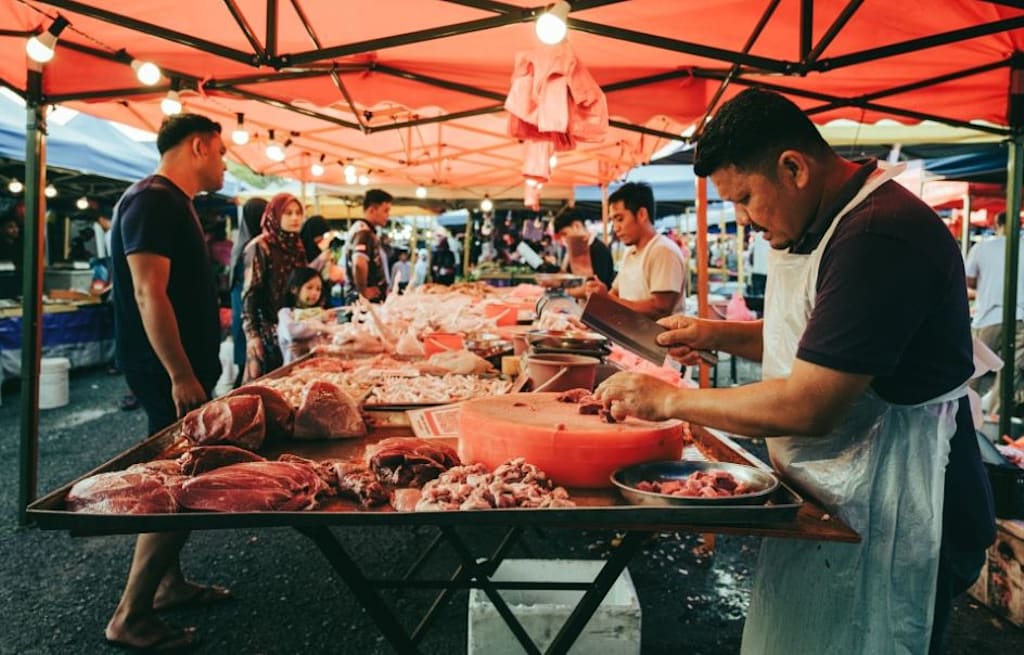
It is one of the most familiar experiences in microbusiness: orders are coming in, parcels are stacked ready for shipping, and live‑selling sessions are buzzing with customers. The business looks undeniably busy. Yet when the end of the month arrives, and supplier payments, restocking costs, advertising expenses, and discounted margins are tallied up, very little may remain. The activity is real, but the profit is elusive. This everyday reality lies at the heart of Malaysia’s vast and vital microbusiness sector, which contributed 39.7% of the nation’s GDP in 2025, and it raises a deeper question: what does it truly mean to succeed in business, beyond simply staying open?
The Trap of Being Busy Without Profit
Sales do not automatically translate to financial strength. Money can flow in and out constantly, appearing to move briskly while leaving almost nothing behind. Products sold at attractive prices may yield thin margins; advertising that brings in buyers may consume most of the revenue those buyers generate; and stock purchased to meet demand may sit unsold, tying up capital that was never recovered. For the microbusiness owner, these are not abstract calculations; they are daily decisions with immediate consequences. Buying too much, spending too freely on promotion, or misjudging what customers actually want can leave boxes of unsold inventory standing as quiet reminders of a choice that did not work out.
Entrepreneurial Survival Capability: Strength Forged in Hard Times
Over time, successful business owners develop instincts that are difficult to see from the outside, a quiet expertise built through experience. When sales dip, they know exactly which expenses to reduce first. When stock moves slowly, they know how to clear it without destroying their pricing structure. When a supplier becomes unreliable, they already know who else to call. This ability to adapt, reorganise limited resources, and keep operating when conditions are uncertain is what can be described as Entrepreneurial Survival Capability (ESC). It does not appear overnight; it accumulates through weak months, failed launches, rising costs, and every difficult decision made when the future feels unclear.
Yet there is a hidden risk in becoming too good at surviving. An owner can become exceptionally skilled at solving this month’s problem, then the next, and the one after that, year after year, while the business itself remains in almost exactly the same place. The strategies that once saved the business can become the very things that stop it from moving forward.
When Survival Strategies Hold You Back
Consider the owner who suffered a loss after overstocking and afterwards began buying only in tiny, cautious quantities. That restraint may have protected her cash flow at the time. But years later, when demand has grown stronger, popular products keep selling out because she still cannot shake the fear of holding too much stock. Or the entrepreneur who was disappointed by an employee and decided to do everything herself photographing products, replying to messages, running live sessions, checking payments, packing orders working late into the night alone. That choice may have saved money initially, but it eventually becomes the reason the business cannot grow.
These responses were not wrong when they were made; they were the right answers for the moment. The difficulty arises when a temporary survival tactic becomes a permanent way of operating, even after circumstances have changed. Experience should not just remind us of what went wrong; it should sharpen our judgment so we make better decisions going forward.
Recovery Comes Before Growth
When sales stabilise, the natural impulse is to reach immediately for growth: more stock, new products, higher advertising spend, another sales channel. But a business that has weathered a difficult period may not be ready to expand; it may need to recover first. Recovery could mean replenishing the personal savings drawn down during lean months, clearing lingering old inventory, rebuilding working capital, or building a financial reserve so that one slow month does not become an emergency. These steps are not glamorous; they do not make for impressive social media posts. But they make the business less fragile.
Rebuilding is progress, even when it does not look like expansion. An entrepreneur recovering strength should not feel she is falling behind simply because the business is not doubling in size. Sometimes restoring what was lost is exactly what is needed to lay a solid foundation.
Growth Means Stronger, Not Necessarily Bigger
Another common phrase among microbusiness owners is: “Better I do it myself.” At the start, that is sensible it saves money and keeps things simple. But as five orders become twenty, and twenty become fifty, the owner’s workload expands without necessarily building a business that can function without her. The critical question emerges: has the business actually grown, or has the owner simply become busier?
Growth does not have to mean opening multiple branches or dominating the market. For a microbusiness, real growth could look like better inventory management, higher rates of repeat customers, bringing in help during peak periods, or being able to take a day off without everything stalling. Remaining small is not the same as remaining fragile. The goal is to build strength, not just size.
There is quiet pride in saying, after eight or ten years, “I am still here.” Those words carry the weight of unsold stock, difficult customers, rising costs, and countless decisions whose outcomes only became clear after the money was spent. That resilience has genuine value. Yet we must be careful not to mistake permanent struggle for success. Working longer each year just to stay in the same place is not progress.
For every business owner who keeps going late into the night, navigating the ups and downs with the quiet realism of someone who knows business “has good times and hard times alike,” the next question is not whether she can survive; she has already proven that she can. The next question is how all that experience can be used to build something stronger. Survival keeps the business alive; recovery restores its strength; and growth creates the space to build what comes next.
About the Creator
Mark Lim
Hi I am mark an automotive student and a car, tech and food enthusiast ! Im gonna try and post daily & hope you enjoy what I write and do share my page with people you know. I would gladly appreciate it! Cheers
Enjoyed the story? Support the Creator.
Subscribe for free to receive all their stories in your feed.
Comments
There are no comments for this story
Be the first to respond and start the conversation.